Jennifer Morehouse has been designing homes since she was 10 years old — even if she didn’t realize it at the time.
“I started by playing The Sims,” Morehouse said of the early 2000s PC game, which allowed players to design virtual homes, create characters and shape entire neighborhoods through simulated everyday life.
What began as a game became a foundation for a career built on storytelling, technical expertise and empathy. Morehouse, now a fully fledged interior designer, believes homes should reflect the lives lived inside them — not just look good in photos.
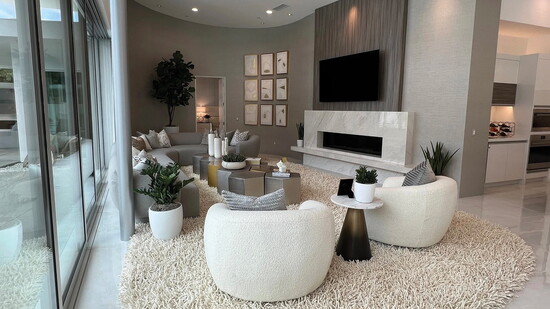
“They say interior design is storytelling,” she said. “When you look at a house, you can tell who lives there. That’s how our houses tell stories about us.”
Morehouse’s professional journey into interior design began in 2013 at Long Beach City College, following a major turning point in her life.
“At the time, I was an ex-felon and a drug addict,” she said. “My dad offered to help me pay for going back to school, and I just totally lit up. I couldn’t believe that he still believed in me.”
Motivated to make him proud, Morehouse excelled academically.
“So I graduated with the highest honors and as valedictorian,” she said. “First ever architecture valedictorian at Long Beach City College.”
She later earned a professional degree in interior design, gaining deep training in space planning, building codes, construction documentation and branding. While her education initially steered her toward corporate design work, residential design ultimately pulled her back.
“Residential design will always be my first love,” she said.
After freelancing on a residential ADU project, Morehouse realized she could combine technical rigor with personal connection. Later, a demanding role designing model homes sharpened her construction documentation skills — a turning point she credits with fueling her business's growth.
“They turned me into a really good machine for construction documentation,” she said. “I think that is why my business started to take off.”
Today, Morehouse’s approach begins not with finishes or colors, but with listening.
“The cool thing about clients that live in their homes is they know better than I do what’s working for them and what’s not,” she said. “I just spend the first hour listening to all the things in their house that are causing them friction.”
That friction often comes from outdated layouts, especially kitchens.
“Homes weren’t designed for the way that people live now,” she said.
For Morehouse, function always comes before aesthetics.
“We always start with space planning and eliminating that friction,” she said. “The style gets applied afterwards.”
Once function is restored, she builds a visual narrative using an in-depth mood board.
“I want to know what recipes you like. I want to know what fashion you’re into, what cars you like, where you want to travel,” she said. “I need to know everything about you."
Her philosophy of home is rooted in sensory experience — an idea influenced by designer Ilse Crawford.
“Interiors are about our senses,” Morehouse said. “People don’t want it to smell bad. They don’t want it to be loud. They don’t want it to be hot. They don’t want it to be itchy or harsh.”
Lighting, she says, plays a powerful role.
“You can get everything right, and if the lighting is wrong, it changes everything,” she said.
Morehouse’s recovery journey continues to shape her values as a business owner. She is committed to hiring people with barriers to employment and volunteers with Defy Ventures, which supports formerly incarcerated entrepreneurs.
“Having someone tell me that they believe in me enough to help pay for my education was everything,” she said. “I hope to have the opportunity to do that for other people.”
Asked what brings her the most fulfillment today, Morehouse doesn’t hesitate.
“My favorite part is showing clients the renderings the first time,” she said. “They feel understood. They feel like it’s coming to fruition.”
Contact Morehouse Crafted Interiors at 949-692-2050 or jennifer@morehousecraftedinteriors.com.
When you look at a house, you can tell who lives there. That’s how our houses tell stories about us.