Founded in 1693, Glastonbury is one of Connecticut’s oldest communities, whose history stretches from Native American settlements and colonial farms to shipbuilding, industry and modern suburban life.
That deep historical foundation is now shaping the town’s role in celebrating the 250th anniversary of the signing of the Declaration of Independence, with local leaders and historians working to connect residents to both the nation’s founding and Glastonbury’s own evolving story.
At the center of that effort is the Historical Society of Glastonbury, whose extensive preservation work and year-round programming have helped generations of residents stay connected to the community’s past.
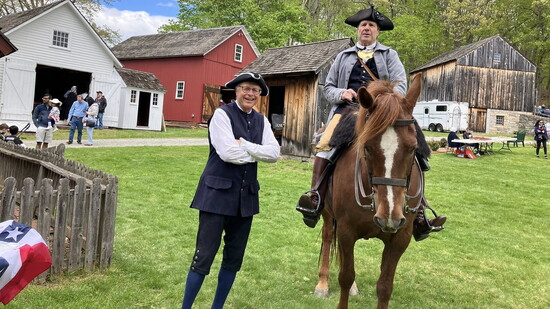
“The effort to preserve and enhance the appreciation of our past ranges from exhibits at the historical society museum, to reenactments and 'living history' events at the Welles-Shipman-Ward House property," said Barbara Theurkauf, the historical society's president.
Through museum exhibits, educational lectures, walking tours, genealogy programs, historic home preservation initiatives and seasonal community events, the organization has become one of the town’s most active stewards of local history.
HSG maintains three distinct properties here: The Welles-Shipman-Ward House, the Museum on the Green and the Welles-Chapman Tavern. Its programs draw residents of all ages, helping transform history from something confined to textbooks into a living part of everyday community life.
The historical society also recently published a local history book, "Our Sacred Honor," on the town's role in the Revolutionary War. The 91-page book attempts to reflect the experiences of individual Glastonbury men and women during the war for independence.
“Glastonbury took the patriot side from the beginning,” Barbara said. As early as 1774, the town authorized a letter expressing opposition to what was described as British attempts “to enslave America." Glastonbury subsequently contributed over 400 men to the patriot cause over six years of war.
The town was originally home to Indigenous peoples, including the Wangunk tribe. In 1636, settlers from nearby Wethersfield established “Naubuc Farms” here. The settlement later became known as Glassenbury before eventually adopting the modern spelling.
Glastonbury developed into an important agricultural and industrial center during the colonial era. It became known for shipbuilding, mills and river commerce. Local forests supplied timber for ships, while waterpower from Roaring Brook fueled mills and manufacturing operations that supported the growing regional economy.
The historic Rocky Hill-Glastonbury Ferry remains one of the town’s most enduring symbols of that history. Operating continuously since 1655, it is recognized as the oldest continuously operating ferry service in the United States and still carries passengers across the Connecticut River between Rocky Hill and South Glastonbury today.
Glastonbury also played a role during the Revolutionary War era. Yale University temporarily relocated some students to the town amid concerns that British forces could attack New Haven. Among those students was Noah Webster, who later taught in one of Glastonbury’s one-room schoolhouses. Local industries, including the Stocking Powder Mill in South Glastonbury, also contributed materials to the American war effort.
The town later became known for progressive ideals as well. Members of the influential Smith family gained national attention for their abolitionist views and later supported the women’s suffrage movement, reflecting a long-standing civic spirit that continues to shape the community today.
Over the centuries, Glastonbury evolved from a farming and manufacturing center into one of Greater Hartford’s most desirable suburban communities. Yet town leaders and residents have worked deliberately to preserve connections to the past through orchards, farm stands, historic districts and preservation efforts led by organizations such as the Historical Society of Glastonbury.
That connection between history and community engagement is central to Glastonbury’s plans for America’s 250th anniversary. The town’s Parks and Recreation Department has assembled a large working group that includes the Historical Society, the Connecticut River Valley Chamber of Commerce, the Glastonbury Rotary Club, the Town Center Initiative and other civic organizations to coordinate commemorative events throughout 2026.
The celebration will align with statewide “CT250” themes emphasizing history, civic engagement and inclusion. Planned programming includes educational events, cultural activities, historical exhibits and community-wide celebrations designed to encourage residents to explore both local and national history. Organizers are also developing a major signature event planned for September 2026.
Among the first announced activities is the “America 250 Fitness Challenge,” encouraging residents to log 250 miles during 2026 through walking, biking, swimming or other activities as a symbolic way to celebrate the nation’s anniversary.
For leaders at the Historical Society of Glastonbury, the anniversary represents an opportunity to deepen community connections, preserve local stories and help residents better understand how Glastonbury’s past continues to shape its future.
Barbara said the group is selling bells so that local residents can take part in the bell-ringing event on July 4.
“We hope everyone makes some noise and has fun. Ring a bell, clang a pot, hit a drum. It doesn’t matter, just do it together.”
“We hope everyone makes some noise and has fun. Ring a bell, clang a pot, hit a drum. It doesn’t matter, just do it together.”
“The effort to preserve and enhance the appreciation of our past ranges from exhibits at the historical society museum, to reenactments and 'living history' events at the Welles-Shipman-Ward House property."
To learn more about the local 250th celebrations and local history in general visit the Historical Society of Glastonbury's website, hsgct.org, or visit the Welles-Shipman-Ward House complex, located at 972 Main St., in South Glastonbury.