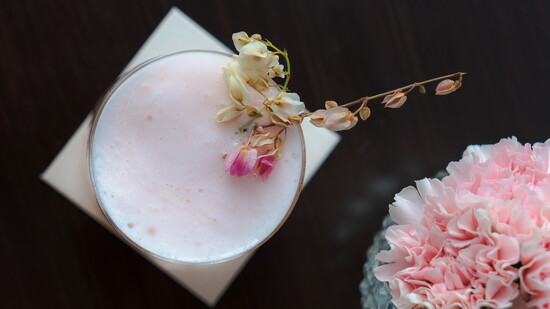
For this April issue, I started with spring. That led to Easter, then bunnies—and with all the Grammy and Super Bowl buzz—inevitably to Bad Bunny. And just like that, the Good Bunny Cocktail was born: a bright, invigorating drink that captures the freshness and renewal of the season.
To embrace the growing interest in mocktails, I created an alcohol-free companion, the Cottontail. More people are alternating cocktails with mocktails when socializing—and this one stands confidently on its own.
Both cocktails and mocktails are considered American inventions. The term “cocktail” first appeared in print in 1806, defined as a stimulating liquor composed of spirits, sugar, water and bitters—what we now call an Old Fashioned. Long before that, people were mixing fermented beverages with honey, herbs and spices to improve flavor.
In the 17th and 18th centuries, widely available spirits like rum, gin and brandy were often harsh, so they were blended with citrus and sugar. These early versions—punches, toddies and slings—were the direct ancestors of today’s cocktails. American bartenders refined the craft in the 19th century, and Prohibition (1920–1933) ironically accelerated innovation as bootleg spirits required creative mixing.
Mocktails trace back to the 19th-century Temperance Movement. During Prohibition, nonalcoholic drinks became more inventive, incorporating syrups, citrus and carbonation. The Shirley Temple became one of the first widely recognized examples.
Today’s craft cocktail revival reflects both tradition and wellness culture. Bartenders apply the same precision to mocktails as they do to spirit-forward drinks—elevating them into a category of their own.
Below are two spring-ready recipes.
Good Bunny Cocktail
1.5 oz gin
0.5 oz Campari
0.25 oz vanilla paste
0.75 oz lime juice
0.5 oz simple syrup
1 strawberry
Muddle strawberry in a shaker. Add remaining ingredients and ice. Shake well and double strain into a chilled coupe glass. Garnish with a marshmallow peep or strawberry.
Cottontail Mocktail
3 oz house-made fruit punch
0.25 oz vanilla paste
0.75 oz lime juice
0.5 oz simple syrup
1 strawberry
Muddle strawberry. Add ingredients and ice. Shake and double strain into a highball glass over fresh ice. Garnish with an orange wedge or marshmallow peep.
Fruit Punch
32 oz cranberry juice
8 oz fresh lime juice
8 oz fresh watermelon juice
8 oz fresh orange juice
8 oz fresh pineapple juice
Combine all juices, whisk thoroughly, strain and refrigerate. Stir before using.
About Chef David Burke
New Jersey Chef and restaurateur David Burke has spent decades championing playful, precision-driven American cooking. Known for elevating comfort classics with technique and showmanship, he brings the same rigor to a Sunday roast as to a tasting menu. Burke’s restaurants span New Jersey and beyond, and he remains a visible mentor in local kitchens and culinary classrooms.