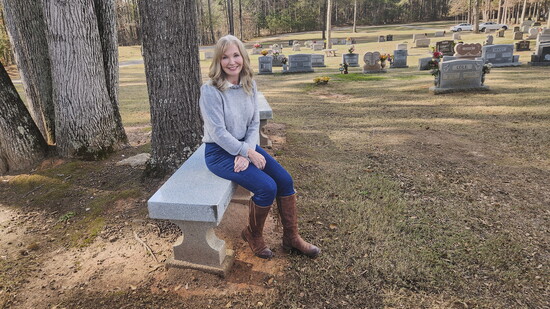
April Mowell admits that much of the cemetery business surprised her. Having watched her husband grow up around the funeral industry, she once viewed it as an unusual — even uncomfortable — line of work. But that perspective shifted quickly once she stepped into it herself.
“It didn’t take me long to realize that this business serves a very real need,” she explains. What stood out most was the deeply human side of the work — the care, compassion, and connection that exists behind the scenes. Over time, the fear and sadness people often associate with funeral homes and cemeteries faded for her, replaced by something far more meaningful. Today, she finds it foreign when people say they can’t bring themselves to step inside a funeral home. “I don’t see it as scary anymore,” she says. “It’s a stepping stone into the next phase.”
April has witnessed firsthand how funerals and celebrations of life, while born from loss, can also be deeply heartwarming and even fulfilling. Of course, some situations are incredibly difficult. In those moments, she’s seen how faith, along with the support of friends and family, can make a profound difference. Families grounded in faith, she notes, often find strength and resilience even in their darkest hours.
That long view of grief and healing is something April cherishes most about the cemetery side of the business. Through WCS Properties, she manages Westminster Memorial Gardens in Peachtree City, Camp Memorial Park in Peachtree City, and Sharon Memorial Gardens in Tyrone — the only perpetual care cemeteries in Fayette County, meaning they are regulated and funded to be maintained forever.
Her relationship with the families they serve doesn’t end after a service. In many cases, it spans years, decades, and even generations. “I’ll see cars coming through the cemetery, and I recognize them,” she says. For April, the cemetery becomes a sacred place where healing unfolds slowly and naturally. “We get to witness that process,” she shares. “Healing does take place. People come through devastating loss, and we see them on the other side of it.”
What many people don’t see, April says, is just how deeply her team cares. “I sleep well at night because I am completely confident in our team — their hearts and how they care for our families. I’m incredibly proud of that.” Balancing compassion with the logistics of running a business rooted in grief requires grace, patience, and perspective — especially when families arrive in the midst of raw emotion. “Often, people are in the anger stage of grief when they come to us. They may be angry at the circumstances, angry at God, angry at the person they’ve lost. We have to remember it’s not about us. It’s about having grace and meeting families where they are.”
As a woman leading in a traditionally male-dominated industry, April sees meaningful change taking place. While most funeral directors have historically been men, she notes a growing influx of women stepping into leadership roles. “I think women can run any business,” she says. “But this one is really special, and women can truly make a difference.” She speaks with pride about her team and grounds crew, adding simply, “I would do anything in the world for them.”
April believes in supporting community and is involved with Wreaths Across America, a national nonprofit dedicated to honoring fallen U.S. service members by placing wreaths on veterans’ graves each December and teaching future generations the value of freedom. With a father who served as a career military member — and whom she lost at a young age — the organization holds special meaning for her. “It’s a way I can honor his service, and the service of all veterans who sacrificed everything for us,” she says. Proudly patriotic, April believes strongly in remembering those who fought to protect freedom. “It’s important that we don’t take that sacrifice for granted.”
Looking toward the future, April is deeply mindful of the legacy she’s carrying forward. She sees the foundation laid decades ago by her mother-in-law, father-in-law, and her husband’s grandfather. “They built the bridge for us to walk on. I hope the same will be true for generations to come.”