No matter how long you’ve lived at the Jersey Shore, there’s always somewhere you haven’t fully explored. I’m a lifer, and friends still invite me to places they somehow know I’ll love—and have never heard of—on a near-weekly basis. Coffee pop-ups tucked into side streets. Old bars that make winter nights pass quickly. Restaurants hosting one-night-only prix fixe menus that feel like insider secrets. From Keyport to Point Pleasant, tiny hidden gems fill a glittering treasure chest along the coast.
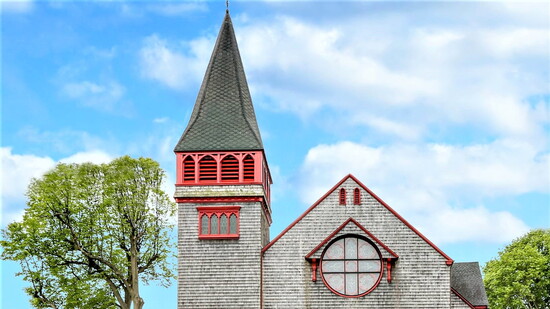
Most of Monmouth County knows Elberon only as a stop on the NJ Transit line—a station name that flashes by between Asbury Park and Long Branch as express trains speed toward Manhattan. For commuters, it’s a momentary blur. But Elberon is far more than a place you pass through. It is one of the Shore’s most historically significant neighborhoods, layered with stories that long predate modern beachfront development and seasonal crowds.
In the late 19th century, Elberon was a prestigious seaside resort, drawing wealthy families, political figures and industrialists seeking fresh ocean air and respite from city life. Grand summer cottages lined wide, tree-shaded streets just blocks from the water. Among Elberon’s seasonal residents were several U.S. presidents, including Ulysses S. Grant, Rutherford B. Hayes and James A. Garfield.
Garfield’s connection to Elberon is perhaps the neighborhood’s most remarkable chapter. After being shot in Washington, D.C., in 1881, the nation’s 20th president was brought to Elberon in hopes that the sea air would aid his recovery. In an extraordinary feat of engineering, a special railroad spur was constructed so Garfield’s train could pull directly to the cottage where he was staying. For weeks, Americans followed daily updates on his condition, with Elberon briefly becoming the focal point of national attention. Garfield ultimately died there, forever linking this quiet coastal enclave to a pivotal moment in U.S. history.
As resort culture waned in the early 20th century, Elberon evolved from a summer playground for the elite into a year-round residential neighborhood within Long Branch. The massive cottages gradually gave way to smaller homes, but the area retained much of its original character. Wide streets, mature trees and an unhurried pace still set Elberon apart from busier Shore towns. It feels like a neighborhood slightly removed from the noise—more lived-in than curated, more local than performative.
That sense of continuity carries into Elberon today. While trends cycle through other parts of the Shore, Elberon remains defined by the people who live there and the institutions that serve them. The neighborhood’s businesses aren’t flashy or fleeting; they feel rooted, intentional and quietly confident.
Directly across from the train station, Modern Man Barber Studio reflects that philosophy. Owner Alex Gomez offers classic barbershop services—hot towel razor shaves included—in a space that blends old-school tradition with modern design. For Gomez, the barbershop is about more than haircuts. It’s a social space, a place where conversations unfold naturally and where clients return not just for the service, but for the familiarity. The shop attracts everyone from high school students to retirees and professionals commuting to Manhattan, reinforcing Elberon’s role as a true crossroads between past and present.
A few blocks away, Roots + Remedies speaks to another, less obvious side of Elberon’s evolution. Owned by longtime friends Frieda Sitt Laniado and Michelle Zaccai BenDayan, the herbal apothecary and organic café was conceived with a simple goal: helping people support their health using natural, accessible options. The shop offers an extensive selection of herbal syrups, tinctures, balms and essential oils, alongside an ingredient-conscious café where refined sugar is notably absent. Roots + Remedies feels less like a trend-driven wellness space and more like a neighborhood resource—one grounded in education, balance and trust.
Nearby, Doru Pilates adds a layer of quiet sophistication to Elberon’s present-day identity. Founder Lauren Ginsberg, a former New York City finance professional and Pilates instructor, created the studio to bring a higher-level Pilates experience to the area—one rooted in expertise rather than hype. Named for her grandfather, Doru Pilates reflects Ginsberg’s emphasis on legacy, care and intention. The studio’s experienced instructors and boutique atmosphere feel well-matched to Elberon’s understated character.
Taken together, these businesses don’t define Elberon—they simply reflect it. They exist as extensions of a neighborhood shaped by history, community and continuity rather than constant reinvention.
Elberon doesn’t announce itself. It doesn’t market its past aggressively or chase attention. Its appeal lies in what most people don’t realize as they pass through: the presidential summers, the extraordinary railroad built for a dying president, the transformation from elite resort to close-knit neighborhood, and the way that history still quietly informs daily life.
Sometimes, the most interesting places aren’t the ones everyone is talking about. They’re the ones you almost miss—unless you decide to slow down, step off the train and look a little closer.
Special discount: Use code CITYLIFESTYLE for 20% off any purchase at Roots + Remedies.