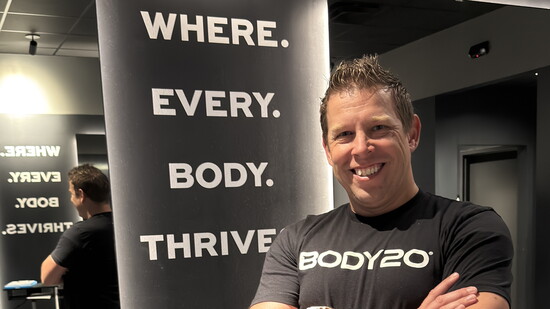
When we think about investing, it’s often in terms of portfolios and retirement plans. But one of the most meaningful investments you can make is in your own health. At Body20 in Des Peres, studio manager Joshua Carter, PhD, FMS, SFMA, helps clients do exactly that. Located at 12115 Manchester Road, the studio’s EMS training combines Electro Muscle Stimulation technology with expert coaching to deliver efficient, personalized workouts designed to improve strength, balance, and mobility. The best part? Each session takes just 20 minutes. By building strength today, Body20 Des Peres empowers clients to protect their independence, enhance their resilience, and invest in a healthier tomorrow. That kind of return is truly priceless.
Dr. Joshua shares his tips and tricks for fall prevention and practical ways to begin strengthening your foundation for a fit future, helping you invest wisely in long-term health, stability, and independence.
1. Falls Are a Leading Cause of Injury
Falls are the #1 cause of injury-related hospitalization in adults 65 years old or older. Prevention is not optional; it’s foundational to longevity and independence.
2. Strength Is the #1 Protective Factor
Lower-body strength (glutes, quads, hamstrings, and calves) significantly reduces fall risk. Sit-to-stand ability is a powerful predictor of independence.
3. Balance Is Trainable at Any Age
Even into the 80s and 90s, the nervous system continues to adapt. Static balance (single-leg stance) and dynamic balance (weight shifting and stepping patterns) can both improve with practice.
4. Reaction Time Matters More Than We Think
Most falls happen because someone cannot react quickly enough to a trip or slip. Agility drills and reactive training (unexpected direction changes or visual cues) are critical.
5. Ankle Mobility Is Often Overlooked
Limited ankle flexion reduces walking efficiency and increases trip risk. Maintaining ankle mobility directly improves gait mechanics and stability.
6. Gait Speed Predicts Health Outcomes
A slower walking speed is strongly associated with higher mortality and increased fall risk. Improving gait speed safely can reflect better strength, confidence, and coordination.
7. Core Stability Supports Upright Posture
Weak trunk muscles lead to forward leaning posture, shifting the center of gravity and increasing fall risk. Stability core work-outs here are key.
8. Vision & Vestibular (Inner-Ear) Systems Play a Major Role
Balance is not just muscular; it’s sensory. Challenging visual input (eyes closed and head turns) and uneven surfaces helps train the body’s balance systems.
9. Fear of Falling Increases Fall Risk
Psychological factors matter. When seniors limit movement due to fear, strength and coordination decline, creating a negative cycle. Confidence-building progression is essential.
10. Consistency Beats Intensity
2–3 structured sessions per week focused on strength, balance, and mobility produce measurable improvements within 8–12 weeks without high-impact training.
Dr. Joshua suggests incorporating these simple exercises into your routine a few times a week to begin investing in a healthier, more confident future. When performed consistently, these intentional movements become a powerful return on your investment. The exercises strengthen the muscles that support balance, improving joint mobility, and sharpening reaction time, so your body is better prepared for whatever lies ahead.
Lower Body Strength (in 3 sets of 10)
- Sit-to-stand exercises build functional strength for everyday activities like getting out of a chair or car.
- Step-ups strengthen muscles and improve stability when navigating stairs or curbs.
Static Balance
- Practice standing on one leg for as long as you can, working up to 30 seconds per side.
- Heel-to-toe walks about 10 feet long challenge coordination and body awareness, helping improve stability during walking.
Mobility
- Ankle mobility stretches in 10–15-second holds improve walking mechanics and reduce trip risk.
- Hip stretches in 10–15-second holds support stride length, posture, and overall ease of movement.
Agility & Reaction
- Cone direction changes or “figure 8” walks in 3–4 passes help train coordination.
- Tossing a ball with a partner sharpens reaction time and visual tracking.
- Lateral shuffles or “monster walks”, in 2–3 15-foot-long passes, strengthen side-to-side stability, which is critical for preventing falls.
To learn more about BODY20 Des Peres, visit https://www.body20.com/ or call 314-288-0551. You can also follow them on Instagram @body20desperes or check out their Facebook page.