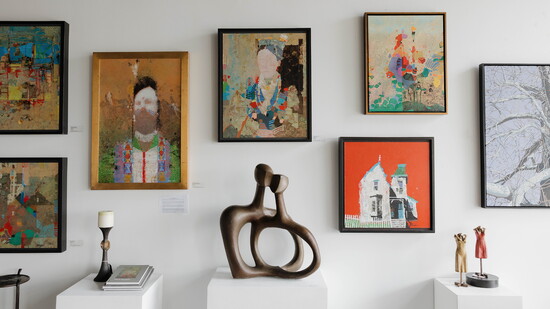
Most people hang a painting because it speaks to them, not because they think it will grow in value. Art is often admired, but rarely considered an investment. Yet for those willing to approach it with both care and intention, collecting fine art can offer something few other assets can: daily enjoyment paired with long-term potential.
Eva Reynolds, owner of Eva Reynolds Fine Art Gallery, has spent more than three decades guiding collectors at every stage. She often reminds clients that art offers a return long before it ever appreciates in value.
“Art is one of the only investments that enriches you long before it appreciates,” Reynolds says. “If you buy a piece you love, it will pay dividends to you every day for the rest of your life.”
Artwork changes the atmosphere of a home. It becomes part of the morning light in a hallway, the backdrop to dinner conversations, the image children grow up seeing every day. Over time, it weaves itself into family history. Even if the market fluctuates, the owner still lives with something beautiful and meaningful. When appreciation does occur, it becomes an added benefit to something that has already delivered years of enjoyment.
From a financial standpoint, fine art also provides diversification. It does not always move in tandem with traditional markets. For seasoned investors who understand the value of spreading risk across asset classes, that independence can be appealing. The key, Reynolds notes, is discernment.
When evaluating an artist with potential for growth, she looks for trajectory and consistency. Is the artist actively exhibiting? Do they have consistent gallery representation? Are they producing a cohesive body of work? Is their work entering corporate or permanent collections? Timing matters as well. Entering an artist’s market before institutional validation can present significant upside, but not all emerging artists are investment grade. Professional guidance can help separate momentum from mere trends.
The question of heart versus head inevitably arises. Should collectors buy what they love or what they believe will increase in value?
“It’s both,” Reynolds says. “The heart chooses. The head confirms.”
If someone buys strictly for profit and the market shifts, they may be left with a piece that brings little personal satisfaction. On the other hand, buying purely on emotion without understanding the broader context can lead to missed signals. Reynolds encourages what she calls informed passion. Fall in love with the work first. Then collect thoughtfully, build slowly, and keep strong records. When love and research align, collecting becomes both meaningful and strategic.
Working with a trusted gallery is especially important in an unregulated market. Unlike stocks or real estate, the art world runs largely on relationships, reputation, and knowledge. A reputable gallery helps protect authenticity, maintain stable pricing, and steward the long term legacy of the artist. It also guides collectors away from overpaying, purchasing weaker examples, or chasing speculation that can undermine value.
At Eva Reynolds Fine Art Gallery, collecting is approached as a partnership rather than a transaction. First time buyers are educated about pricing, terminology, and market dynamics so they feel confident rather than intimidated. Long time collectors rely on ongoing advice about when and how to add to their collections. Great collections, Reynolds says, are built carefully over time and often become part of a family’s legacy.
The opportunity can be particularly compelling with regional and emerging artists. When an artist is early in their career, the broader market has not yet fully priced in their potential. Entry points tend to be more accessible. There is also something rewarding about supporting an artist in the formative chapters of their story.
Over the years, Reynolds has represented artists whose work has appreciated 100 to 500 percent. She is quick to note that such returns are never guaranteed. Still, she has seen firsthand how thoughtful collecting, guided by expertise, can lead to both personal and financial reward.
One artist whose career illustrates the power of quality and legacy is Mark English. English began as one of the most awarded illustrators in American history, creating work for publications such as TIME and Sports Illustrated, before transitioning into fine art. His paintings are now held in major private and corporate collections, including the Smithsonian Institution.
Reynolds worked with English for more than 20 years. Since his recent passing, collectors have viewed his work through a different lens. With the body of work now finite, demand has increased. “When a master passes, there is often a shift from inventory to legacy,” Reynolds explains. Supply and demand take on new meaning.
English’s enduring appeal lies in his storytelling. He painted remembered landscapes and dreamlike figures, layering texture and soft edges to create a sense of atmosphere. Viewers do not simply observe his paintings. They step into them.
Closer to home, Reynolds is energized by the strength of regional talent. Sculptor Tom Corbin continues to produce refined figurative bronze work that feels as vital today as it did decades ago. Painter Dan Vanderhoof, a protégé of Mark English, brings bold color and confidence to his canvases. Jan Gaumnitz, a cornerstone of the Lawrence arts community since the 1960s, continues to explore new materials and ideas at 90, moving fluidly between painting, sculpture, photography, and printmaking.
For collectors considering their first purchase or their next acquisition, Reynolds offers simple guidance. Buy what moves you. Do the research. Partner with professionals who think long term. Investment in art is not only about financial gain. It is about living with beauty, supporting creative talent, and building a collection that reflects both taste and intention.
When done thoughtfully, art becomes more than décor. It becomes a lasting asset, financially and personally, woven into the story of a home and the legacy of a family.