Many small business ideas begin with a simple thought: Our city needs this. Or maybe, I wish Birmingham had this. When someone is bold enough to take the risk and build it, those ideas often become the businesses that give a city its character.
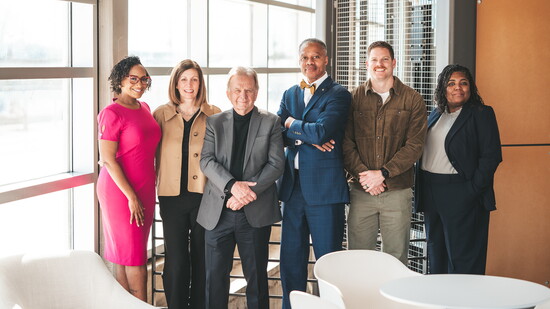
That entrepreneurial instinct is one of the qualities that caught the attention of Goldman Sachs when the firm expanded its 10,000 Small Businesses initiative into Alabama as part of its focus on fueling businesses in rural communities. From across the state, 26 founders were selected for the inaugural cohort, each bringing a company shaped by that same spark and determination. Over 12 intensive weeks, they studied, planned, and tested new strategies for growth—an experience many describe as a crash-course MBA grounded in real-world business challenges.
Now, a year and a half later, their stories offer a revealing look at what happens when bold local ideas meet national investment—and what those entrepreneurs are building next.
To Christy Staubach, owner of Top Dog, Birmingham needed a more personal kind of dog daycare. After leaving a health care career and struggling to find a place she trusted for her own dog, she decided to build one herself. “I had a vision and knew I could do it better than anyone else,” she says with a laugh.
Today, Top Dog cares for 60 to 90 dogs a day, from energetic puppies to post-surgery and end-of-life care she calls “doggy hospice.” “We know each dog individually. We know their parents,” Staubach says.
The Goldman Sachs program helped her step back from the daily grind and focus on growth. With stronger financial fluency and deeper trust in her team, expansion began to feel possible. As Top Dog approaches its fifth anniversary, Staubach is preparing to open a second location in Homewood. “At the time when I graduated, expanding was not in my growth opportunity, but it sure is now,” she says. “Goldman Sachs taught us to dream big and look beyond our current scope of business.”
Princess Jennings built her business on a promise to go where others won’t and to listen. A public health entrepreneur known as a “data bounty hunter,” she conducts focus groups and interviews in prisons, homeless camps, and rehabilitation centers so that the voices of underserved communities are actually heard.
“I go where researchers can’t or won’t go,” she says.
She applied to the Goldman Sachs program after years of doing the work largely on instinct alone. “I didn’t think I would be chosen,” she admits. “But I said, ‘This is my year of yes,’ and went for it.” The experience helped her see her company with fresh clarity after 13 years in business.
What drives her is impact that can’t be measured on a spreadsheet. She recalls once searching for a program participant who had disappeared from treatment. At the end of his treatment, he was asked what part of the program made the biggest difference in his life. He didn’t mention the services or resources provided. “He pointed toward me and said, ‘She came looking for me,’” Jennings says. “Moments like that make everything I do worth it.”
Kerry Grinkmeyer built his business around a different kind of investment: teaching people how to take charge of their financial futures. What began as a YouTube channel filmed in his basement quickly grew into a paid subscription service reaching more than 1,000 investors each month.
“Goldman Sachs taught me that if I was going to grow my business, I had to find a growth opportunity,” he says. That lesson pushed him to refine his offerings, raise prices with confidence, and expand his reach through new technology, including AI-driven portfolio tools.
For Grinkmeyer, the impact shows up most clearly in the people he serves. He recalls a letter from an Alabama school bus driver who, after following his guidance, paid off her home and began redirecting that money toward retirement. “She said it changed their life,” he says. “And I’m happy to say I’ve got about 1,000 people whose lives have changed as well.”
At 81, Grinkmeyer speaks about the program with the excitement of someone at the beginning of a career. “I have a new life,” he says. “I have a purpose, and that is to change the world. Goldman Sachs has shown me that I have the ability to do that.”
For Dr. Calvin Briggs, the program prompted a shift in how he understood his own work. An educational consultant focused on strategy and STEM initiatives, he had spent years immersed in day-to-day execution. The coursework pushed him to zoom out and examine the larger architecture of his business—what it could become, not just what it produced.
“You should be working on your business, not in your business,” he says. “If you’re just doing the daily grind, you don’t have a growing business—you’ve just created another job for yourself.”
That reframing changed how he allocates his time, energy, and resources, treating them as investments rather than expenses. The 10,000 Small Businesses Summit, which brought together thousands of program alumni in Washington, D.C., only reinforced that mindset. There, he heard directly from leaders like Martha Stewart, Kevin O’Leary, Michael Bloomberg, and Ken Langone, all sharing how they scaled their ideas into enduring companies. “It takes you from the ground and puts you into the stratosphere,” he says.
Josh Cosio’s business runs on a very different kind of fuel. “At Cala Coffee, we roast, we brew, and we bring the passion,” he says. With two Birmingham cafés, a third on the way in Mountain Brook, and a central roastery powering wholesale and online sales, Cosio has built a hands-on brand that stays closely connected to the community through everything from daily service to mobile pop-ups and private events.
For him, the greatest return on the Goldman Sachs program was not just strategy but solidarity. “Running a small business can be incredibly lonely,” he says. “It was so refreshing to trade stories with other founders and realize we are all grinding through the exact same struggles.” Just as important was a shift in perspective about growth itself. “Growth is not just about driving maximum revenue,” Cosio says. “It is about building a company that fits into your actual life, supporting your family and your mental health.”
Kimberly Blackmon, who leads the Southeast region of Goldman Sachs’ 10,000 Small Businesses program, spends much of her year on the road, sitting across from founders as they talk about the work they have poured their lives into. When she meets a potential participant, she is not scanning financials first.
“I tell people, speak to me and help me fall in love with your business,” she says. “I want to see your passion for it. I want to feel what you feel.”
For 12 weeks, those founders step back from the daily rush of running a company and take a clearer look at how it actually works—the numbers, the hiring, the contracts, the capital they might be leaving on the table. Many drive to Birmingham for the in-person sessions at Jefferson State, their travel and meals covered so they can focus on the work instead of the logistics.
“The whole goal of going through this program is to make a positive impact on your community,” Blackmon says.
That investment shows up in ways Birmingham residents recognize: in storefronts that stay open, in new jobs created close to home, and in businesses built by people who saw a need in their city and decided to meet it.
The next Alabama cohort is slated to begin this fall, with applications open through April. Small business owners interested can learn more at 10ksbapply.com