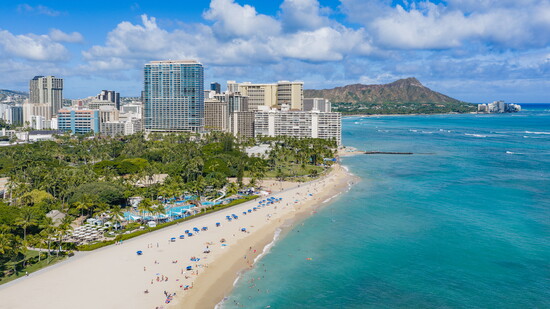
Ka Laʻi Waikīkī Beach sits pretty in Waikīkī, steps from the sand, warm water and sea turtles that glide surprisingly close to shore.
Yet what makes the hotel special begins upstairs.
Ka Laʻi offers the space and ease of a private residence with everything you want from a luxury resort. Its 238 residential style studios and suites feature full kitchens, generous living areas, spa inspired bathrooms and private lanais overlooking the ocean or the green canopy of Fort DeRussy Park.
For families, that space changes the entire rhythm of a vacation. Breakfast does not require getting everyone dressed and out the door. Children can settle into the living room while parents enjoy coffee on the lanai. Grandparents, parents and grandchildren can travel together without every moment feeling crowded or overly scheduled.
It is condo style living, elevated.
There is a difference between a beautiful hotel room and a place where a family can comfortably live for several days. Ka Laʻi gives everyone room to spread out, come back together and settle into a pace that feels less like managing a trip and more like enjoying one.
Now, following a $100 million property wide transformation, one of Waikīkī’s most livable luxury hotels has also become one of its most stylish.
Ka Laʻi remained fully operational throughout the phased renovation, which reimagined everything from the accommodations and restaurants to the pool, spa and public spaces. It was a complete transformation of the guest experience, from arrival to opening the lanai doors.
It also marks the first Hawaiʻi property for LXR Hotels & Resorts, Hilton’s collection of distinctive luxury hotels shaped by the character of their destinations.
To lead a transformation of this magnitude, Irongate Group selected Bryan O’Sullivan Studio, with architectural support from Guerin Glass Architects.
Bryan O’Sullivan may not be a household name, but the rooms he has designed are among the most talked about in luxury hospitality. Forbes called him “London’s buzziest interior designer,” and his work includes the Red Room at The Connaught, suites and spaces at Claridge’s, and interiors at The Maybourne Beverly Hills and The Maybourne Riviera near Monte Carlo.
His studio is known for creating glamorous spaces that are polished without feeling precious. Curved forms, rich materials, custom furniture and historical references appear throughout his work, but no two properties feel copied from the same playbook.
That was especially important at Ka Laʻi.
The goal was not to bring London style to Waikīkī. It was to give the hotel a stronger identity rooted in Hawaiʻi, without relying on the predictable design language so often used in tropical resorts.
O’Sullivan and his team began with research. Much of it centered on anthropologist Peter H. Buck’s Arts and Crafts of Hawaii, an extensive study of traditional Hawaiian craftsmanship, construction and everyday objects. The studio used that history as a foundation, then interpreted it through materials, shapes, lighting and furniture created specifically for the property.
On the ground floor, existing stone columns, elevator shafts and architectural elements were retained and layered with warm wood paneling, bespoke joinery and raffia toned wall coverings that subtly reference traditional weaving.
Lava stone, one of the most defining materials in the redesign, appears throughout the hotel. It grounds the reception desk, consoles and terrazzo floors, while a glazed lava stone surface adds a polished finish. Curved sapele wood details move across the walls and into the custom furniture, giving the spaces softness and flow.
Lighting carries its own connection to place. Woven rattan, punched metal and parchment shades draw from Hawaiian forms and materials. Behind the reception desk, palm frond fixtures were inspired by ceremonial paddles associated with Honolulu’s Outrigger Canoe Club.
Even the smaller pieces hold meaning. Cast blackened brass side tables with orange seeded glass tops reference the intricate geometry of traditional plaited Hawaiian fans. Custom outdoor chairs feature woven backs and sculpted legs influenced by Hawaiian forms. On the lanais, glazed ceramic tables are hand painted with tropical palm motifs.
Art deepens that connection. A curated collection includes works by Marco Rountree, Christine Skaggs and Big Island ceramic artist Suzanne Wang. Wang’s sculptural installation, Kūkulu Ola, anchors the collection and explores the elemental forces that connect all living things.
Her ceramic totems are also placed throughout the hotel, each representing a different pillar of Hawaiian culture. They give the expansive property moments that feel personal and handmade.
The residential accommodations continue the same material story, with warm wood tones, teak, lava stone and custom furnishings adding character without sacrificing comfort. The rooms feel finished and sophisticated, but they are still meant to be lived in.
That distinction matters at Ka Laʻi. Kitchens are fully equipped and genuinely useful. Living rooms give families somewhere to gather after the beach. Private lanais extend the accommodations outdoors, with sweeping views.
The hotel gives guests the option to do as much or as little as they want, which may be one of the most underrated forms of luxury.
The sixth floor brings everyone back together.
Set above Fort DeRussy with beach views, the reimagined level moves easily from breakfast to cocktails and dinner. Bespoke banquettes are positioned toward the ocean, while koa wood paneling, custom rugs and plaster friezes with palm motifs by artist Brian Robles add depth.
A custom Murano glass architrave introduces a touch of Art Deco glamour. The bar is wrapped in green glazed lava stone tile and backed by mirrors that catch the changing light.
Three new dining concepts led by Executive Chef Yoshi Ohata now anchor the culinary experience.
The Kini Room is the resort’s intimate, 86 seat signature restaurant. Tambour wood paneling, mosaic columns, richly colored terrazzo and custom furniture create a moodier atmosphere than the sun filled spaces surrounding it. The menu draws from Pacific Rim and global influences, with dishes including Kagoshima A5 Wagyu sushi, slow braised lemongrass lamb shank and Kini Kini Pie made with Kona coffee.
Muse Lounge serves as the resort’s social hub, pairing cocktails with oysters, caviar and shareable dishes. Ilikea’s Mai Tai combines ginger liqueur, kaffir lime and caramelized pineapple, while the Ka Laʻi Old Fashioned is made with single barrel rum, chocolate bitters and orange peel.
Bloom Cafe & Restaurant takes over in the morning with a garden inspired setting overlooking Waikīkī. The menu includes guava cream cheese waffles with brûléed banana and Hawaiian honey.
Spa Ka Laʻi has also been refreshed, with treatments rooted in traditional Hawaiian wellness practices and locally inspired ingredients. The infinity pool and revitalized outdoor spaces offer another place to slow down, with Waikīkī Beach just steps away when the ocean calls.
Yet even after a $100 million transformation, the hotel’s greatest strength may still be its people.
“Returning guests will recognize the sense of calm that has always defined Ka Laʻi, along with the warmth and generosity our team brings to every interaction,” says Managing Director Scott Ingwers. “For new visitors, this transformation introduces a more contemporary expression of Hawaiian hospitality, where thoughtfully designed spaces and vibrant gathering places complement the personalized services that have always been at the heart of who we are.”
To celebrate the transformation, Ka Laʻi Waikīkī Beach is offering a limited time Discover Luxury package with up to $1,000 in resort credit toward the hotel’s new dining, spa and resort experiences.
hilton.com/en/hotels/hnlwiol-ka-lai-waikiki-beach
“It is condo-style living, elevated. The goal was not to bring London style to Waikīkī, but to create a stronger identity rooted in Hawaiʻi.”