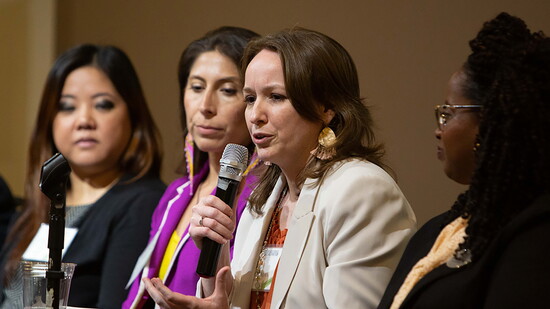
If you’ve spent much time in Austin, you’ve probably heard of Leadership Austin—or realized halfway through a conversation that someone you know is an alum. That recognition often becomes a shortcut to trust. But as Jill Goodman, Leadership Austin’s CEO, puts it, the more important question is: what actually happens next?
Leadership Austin isn’t designed as a résumé booster or a one-time experience. It’s a pathway—one that helps people understand their city more deeply and connect with others who want to make it better. The organization brings together individuals from different industries, backgrounds, and stages of life not to hand them answers, but to provide context, relationships, and a shared sense of responsibility for Austin’s future.
“What we do isn’t really about a program,” Goodman has said. “It’s about community leadership.” In practice, that means shifting the focus away from titles and toward engagement—how people show up locally, where they invest their energy, and how they work across differences.
That emphasis feels especially relevant right now. Many people feel disconnected from decision-making or disillusioned by politics at the national level. Leadership Austin intentionally brings the conversation closer to home. Local is where people still have agency. It’s where trust can be built—and where change feels possible, often in ways that are tangible and immediate. Leadership Austin’s work starts from the belief that informed, connected people are the foundation of a healthy city.
Julia Campbell, Leadership Austin’s Partnership Director, notes that one of the most common reactions she hears is surprise. People think they know what Leadership Austin is—often based on what it looked like years ago—but don’t realize how much it has evolved. Today, the organization hosts an annual leadership conference open to the public (this year on February 20), a Courageous Leaders Lunch, and offers multiple ways to engage, all built around the same idea: leadership is accessible, and it’s ongoing.
Rather than positioning itself as exclusive, Leadership Austin works to widen the table. Its goal is to meet people where they are—whether they’re early in their careers, deep into them, or simply looking for new ways to contribute. The common thread isn’t ambition for status, but a desire to understand Austin better and help shape what comes next.
The impact of that approach is often most visible through alumni experiences. For Keith Sommer, Senior Vice President of Social Enterprises at Goodwill Central Texas, Leadership Austin offered a new lens on a city he already knew well. “Even after living in Austin for more than 20 years, Leadership Austin opened my eyes to the complexity of our city’s challenges and the opportunities that exist when people come together with curiosity and purpose,” he said. “It reinforced that meaningful change isn’t about politics—it’s about shared responsibility as leaders and citizens.”
Chris Mugica, a partner at Jackson Walker, echoes that sentiment. “Leadership Austin helped me appreciate the complexity and promise of the systems and cultures that shape Central Texas,” he said. “More importantly, the experience taught me that loving a city also means taking responsibility for shaping its future.”
Stories like these reflect what Leadership Austin emphasizes again and again: the value isn’t just in what participants learn, but in what they carry forward. Alumni continue to serve on boards, support nonprofits, and collaborate across sectors—often quietly, but consistently. Leadership Austin’s role, as Goodman describes it, is to create the conditions for that kind of sustained engagement.
At its core, Leadership Austin is built on a simple idea: change doesn’t start somewhere else. It starts locally, with people willing to engage, build relationships, and take responsibility for the place they call home.