When Laura Hackett, education manager and lead wildlife biologist at Liberty Wildlife, is leading a field trip at the Phoenix nonprofit, she likes to ask the kids what they think goes on there.
After listening to the wide range of answers, Hackett explains that Liberty Wildlife is “a nonprofit, wildlife, rescue, rehabilitation, education, conservation organization.”
“There’s a lot that goes into that sentence, but the gist of it is that we are here to serve Arizona’s native wildlife,” Hackett says, adding that Liberty Wildlife is primarily a hospital for sick, injured, and orphaned wildlife animals with the hopes of rehabilitating them and releasing them back into the wild. “The education part of our job comes in when those animals cannot be released back into the wild for one reason or another, and they potentially have a job change and become animal ambassadors or teachers.”
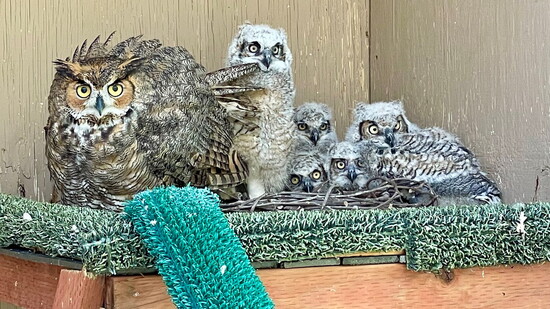
There are currently about 70 birds of prey education ambassadors who live at Liberty Wildlife permanently. They include owls, hawks, vultures, falcons, eagles, and California condors.
“We also have a bobcat, raccoon, ringtail, and coatimundi, plus a few squirrel species on display, and about 20 reptiles, including snakes, lizards, and tortoises,” Hackett says.
While Liberty Wildlife is primarily known for helping a wide variety of birds, and about 80% of their intakes are birds, Hackett says they take in the majority of native wildlife, including mammals and reptiles.
“We currently cannot take in ducks or Canada geese, because they are considered to be prime carriers of avian flu, and we also aren’t taking in lovebirds because of a common avian disease that they carry and could spread to our native populations,” Hackett says.
On average, she notes, Liberty Wildlife takes in about 10,000 patients every year.
“We run off the kindness of the public to bring animals to us for the most part, and then very much off the dedication of our volunteers who have so many different roles at Liberty Wildlife,” Hackett says.
Susie Vaught, volunteer coordinator at Liberty Wildlife, says 490 volunteers currently work at the nonprofit, including 35 from Chandler.
“These wonderful volunteers are part of the backbone of what makes Liberty the state-of-the-art facility that it has become,” Vaught says, adding that Chandler volunteers work in every area at Liberty.
Volunteer jobs include working at the intake window, which Vaught describes as “the face of Liberty Wildlife.”
“These volunteers are usually the first people someone who has found an orphaned or injured animal may meet face to face,” Vaught says. “Our intake volunteers are trained on how to explain what our process is, reassuring them that the animal will receive the best of care.”
Volunteers also work on the Hotline, which Vaught calls “the voice of Liberty.”
“They answer the calls from people who have found an injured or orphaned animal and want to find the best place to care for it,” Vaught says. “If it is a raptor and may be dangerous, the hotline staff coordinates with rescue/transport volunteers to send them out to bring the animal to Liberty. They drive to the reported location of the animal, safely capture it, and then bring it back to Liberty for treatment and care.”
Other volunteer jobs at Liberty Wildlife include orphan care, daily care, owl team, medical services, interpretive guides, and the wildlife guardian and fundraising team.
People who are interested in volunteering can find more information on the Liberty Wildlife website.
Hackett is grateful for the many volunteers and visitors, as well as the members of the public who care enough about wild animals to get them help.
“I love that no day is the same. From the different animals and their situations that we see daily, to the field trips or visitors that come to learn, there’s always more to learn and be amazed by,” she says. “When you work 40-plus hours a week with these animals, sometimes you don’t remember their uniqueness until you lead a tour and have them hear the sounds of the eagles. Or you talk to someone who drove 40 miles to bring an injured dove to the hospital. Then you realize how important nature is and how connected humans are to it.”
"From the different animals and their situations that we see daily, to the field trips or visitors that come to learn, there’s always more to learn and be amazed by."—Laura Hackett
"We run off the kindness of the public to bring animals to us for the most part, and then very much off the dedication of our volunteers who have so many different roles at Liberty Wildlife."—Laura Hackett