In Fairfield, as in much of Fairfield County, success in children and teens is often measured by a stellar report card, a spot on the travel team, a full social calendar, and the expectation that they’ll get into the right college.
But beneath the outward signs that a young person is thriving, they may be struggling in silence.
Every two years, the Fairfield CARES Student Survey asks local students in grades 7 through 12 about mental health, overall well-being, and substance use. The 2025 survey included 2,088 students, and the findings underscore the challenges many Fairfield students face, with depression, anxiety, and feelings of isolation emerging as significant concerns.
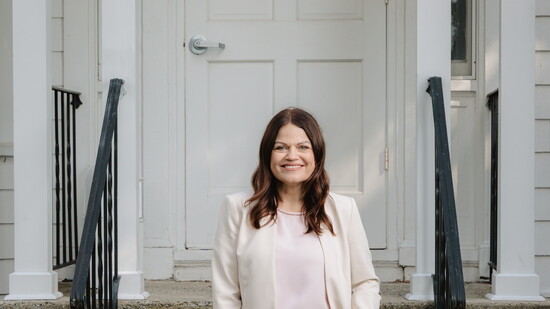
“This data offers an important reminder that outward achievement doesn’t necessarily mean a young person is doing well emotionally,” says Edith Boyle, President and Chief Executive Officer of LifeBridge Community Services. “Particularly in a community where academic achievement is highly valued and the pressure to succeed can be intense.”
Among Fairfield high school students surveyed, 89% identified school or academics as at least some source of stress, 86% cited expectations about their future, and 78% reported stress related to balancing their schedules.
Parent and guardian expectations were also a source of stress for many. And while 57% of students said they would talk with a parent or guardian about a mental health or substance use concern, only 18% said they would ask a parent to see a therapist.
“This underscores the importance of helping families distinguish between encouragement and pressure,” Edith says, “and of recognizing emotional well-being as an essential part of a child’s success.”
For Edith, understanding what’s driving that pressure is the next step.
“I’m a data person,” she says. “If we’re going to know how to address it, we have to better understand what’s contributing to it.”
When she drills down into the numbers, the answer is resounding—and stark: pressure to perform. One of the culprits is the increasingly structured nature of childhood. Endless extracurriculars, club and travel sports, and academic enrichment now fill hours that once might have been spent building forts, playing outside, or simply being bored.
“It’s all well-intentioned,” Edith says. “We’re trying to give our children the very best chance at a successful life. We want them in karate, learning an instrument, a second language. I was this way with my own child! But there’s also pressure to always be somewhere, doing something. Part of what we hope to do at LifeBridge is help families recognize that pressure and understand its impact.”
She is careful, in LifeBridge’s outreach, not to make parents feel judged.
“When we know better, we can do better—myself included,” she says. “I wish I could go back and do things differently, now that I have a stronger awareness of what my child needed at that time. We’re all doing the very best we can, and truly, people do what they do because they love their children.”
But even in loving families, pressure can build almost imperceptibly, compounding through well-intentioned choices until it becomes part of everyday life. In communities around Fairfield County, the culture of achievement—of earning good grades and getting into the right college—can take hold as early as middle school.
“Young people, especially, don’t always recognize what’s weighing on them,” Edith says. “They don’t know it’s the constant stress of trying to achieve.”
Edith brings a unique perspective to LifeBridge, shaped by both her lived experience and professional expertise—one that makes her well suited to lead the organization.
“I grew up in poverty on a rural cattle ranch in Arizona,” Edith tells us. “I was always on Medicaid. I’ve had Type 1 diabetes since I was 12, so I’m very familiar with the challenges of navigating the healthcare system.”
Her own experiences, along with those of her family—including adopting her son when he was 8—helped lead Edith toward a career in social services. She was the first in her family to attend and graduate from college, earning her degree in her 30s. She went on to earn a master’s degree in social work and become a licensed clinical social worker, eventually taking a job at a federally qualified health center in New Mexico.
“I had the best of both worlds,” Edith says. “Monday through Thursday, I was in a senior leadership role, and then on Fridays I was still able to see patients and provide direct care.”
From navigating the healthcare system herself to working directly with patients and leading care delivery, Edith has seen mental health services from multiple perspectives. That combination of lived experience and professional expertise continues to shape her approach at LifeBridge, informing her understanding of not only how services are delivered, but also what can stand in the way of people getting the care they need.
Ready for a change of scenery from the Desert Southwest, Edith applied for two positions on opposite coasts: one in San Francisco and the other in Stamford. She chose Stamford, drawn to the idea of moving as far from what was familiar as possible and starting a new chapter. The move proved a serendipitous one for LifeBridge, which she took the helm of four and a half years ago.
LifeBridge has a long history of supporting children and families in need. Founded in 1868 as an orphanage, it has evolved over time to take on adoption and broader social services, operating under several names, including the Ladies Relief Society, the Bridgeport Orphan Asylum, Woodfield Children’s Village, and Family Services of Woodfield, before becoming LifeBridge Community Services.
LifeBridge marked its 10th anniversary in Fairfield this year. In 2016, it acquired Fairfield Counseling Services at 125 Penfield Road, where it remains today. It’s name may have changed, but its commitment to vulnerable children and families remains central to its mission. The organization provides mental health counseling, substance use treatment, school-based mental health services, integrated pediatric behavioral health care, and community-based trauma and resilience programs.
It’s the Community Resiliency Model (CRM), developed by the Trauma Resource Institute, that especially excites Edith. This evidence-based approach helps people understand the nervous system, recognize how stress affects the body, and learn what the body needs to recover.
Stress affects everyone, making CRM relevant to people and organizations of all kinds. LifeBridge offers CRM training to businesses and nonprofits, teaching practical skills to manage stress and build resilience. These trainings follow a set fee structure that helps support LifeBridge's mission. LifeBridge also offers free CRM workshops on a regular basis, open to everyone in the community.
In Fairfield, the workshops also emphasize the value of unstructured time, giving young people room to slow down and be bored—something that can be difficult in lives packed with activities and expectations.
“Building resilience is like working a muscle,” Edith says. “For a muscle to grow, there has to be resistance. There has to be stress in your life for resilience to build. But there also have to be periods of recovery, when the system can calm down. Nowadays, there often isn’t enough time for recovery, and that’s when anxiety and depression start to creep in.”
In her three years as president and CEO, Edith has drawn on her own experiences and understanding of the challenges families face to help LifeBridge find new ways to reach those in need. Rather than waiting for people to seek help, the organization is working to get care to them sooner.
“The traditional healthcare model is, we put up our shingle, you come to us,” she says. “But it’s one less barrier when you can go to them.”
LifeBridge now places clinicians in Bridgeport high schools and, through a partnership with Pediatric Healthcare Associates, in pediatric offices in Fairfield, Stratford, and Trumbull. When a pediatrician identifies a mental health need, they can submit a digital referral form in the exam room, and LifeBridge will reach out to the family directly.
In the first 8 months, the practice referred 436 children and adolescents to LifeBridge, and 180 of them engaged in counseling services. Since the effort to embed clinicians in the community began three years ago, the number of young people LifeBridge serves has grown by an astonishing 449%.
Access is also about cost. Greater Bridgeport is federally designated as a Mental Health Professional Shortage Area, and people seeking care have often faced waits of six to nine months to see a clinician. Edith says many Fairfield families pay out of pocket because private practitioners in the county often don’t accept insurance, and families may not realize LifeBridge does.
“We accept Medicaid, but we also accept commercial insurance,” she says. “People don’t need to be paying out of pocket.”
LifeBridge also offers a sliding fee scale for people who are uninsured or struggling to afford care, supported in part by funding from the Town of Fairfield. Even in an affluent community, many families are feeling the financial strain.
For Aleera, who turned to LifeBridge during some of the most difficult years of her life, the experience made a lasting difference. After facing pain and loss in high school, she found therapists who helped her feel comfortable opening up and gave her the confidence to move forward.
“I was always afraid of therapy and worried I wouldn’t open up or connect with anyone, but it was quite the opposite,” she tells us. “I felt seen and heard, and they helped me understand and love myself in ways I never knew. I’ve become more confident and am taking control of my life. I owe a lot of my success to the people at LifeBridge, especially Jessica, who helped me so much. I’m so thankful I went there, and I would recommend LifeBridge to anyone who feels scared to open up about the pain they’re experiencing. I was there, too, but with LifeBridge’s help, I was able to overcome that fear.”
Another effort under Edith’s leadership has been securing a $10,000 grant from the National Alliance for Children’s Grief, in partnership with the New York Life Foundation. The funding will bring children’s grief training to clinicians throughout Fairfield, not just LifeBridge’s staff.
“I’m a capacity builder,” Edith says. “I told the town that I’d like to offer this as an opportunity to help train all clinicians in Fairfield. My hope is to build our community’s collective capacity to be able to offer grief support groups for children who have lost a parent.”
In a community where so much weight is placed on tangible measures of success, Edith hopes families will pay attention to what those measures can’t capture: how a child is doing emotionally.
“Mental well-being is still so heavily stigmatized,” Edith says. “We’ll talk openly about a child having asthma or diabetes, but there’s often a pause when it comes to mental health. We need to recognize that the mind and body are connected, and that emotional well-being is just as important as physical health.”
A strong report card doesn’t tell the whole story. Even children who do well can feel pressure to keep up—and need room to breathe. Parents who are concerned about anxiety or depression can check in with their child and explore whether counseling could help.
LifeBridge’s Fairfield office is located at 125 Penfield Road. Hours are Monday and Wednesday, 9 a.m. to 6 p.m., and Tuesday, Thursday, and Friday, 8 a.m. to 5 p.m. Most commercial insurance plans and Medicaid are accepted. Request an appointment or refer someone by visiting lifebridgect.org.
Fairfield youth who are patients of Pediatric Healthcare Associates (PHA) can also receive counseling at PHA’s office at 50 Unquowa Place. To schedule an appointment at either location, call LifeBridge directly at 203-368-4291. Visit pha4kids.com to learn more.