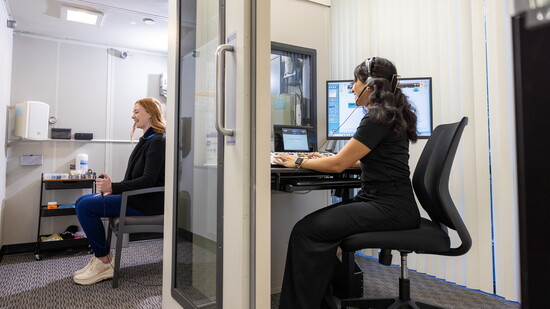
Hearing aids have gotten cool. Nowadays they’re bits of refined technology practically invisible to the naked eye, with all kinds of special features that can be customized to the wearer’s experience, such as blue tooth connectivity and heart rate monitoring. Here in El Dorado Hills, Gold Country Hearing & Balance helps people with hearing loss get access to these devices and other hearing-related services. It’s a woman-owned clinic staffed 90% by women, all of whom collaborate to see that patients receive the compassionate care and all the assistance they need. The clinic is owned by Kimberly Bonney, Au.D. (doctor of audiology), and the team also includes Marissa Gilger, Au.D., CCC-A, F-AAA; hearing instrument specialist Samantha Poulos; patient care coordinator Cynthia Riggs; and physician and community liaison Sarah Banks.
Chief operating officer Diana Vercellino answers some questions about the clinic, which is located on Windplay Drive in EDH, and the impact effective hearing has on our lives.
Why should people consider hearing care an investment in their long-term health?
Hearing health plays a much bigger role in overall wellness than many people realize. When you can hear clearly, you stay connected with the people around you, remain socially active, and keep your brain engaged. Addressing hearing loss early can help protect cognitive health, support emotional well-being, and improve quality of life. Investing in your hearing today helps support your long-term health and independence.
What are some early signs of hearing loss that people tend to overlook?
One of the most common early signs is difficulty hearing in noisy environments, like restaurants or family gatherings. People may also notice that they’re asking others to repeat themselves more often, turning the TV volume up louder than others prefer, or feeling like people are mumbling. These changes often happen gradually, so many people don’t realize their hearing is declining until it begins affecting daily life.
How can untreated hearing loss affect overall health, like balance, memory, or mental well-being?
Untreated hearing loss can contribute to feelings of isolation, frustration, and fatigue because the brain has to work harder to understand sounds. Research also shows connections between untreated hearing loss and issues with balance, memory, and cognitive decline.
Do you see patients’ relationships or social lives improve after they address their hearing?
Absolutely. One of the most rewarding parts of our work is seeing patients reconnect with the people and activities they love. We often hear from patients that conversations with family become easier, they feel more confident going out with friends, and they’re able to participate more fully in everyday life again. Better hearing can truly strengthen relationships.
What is the connection between hearing loss and cognitive decline?
Studies have shown that untreated hearing loss can increase the risk of cognitive decline over time. When the brain receives less auditory stimulation, it has fewer opportunities to stay actively engaged in processing sound and speech. Treating hearing loss helps keep those auditory pathways active, which supports long-term brain health.
How do hearing devices help keep the brain more actively engaged?
Hearing devices help restore access to sounds that the brain may have been missing. By improving clarity and reducing the strain of listening, they allow the brain to process speech and environmental sounds more naturally. This continued stimulation helps keep the brain active and engaged in communication and everyday experiences.
Hearing technology has advanced so much. What are some features that surprise your patients most?
Modern devices can connect directly to smartphones, stream phone calls or music, automatically adjust to different listening environments, and even be adjusted remotely by their hearing professional. People are often amazed at how small the devices are and how much technology is packed into them.
How have modern devices become more comfortable, discreet, and easy to use?
Today’s hearing devices are designed with both comfort and convenience in mind. They’re smaller, lighter, and more discreet than ever before. Many are rechargeable, which eliminates the need to change tiny batteries, and they automatically adjust to different listening environments.
What’s most meaningful about your work?
We’ve had patients tell us they could hear birds again, enjoy conversations with their grandchildren more easily, or finally follow along at family gatherings without struggling. Those moments remind us how impactful better hearing can be. That connection is at the heart of everything we do.
What sets Gold Country Hearing & Balance apart is its focus on personalized treatment and meaningful connection. Rather than a one-size-fits-all solution, patients are guided through a thoughtful process—from initial consultation to continued care—ensuring the best possible outcomes. The clinic provides advanced diagnostic evaluations, customized hearing aid fittings, and ongoing support tailored to each individual’s needs. Their services also include tinnitus management, balance and dizziness assessments, and preventive care designed to support long-term hearing health. For more information on the services they offer, visit goldcountryhearing.com/el-dorado-hills.
“One of the most rewarding parts of our work is seeing patients reconnect with the people and activities they love.”
“When the brain receives less auditory stimulation, it has fewer opportunities to stay actively engaged in processing sound and speech. Treating hearing loss helps keep those auditory pathways active, which supports long-term brain health.”