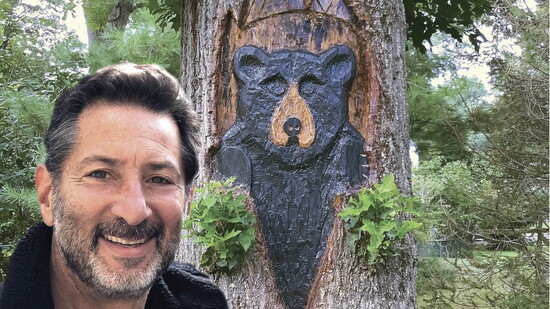
The story of Little Billy began with a child’s imagination.
Barry Farber grew up spending summers at a camp in Pennsylvania, where his father worked as director and his mother served as the nurse. His childhood was filled with forests, lakes, mountain trails and a small log cabin. Years later, that cabin would inspire the opening scenes of “The Adventures of Little Billy: In Search of the Magic Tree,” a children’s book series built around imagination, adventure and life lessons.
For Farber, the heart of the story has always been children themselves: how they learn, build confidence and carry small lessons for a lifetime.
When his own children were young, Farber made up bedtime stories about a boy named Little Billy wandering through magical woods and learning from animals he met along the way. Years later, his daughter reminded him of those stories and challenged him to write them down.
“She said, ‘Dad, you always tell us to finish what we start. Why haven’t you written the children’s book yet?’” Farber recalls. “That was the moment I knew I had to commit to it.”
What followed was years of rejection and persistence. Publishers turned the book down repeatedly. Some wanted to replace the illustrator. Others questioned whether the story belonged in the market.
“When people tell me something won’t work, it motivates me even more,” Farber says. “If you truly believe there’s value behind what you’re creating, you keep going.”
At the center of Little Billy’s journey are five values: empathy, courage, determination, service and attitude. Each lesson is represented by an animal character. Lawrence the Owl teaches kindness and service. Bosco the Bear represents attitude and positivity. Sheba the Wolf encourages bravery. Rupert the Toad teaches empathy, while Sherman the Turtle talks about discipline.
Farber was careful not to create a story that felt preachy. Instead, he wanted children to absorb the lessons naturally through adventure and imagination.
“You don’t want kids feeling like they’re being lectured,” he says. “You want them entertained first, and then the message stays with them.”
That balance between imagination and emotional learning has resonated with families. Parents often write to Farber to share that their children ask to read the story night after night. For him, those moments matter more than sales numbers or recognition.
“Knowing somewhere a parent or grandparent is reading Little Billy before bedtime—that’s everything,” he says.
The project recently entered a new chapter close to home in New Jersey. In June, Livingston High School theater students transformed the story into a live stage production for younger audiences. Farber also shared the project with the Livingston Township Council, where he spoke about the book’s message of determination and the persistence it took to bring Little Billy to life.
Rather than tightly controlling the adaptation, Farber encouraged the students to use their own creativity while keeping the story’s core values intact.
“I wanted them to make it theirs,” he says. “Kids connect best when they feel ownership and creativity.”
The production was filmed and will be shared with schools, allowing younger children to experience the story through live performance.
That sense of purpose extends beyond the page. Inspired by Little Billy’s connection to helping animals in the story, Farber partnered with Tamerlaine Sanctuary & Preserve in New Jersey, where portions of book proceeds help support rescued animals. He hopes children who read the series enjoy the adventure and understand how compassion and kindness show up in real life.
As many parents worry about screen time and the fast pace of childhood, Farber believes stories still hold power. Not because they provide all the answers, but because they create opportunities for connection between children, parents and the values families hope to pass down.
“Kids remember stories,” Farber says. “They remember how a character made them feel. If Little Billy helps even one child become more confident, compassionate or determined, then every rejection letter and obstacle along the way was worth it.”
To learn more about Barry Farber and “The Adventures of Little Billy: In Search of the Magic Tree,” visit barryfarber.com/little-billy.
“Kids connect best when they feel ownership and creativity.” —Barry Faber
“You don’t want kids feeling like they’re being lectured, you want them entertained first, and then the message stays with them.”—Barry Faber