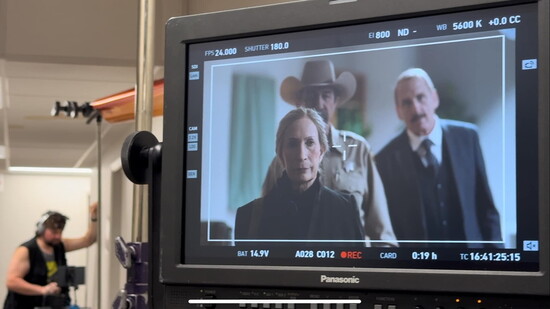
In Southern Arizona, filmmaking is rarely a solo effort. It is shaped by long, hot days on set, tight-knit communities, and a strong willingness to bring stories to life with limited resources. For Tucson-based filmmaker and actress Elizabeth von Isser, that collective effort became the foundation of a multi-year journey that transformed an initial screenplay into a fully realized film. Written over several years and brought to life with the help of local actors, crew members, and the surrounding community, the finished project reflects both the intensity of independent filmmaking and the unique role Tucson plays in fostering creativity.
For von Isser, the path to filmmaking was anything but traditional. Before transitioning into film, she spent many years working full-time as an aerospace engineer. Her career choice was shaped largely by family expectations and partly by her strong aptitude for math. Throughout that time, she remained deeply connected to her creative side, which included painting, jewelry-making, and community theater. In the mid-2000s, however, she made the decision — as she put it — to leave her job and “go do fun stuff,” a shift that allowed her to pursue her creative passions more fully and eventually led her to filmmaking.
The film, Kate Hugo: Murder After Mayhem, unfolded over several years, beginning with a screenplay von Isser started writing in the summer of 2022. After an extended period of pre-production, filming took place over 16 days in April and May of 2024, followed by months of post-production, which are still ongoing. Throughout the process, she wore many hats, serving as the writer, executive producer, and lead actress. She worked closely with director Rich Goldstein during production, collaborating on both creative direction and on-set problem-solving. She described the experience as a constant learning curve, saying it felt “like starting a brand-new job where you don’t really know what you’re doing at first,” with each day bringing new challenges and lessons.
Day-to-day life on set was defined by long hours and constant coordination. A typical filming day stretched to 12 consecutive hours, which became physically and mentally demanding over the course of the shoot. With roughly a dozen actors and 30 crew members involved, the work required careful organization, particularly as creative differences emerged and exhaustion set in. Despite the challenges, the experience pushed von Isser to grow as a leader and collaborator.
Working with a large team of creatives meant navigating different communication styles and personalities — something she admitted did not come naturally to her. Self-described as non-confrontational, she found herself learning how to speak up, problem-solve, and resolve disagreements as they arose. With more than a dozen actors and dozens of crew members working closely together under tight schedules, moments of tension were inevitable.
One of the most demanding aspects of production came after von Isser and her team decided to work with union actors through the Screen Actors Guild, a choice that significantly expanded the scope and cost of the film. The team wanted to support and collaborate with local talent, but bringing union actors on board required adhering to strict standards for compensation and working conditions. Filming across multiple locations in Tucson and Arivaca added another layer of complexity. “There are no hotels in Arivaca,” she said, explaining that the production “rented every Airbnb, an RV, and every place we could find to house the cast and crew,” while also providing three meals a day during long shoots in the unforgiving desert heat. Filming in April and May meant working through rising temperatures, making hydration, shade, and rest a top priority to keep the crew safe throughout the process.
Despite the challenges, filming in Southern Arizona offered a level of community support that would have been difficult to replicate in larger cities. Residents and businesses donated locations, stepped in as background extras, or lent equipment. Their collective willingness to help eased the logistical burden of the project and reinforced the collaborative spirit that defines Tucson’s filmmaking scene.
That sense of connection is further strengthened by Tucson’s broader film community, which von Isser described as unusually accessible and supportive. Film Tucson’s monthly mixers create opportunities for actors, crew members, and creatives to network, collaborate, and gain experience together. Rather than competing for limited opportunities, filmmakers often share resources and knowledge, creating an environment where independent projects can take shape. For von Isser, that tight-knit network made the challenges of transforming a script into a film feel more manageable and underscored the value of producing the film locally.
At its core, Kate Hugo: Murder After Mayhem is rooted in themes of connection and healing — ideas von Isser hopes will resonate with audiences long after the credits roll. The film was originally titled Reconciliation, shaped by the belief that even in moments of conflict, understanding and empathy can emerge. “Even in the toughest situations, people can come together to help heal each other and reconcile their differences,” she said. In a time marked by division and uncertainty, the film offers a reminder of the power of collaboration, both on screen and behind the scenes.
“We rented every Airbnb, an RV, and every place we could find to house the cast and crew.”
“It felt like starting a brand-new job where you don’t really know what you’re doing at first — every day brought a new challenge and a new lesson.”