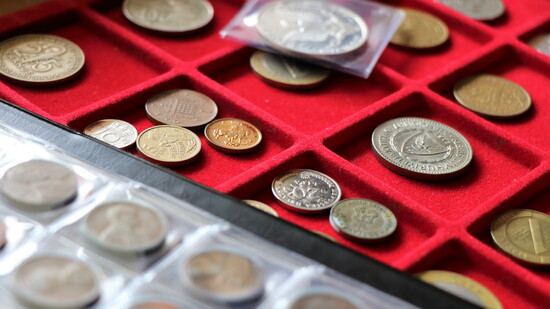
If you have ever glanced at the rare-coin world and thought, I would not even know where to begin, you are not alone. For many Palm Beach investors, especially younger, first-time collectors, numismatics can feel like a closed room: insider language, unfamiliar history, and the nagging worry that you will buy the wrong thing.
But 2026 is shaping up to be a particularly magnetic moment to step through the door. Between milestone anniversaries and a market drawing in new buyers, the category is experiencing a genuine resurgence. Notably, it is happening across both ends of the spectrum, from entry-level collectible pieces to the “top one percent of the one percent” museum-grade rarities.
Alex Young, an expert with Dungeon Luther Rare Assets, says the renewed attention comes down to practicality.
“A lot of people ask why rare coins, or why they should deal with graded coins instead of bullion,” Young says. “People are becoming involved because frankly it's a solid hedge against economic volatility and inflation due to their tangible nature.”
He then points to something Palm Beach investors instinctively understand: discretion matters.
“These are graded assets that exist outside the digital financial system,” he says. “They are very private, and privacy is paramount in any industry.”
In a moment when so much wealth is digitized, trackable, and tied to the same market swings, the appeal of something tangible, finite, and private becomes clear. For many investors, it is not only practical, but increasingly attractive.
Young also notes performance history as another factor drawing attention to the space.
“Historically, graded coins have shown strong long-term appreciation,” he says, while emphasizing that coins are typically part of a diversified portfolio, not a replacement for other assets.
“All of my clients maintain diversification. They hold bullion, numismatics, equities, and other assets.”
Still, he is direct about what he hears most often after clients enter the rare-coin market. It is rarely regret that they purchased coins. Instead, it is regret that they did not acquire more.
“The biggest regret is always not acquiring enough,” Young says.
Why does that happen? According to Young, the answer is simple: access.
“The main barrier is accessibility. When it comes to acquiring assets in the top tier of rarity, access is everything.”
This is where firms like Dungeon Luther distinguish themselves, not by offering widely available inventory, but by sourcing truly scarce, certified pieces.
“We focus on coins that are among the finest known examples, sometimes the first five, the first ten, or the first fifty,” Young says. “In some cases, the population may be one of one, or one of twenty-five.”
Numismatics for Beginners
Alex Young’s simple framework for getting started
For those intrigued but unsure where to begin, Young offers a straightforward approach. The key, he says, is to shift how you think about coins.
“Look at coins the same way you would look at artwork. Bullion is valued by weight and a fluctuating market price. Numismatics on the otherhand are valued by their historical rarity, quality, and demand.”
Start with what interests you
Rather than attempting to predict the market, begin with a category that naturally appeals to you, whether early American coins like silver dollars, historic gold, or modern limited issues. Personal interest often leads to deeper understanding, something you relate to and that knowledge ultimately supports stronger investment decisions.
Find the finest example you can
Once a category is identified, the focus should shift to quality. In numismatics, condition and scarcity are major drivers of value, and the strongest long-term potential is often found in the finest available examples within a given range.
Understand current market value, which is where someone like Alex comes in.
Before purchasing, it is essential to research recent auction results and comparable sales to determine how similar coins are trading in the market. Establishing this benchmark helps ensure informed decisions and prevents overpaying.
Buy strategically
A coin becomes an investment when it is acquired at the right price. Securing a high-quality, scarce piece at a competitive market value can immediately create long-term upside potential and strengthen the overall position.
Think long term
Many investors enter numismatics seeking stability and diversification, and remain for the enduring demand behind truly scarce assets.
“Rare coins have historically protected value during uncertain periods,” Young says. “That is why people stay.”
The Palm Beach Perspective
In Palm Beach, where investing often carries a generational lens, rare coins occupy a distinctive space between financial asset and cultural object. They are not only stores of value, but artifacts of history, craftsmanship, and permanence. Unlike purely digital holdings, they can be held, studied, displayed, and ultimately passed down, linking wealth with legacy in a tangible way.
For many collectors and investors, the appeal extends beyond performance. Rare coins represent continuity, a connection to history, and a quiet form of wealth preservation that has endured across centuries and market cycles.
As interest in tangible, non-correlated assets continues to grow, rare coins are once again finding their place in sophisticated portfolios, not simply as investments, but as enduring symbols of rarity, history, and lasting value.
What’s Hot in Rare Coins
Key trends gaining momentum in 2026
American Silver Eagle Anniversary Issues
The 40th anniversary of the American Silver Eagle is driving strong interest in high-grade and limited-release examples.
Military-Privy Silver Eagles
Special-issue Eagles tied to major U.S. military anniversaries have seen sharp demand and rapid price movement due to limited supply.
Pre-1933 U.S. Gold Coins
High-grade Liberty and Saint-Gaudens Double Eagles remain sought-after as rising gold prices reduce available supply.
Historic Proof Coins
Late 19th- and early 20th-century Proof coins continue to attract collectors for their rarity, craftsmanship, and steady demand.
Iconic Rarities
Legendary pieces such as the 1933 Saint-Gaudens Double Eagle and famous error coins remain enduring cornerstones of the market.
When it comes to acquiring assets in the top tier of rarity, access is everything.