Food is more than physical nourishment. It feeds something deeper—the soul, the spirit, our need to connect. Around a table, we share more than a meal. We share stories, laughter, silence, celebrations and the ordinary details of our extraordinary lives. We pause to notice what is right in front of us, and who is beside us.
Yet it is increasingly easy to eat without really eating: breakfast in the car, lunch at a desk, dinner standing at the kitchen counter or balancing a plate on our lap while scrolling on our phones. Meals can become something we simply get through, rather than experience. In the rush of modern life, nourishment can become survival instead of ritual.
Setting a table—even for one—is a small step towards reclaiming that ritual. It creates a physical invitation to pause. A place to sit, breathe, look up and be present.
Table-setting traditions and etiquette have evolved over centuries, particularly through European dining customs, where the arrangement of plates, utensils, glasses and napkins communicated practicality and social convention. But you don’t need a formal dining room, or a rulebook, to bring the spirit of those traditions home.
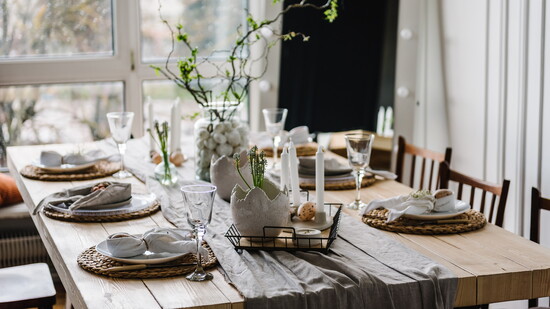
A place setting can be as simple as a plate, fork, spoon and napkin. A placemat isn’t required. Neither is fine china, polished silver or a perfectly matched collection. In fact, some of the most inviting tables are the ones that feel mismatched and collected rather than perfectly coordinated.
A thrift-store tablecloth, a stack of mismatched plates found at a yard sale, colorful glasses, vintage silverware or a handful of flowers clipped from the garden can add personality, whimsy and even become conversation starters. A weathered wooden table can be as beautiful as a formal dining set. Takeout can be served on real plates. A bowl of soup deserves a napkin.
The point is not perfection, it’s intention. Setting a table says “this meal matters, this moment matters, you matter.”
And perhaps that is the part of the tradition worth preserving—not rigid rules about which fork goes where, but simply acknowledging that gathering around food deserves a little ceremony. Society encourages us to hurry, multitask and consume on the go. Creating a place to eat can be an invitation to slow down, to savor the moment and the meal.
So set the table. Light a candle. Fold the napkin. Put away the phone. Whether feeding a crowd or dining alone, give yourself a place to pause—and let the meal begin.
Five Simple Steps to Setting the Table
1.
Start with a clean, welcoming surface. A tablecloth or placemat is optional. Let the table itself be part of the beauty. Add texture with linen, wood, woven fibers or a simple runner, keeping enough open space for food and conversation together.
2.
Place the dinner plate in front of each seat, centered about an inch from the table’s edge. If serving soup or salad, layer the appropriate plate or bowl on top. Choose pieces that feel truly collected, useful, personal, and warm and inviting.
3.
Set the fork to the left of the plate and the knife to the right, blade facing inward. Place the spoon beside the knife when needed for soup. Arrange utensils in the order they’ll be used, working outward from the plate.
4.
Place the napkin wherever feels natural: beside the fork, beneath the utensils, or on the plate. Add a water glass just above the knife. Then thoughtfully bring in something organic—a sprig, flower, fruit or candle—to add warmth without overwhelming the table.
5.
Finish by making the table feel ready, not perfect. Pull out each chair, light the candles, serve the food and invite everyone warmly to sit. Good table etiquette is ultimately hospitality: make people comfortable, encourage conversation and enjoy the meal together.
Setting a table says “this meal matters, this moment matters, you matter.”