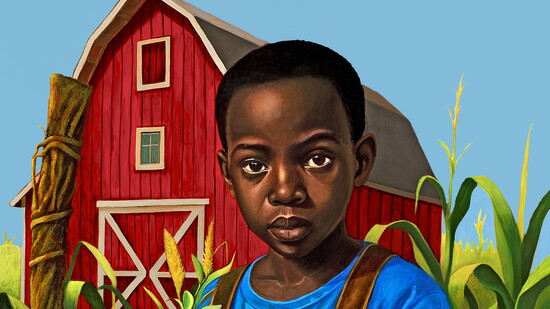
At Agricultural History Farm Park in Derwood, food is everywhere — cornfields, chickens, cows and goats, gardens and barns. During Community Roots, people talked again and again about the work that kept farm life going.
Community Roots is a public art project led by Montgomery County nonprofit Story Tapestries, in partnership with Montgomery Parks. Guided by community input, DMV artist Luis Del Valle is creating painted, diamond-shaped signs that visitors will encounter along the trails.
Before Del Valle decided what belonged on those signs, the partners spent last fall listening — and food led to a larger question: who tended this land?
Across generations, many hands planted, harvested, and cared for animals under very different conditions. The history includes people who were enslaved and whose labor was forced, Black families connected to the land after Emancipation, farm owners and workers, children learning chores, foster children folded into family life, and the park stewards and visitors who use the land today.
Agriculture connects those stories, though the lived experiences vary widely. That multi-layered history is what brought Story Tapestries and Montgomery Parks together.
Story Tapestries uses the arts as a tool for community development, bringing artists and neighbors together to surface stories and help people see themselves in the places where they live. As Shirl Spicer of Montgomery Parks puts it: "Who gets to dictate the stories? Who is the storyteller within the space?" For her, the partnership widens that circle beyond a traditional museum audience.
Community Roots put that philosophy into practice. Visitors could paint, draw, start from one of Del Valle's sketches, or simply talk, and while hands were busy, conversations unfolded. Hundreds stopped at the table during HarvestFest; at a smaller gathering, only a few came, including Debbie, whose grandparents owned the farm when she was a child.
Debbie remembered foster children, cows and chickens, and everyday farm life — like making diapers from a sheet when a baby arrived without supplies. These small memories make a place human.
Children talked about goats and animals; other visitors described walking beside the cornfield, spotting deer, and returning to the park again and again.
Del Valle listened for those details. "Getting the input from the community, that's really what makes the artwork special," he said. He listens for the stories and images that repeat, then works in pencil and digital tools before returning to hand-drawn, painted mixed-media work.
Even the project's shape changed: a single mural became a trail of painted, street-sign-inspired works, so visitors discover it as they move through the landscape.
That seems fitting. No single picture can hold this land's whole history, and a joyful image shouldn't erase the very different conditions under which generations worked here.
Instead, the artwork asks people to notice. The many hands that tended this land did so under profoundly different circumstances, yet they left traces — in food, in fields and buildings, in family stories, and in questions people are still learning how to ask.
Story Tapestries' role isn't to arrive with all the answers, but to create the conversations where stories can meet, then bring them into view with artists like Del Valle and partners like Montgomery Parks.
Someday, a child or family will walk through Agricultural History Farm Park and encounter one of Del Valle's painted signs created in partnership with Story Tapestries. They may stop, look from the artwork to the field around them, and wonder whose hands were here before theirs — and what they, in turn, will leave behind.
To learn more about Story Tapestries and similar projects, go to www.storytapestries.org