For Meg Evans, building Mean Mule was never just about making spirits. It was about creating something with meaning, rooted in family history, hard work, and a deep connection to Kansas City. “This was a major factor in our decision to branch out and do our own thing,” Evans says of her family’s distilling background. “I was inspired by the culture I grew up in, people working with their hands, making things, and doing whatever it takes to build good lives for their families. We wanted to do something interesting with our lives too.”
That story lives on in the name. “My great grandfather was distilling during Prohibition and hid his equipment under a false floor in the barn,” she explains. “When revenuers came looking for it, they were scared off by a mule that started causing a ruckus. We say that mule saved our family from ruin.”
When Evans and her team launched Mean Mule, they were not trying to follow a trend. They were chasing something they genuinely enjoyed. “We wanted to make something we loved and do it our own way,” she says. “Around 2015, agave spirits were just being introduced as craft in the U.S., and we were excited by the idea of trying something different.” That led them to work with 100 percent Blue Weber agave, a choice rooted in both quality and sustainability. “We care deeply about quality, and cutting spirits with grain alcohol was never even a consideration,” Evans says.
Their willingness to experiment has defined the brand ever since. One of their most distinctive offerings, an agave-based gin, came from simple curiosity. “One of our distillers is a huge gin fan and wanted to see how an agave base would work,” she says. “It ended up being warmer and a little sweeter than traditional gin. It is great for people who don’t like something that tastes like trees.” That spirit of experimentation has been there from the beginning. “We built our equipment ourselves, including our stills, and pulled the whole business together on a hope and a prayer,” Evans says. “The question was never tradition versus innovation. It was whether it could be done at all.”
Nearly a decade in, that mindset still shapes how they create. New ideas come from the entire team. “We follow about a six week process with pitches, testing, and feedback,” she says. “Anyone can contribute, which makes us stronger together.” At the center of it all is the experience they create for guests. “People can choose to drink anything anywhere,” Evans says. “Our job is to make them feel a sense of belonging when they are here.”
That sense of community has been tested and proven over time. “We saw it during COVID when we were delivering cocktails to doorsteps,” she says. “And we saw it this past year when our community showed up for us after my husband passed.”
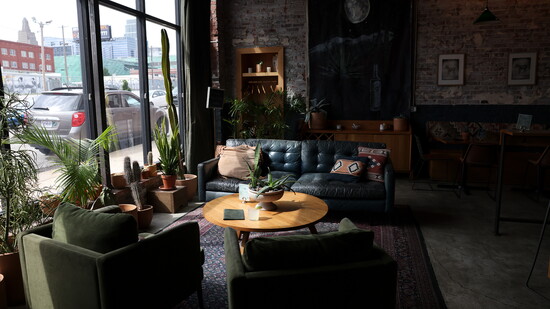
Kansas City itself has played a major role in their growth. “I always say this is the best place to start something,” Evans says. “People here love local. They want to support what is being built in their city, and that has been integral to our success.” That local connection extends into collaborations. “No part of our business would be here without artists and other small businesses,” she says. “From our logo to our furniture, the craftspeople of this city are part of everything we do.”
Running a distillery has not come without challenges. “It is constant adjustment,” Evans says. “You have to stay flexible and build systems that can bend without breaking.” The personal side of the journey has been just as demanding. “We started this when I was 24, and I’ve grown up through every phase of life while running it,” she says. “Being an entrepreneur is like self development on speed. It is much more work than play.”
Still, there are moments to enjoy. “After a long day, I love a spicy margarita,” she says with a smile. “It is just good, no questions.”
Looking ahead, Evans is focused on steady evolution. “Our canned cocktail line has become a big focus as that market grows,” she says. “At the same time, we are continuing to make great drinks in the bar.” Through it all, her vision for Mean Mule remains grounded. “I want us to be remembered as people who really loved Kansas City and contributed to a sense of place and community,” she says. “We’ve seen people meet here, get married, and bring their babies back. Showing up authentically through all of that feels like the most important thing.”