Happy Life Ranch
Beecher, IL
For Gus and Melissa, farming began with a simple question: Where does our food come from, and how is it raised?
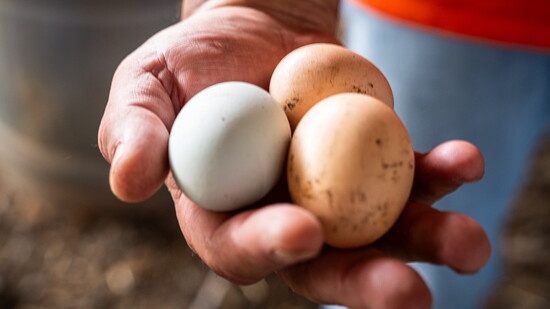
The first-generation ranchers moved to the country looking for a quieter life and a place to raise their family. Their desire to provide healthier food for their own family soon grew into Happy Life Ranch, where they now raise pasture-fed beef, pasture-raised pork, chicken, lamb, and eggs.
Along the way, the ranch became about more than food. Customers became friends, and friends became part of the Happy Life Ranch family—a community centered on clean food, healthy living and reconnecting children and families with the source of what they eat.
Without generations of family farming behind them, Gus and Melissa relied on mentors who taught them how to care for livestock and steward the land. Those lessons helped shape their commitment to regenerative agriculture, healthy pastures and raising animals naturally whenever possible.
Fall brings one of their favorite traditions: welcoming new piglets to the ranch. Watching the animals take their first steps (and sharing those moments with visiting families) is especially meaningful. Those experiences offer children something increasingly rare: the chance to see firsthand where their food begins.
“Ranching isn't just a job,” they say. “It's a lifestyle and a commitment to caring for animals, the land, and the families who depend on both.”
Brandau Farm Stand
Mokena, IL
In 1849, Henrik Brandau purchased the original Brandau family farm in Tinley Park. Nearly 180 years later, the family is still farming the land—and Kyle Brandau is carrying the tradition into its sixth generation.
Kyle grew up watching his grandfather and father work the farm, eventually joining the family’s produce operation himself. His father, Jim, opened the Brandau Farmstand in 1983, with Kyle’s uncle joining him a few years later.
“I pretty much tagged along from the time I could walk,” Kyle says. “I loved growing, picking and selling produce and still do today.”
Much has changed since Kyle’s grandfather farmed with horses. Today, GPS and other technology help make grain farming more precise and efficient, while the produce operation remains decidedly hands-on. During sweet corn season, for example, the crop is still picked by hand every morning.
But some lessons haven't changed. Kyle’s grandfather taught him to work hard, take care of the land, treat people fairly and keep a level head through the inevitable ups and downs of farming.
“Just float like a duck,” his grandfather would say.
Kyle has carried that advice through good seasons and bad—and now his three sons help with the produce operation. Perhaps one of them will become the seventh generation.
“I hope they remember that we worked hard, stayed close as a family, and always did our best to leave the farm better than we found it.”
The Wildflower Farm
Monee, IL
The idea for The Wildflower Farm began with a roadside flower stand and a simple thought: What if people could step into a field of flowers and pick their own?
For owner and manager Anna Carmine, that vision became reality six seasons ago when she and her family found the property where Wildflower Farm now grows multiple acres of flowers. Visitors can wander the fields, fill a container with as many blooms as they can gather and create a one-of-a-kind bouquet of their own.
But the farm has grown into more than a place to pick flowers. Over the years, Anna has added children’s activities, character appearances, food, drinks, fall events and Farm-to-Table dinners, creating a place where families and friends can spend a few unhurried hours together.
The work behind those experiences is decidedly hands-on. Anna selects flower varieties and colors, prepares the fields, plants and fertilizes by hand and spends plenty of time weeding. The farm doesn’t spray for insects or weeds, helping protect the pollinators that visit the fields. And when the weeds inevitably get ahead of her? Some simply become part of the farm’s wild, informal character.
For Anna, that sense of ease is part of the point. She hopes visitors leave with both a bouquet and a memory: a chance to put down their phones, enjoy the outdoors and make time for the people they love.
Many guests now return year after year, sometimes carrying the same jars they used the season before.
“See ya next year” has become one of Anna’s favorite things to hear.
Ditto Foods
Mokena, IL
For Derek Drake and Brad Schiever, growing food has never been the end goal. It’s the vehicle.
The co-owners of Ditto Foods describe themselves as “a community builder first, a grower second,” using hydroponic farming to bring fresh food, education and opportunity closer to the people who need it.
Hydroponics allows Ditto to grow plants without soil, using controlled water, nutrients and light. The approach means food can be grown in places traditional agriculture cannot—from a shipping container to an urban neighborhood—while using significantly less water.
For Drake, the mission is deeply personal. A Ford Heights native, he wants to change the narrative around his hometown by investing in its future. Their work includes a hydroponic farm in Ford Heights, partnerships with schools and community organizations, and efforts to make fresh produce more accessible.
But access, Drake and Schiever emphasize, means more than putting vegetables within reach. It means helping people understand where their food comes from, learn how to grow it and see themselves participating in the food system.
That philosophy extends into Ditto Learning, where agriculture and hydroponics become tools for teaching STEM and creating new possibilities for children and adults.
“Sometimes the vegetables are what get everybody into the room,” they say. “The relationships that grow afterward are the real harvest.”
Ultimately, Ditto Foods hopes to help communities build the knowledge and infrastructure to feed, educate and invest in themselves.