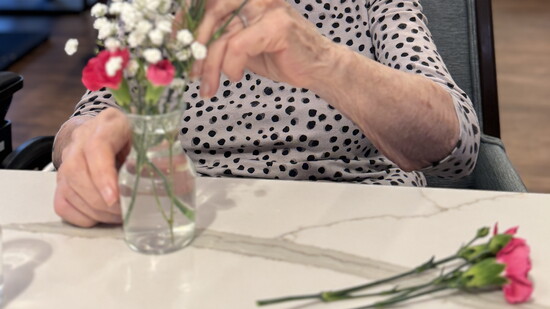
The declining memory of a loved one can be a difficult stage of life to endure. Not only for the senior experiencing it, but also for their adult children. There’s guilt, worry, and tough choices to be made. But one thing remains constant: all parties involved want their loved one to be safe and have their wishes honored.
Thankfully, communities like Sunrise of Mountain Lakes exist not only to care for the elderly who need assistance but also to support families in making informed choices. They have an entire floor and care managers dedicated to providing services for people with dementia, not only to meet their medical needs, but to guide families with respect and dignity.
Barbara Jones, CALA, is the Resident Care Coordinator at Sunrise of Mountain Lakes. It’s her job to facilitate all aspects of life for memory care residents to ensure a high quality of life. She leads programs that stimulate cognitive function and social engagement. She explains the importance of the partnership between residents and their families. “You can help us understand Mom better, because we’re just getting to know her—likes and dislikes—and all her other preferences. That’s where the partnership comes into play.”
Her team collaborates with families to develop individual care plans. “There’s no one-size-fits-all. We’re trying to meet each and every resident’s care based on their needs. We make sure they’re well taken care of, whether it’s painting their nails, talking about the weather, or their families, the staff is really involved.”
The best way to care for someone who is showing signs of memory loss is to recognize the decline. The most common early sign is forgetfulness, but it often manifests into more serious situations. When a senior begins having trouble cooking meals, managing bills, or taking their medication, that’s when adult children need to step in, since the ultimate goal is safety.
But a common error is taking away too much too fast, which can cause significant frustration. Instead, choose one issue at a time. If you’re concerned about them cooking, lead with care and sensitivity. “Maybe tell them the stove is broken, and you’re going to be bringing them dinner for a while,” explains Barbara.
Senior Executive Director Germaine Dignan recommends involving a doctor when bigger issues arise, such as driving. “To avoid straining your relationship with your parent, have a doctor tell them they can no longer drive. Make the doctor the bad person.”
Involving professionals in your loved one’s care is the best route. You’re not taking away freedom; you’re providing a safe environment where they’ll be comfortable and well taken care of. Germaine says, “It’s structured activities throughout the day, hydration, nutrition, and really good care. That’s what matters.”
Barbara adds, “It’s important to choose to bring your parent to a safe environment and have a good quality of life so that you can spend quality time together without worry.”
It’s structured activities throughout the day, hydration, nutrition, and really good care. That’s what matters.