Memphis has always known the power of culture. Music became the city’s language. Its geography was shaped by the Mississippi River. Its moral gravity was defined by civil rights history. Now, with startling ambition, the city is beginning yet another transformation, one that’s rooted not solely in nostalgia but in cultural reinvention.
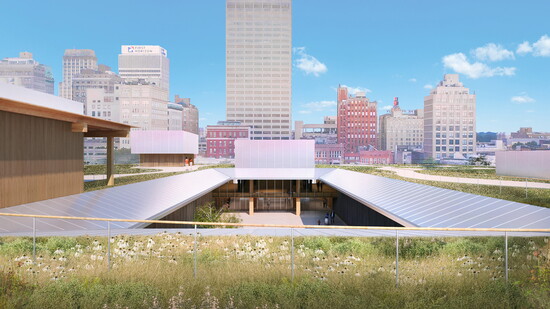
In December 2026, the Memphis Brooks Museum of Art will reopen downtown as Memphis Art Museum, a sweeping, new riverfront campus designed by the internationally acclaimed architecture firm Herzog & de Meuron. The 123,500-square-foot museum will fill an entire city block overlooking the Mississippi River, providing 50 percent more gallery space and greatly expanding public access and community space.
But the real story is larger than a building.
The new museum arrives amid a wave of civic and cultural momentum in Memphis, with the National Civil Rights Museum expanding, the Metal Museum growing and many of the city’s landmark arts organizations marking milestone anniversaries. Together, these projects suggest a city investing in its cultural future with intensified confidence.
For Deborah Craddock, a long-time board member and building committee member for the museum, there’s something very emotional and uplifting about this project. “This moment matters because it reflects what Memphis believes about itself and what it wants to offer the world,” Craddock says. “A great art museum is not only a cultural asset; it is also a signal of confidence, ambition and civic pride.”
That sense of civic identity is built into almost every aspect of the museum’s design.
Unlike many traditional museums that feel elevated above the public, Memphis Art Museum has been intentionally conceived as porous, open and connected to daily life. Its glass façade is entirely transparent so that pedestrians can see into galleries right from the street. Wide walkways tie the city back to the riverfront. More than amenities, these spaces are designed to bring people together and break down the barrier between institution and community, including a central courtyard, rooftop sculpture garden, amphitheater and public plaza.
From an architectural standpoint, the museum will probably become one of the most unique cultural buildings in the American South. It’s one of the first large-scale U.S. museums built with laminated mass timber, a nod to Memphis’ historic role as the “Hardwood Capital of the World.” The building’s warm earth tones evoke the clay banks of the Mississippi River bluff, anchoring the building in the physical landscape of Memphis itself.
The building will reconnect the city to the river in a fundamentally new way, according to the project’s architect, Ascan Mergenthaler, Herzog & de Meuron’s senior partner in charge. “The expansive courtyard with its connection to the river, and the spectacular roof terrace overlooking the Mississippi floodplain are all taking shape,” Mergenthaler reported in a recent museum statement. “Already, the civic nature of the building is tangible.”
That civic ambition matters in a city with a historical identity defined by the river, but often physically cut off from it. The design reorients Memphis toward the Mississippi River with overlooks, framed “river windows” and a rooftop walking trail that turns the landscape itself into part of the museum experience.
Tanya Hart, senior executive vice president and chief human resources officer at First Horizon, views the museum as an investment in downtown Memphis, both culturally and economically. “A vibrant museum downtown supports tourism, strengthens the business environment and adds to the energy that makes people want to live, work and invest in Memphis,” Hart says.
Hart has been engaged with the museum through civic leadership and board service, but she also considers the project through the prism of long-term city growth. To her, the new museum shifts the momentum well outside the arts world. “Strong cultural institutions contribute to a stronger downtown and a stronger city,” she says.
That momentum is already visible. Parallel to its architectural throughline is the museum’s changing curatorial philosophy. Since Dr. Zoe Kahr became executive director, the museum has grown its attendance by 40 percent, doubled its endowment, increased public programming, and added major acquisitions and national partnerships. Along with the downtown move, the institution has received transformational gifts, including 80 works by contemporary Black artists through the Blackmon Perry Initiative.
This is not just an old museum moving to a bigger building. Memphis Art Museum is redefining the role and appearance of a Southern art institution.
Chief Curator Dr. Patricia Lee Daigle has developed a curatorial vision that favors dialogue, community, and contemporary relevance over the traditional chronological presentation. “The construction of a new museum has given us a rare opportunity to not simply display more art, but to reimagine how we think about history, power, creativity and connection,” Daigle says.
The museum’s galleries will be organized into 20 exhibitions, designed to establish conceptual relationships across time, geography and artistic media. Themes of liberation, race, identity, photography, music and Southern history will be interwoven throughout the museum experience.
One of the most anticipated additions is the Hooks Brothers Studio archive, which contains more than 75,000 photographs documenting Black life, excellence, music and community in the American South for much of the 20th century. The archive features iconic images of artists including B.B. King, Count Basie, Billie Holiday, Mahalia Jackson and Al Green, photographed on Memphis’ historic Beale Street.
The museum is also setting up internationally. A cultural partnership with Arts Council Korea is already exhibiting works from the Hooks Brothers archive in Seoul, introducing Memphis’ Black musical and cultural history to global audiences.
Another cornerstone of the museum’s shifting identity is an extraordinary acquisition of stained glass that could become one of the institution’s signature works.
In 2023, the museum acquired a rare 19th-century stained-glass window believed to be one of the earliest known representations in the United States of biblical figures as people of color. Made during the period of Reconstruction, soon after the Civil War, this masterpiece depicts Jesus, Mary, Martha and the Samaritan woman as Black figures. Its historical echoes are deep, especially in Memphis, where religious institutions were major players in the Civil Rights Movement.
The window will serve as the anchor for a gallery that explores ideas of liberation and racial identity in conversation with works that examine the role of jazz and abstraction in Black artistic expression.
These types of curatorial choices reflect a broader trend taking place at Southern museums: an increased openness to centering Black stories, grappling with the nuances of history and creating environments where scholarship and public discussion can coexist.
“Our new campus places art at the physical heart of downtown,” Daigle says. “That makes a statement about the importance of culture, creativity and public access to our community.”
Public access is one of the project’s defining characteristics. The museum announced in June that admission will be free for Shelby County residents forever.
The museum will have six times more free public space compared to the current institution, including community gathering spaces, rooftop walking trails, educational studios and outdoor programming spaces. Festivals, performances, seasonal art installations and public events will take place in the museum’s central courtyard, with the goal of extending the life of the museum beyond regular gallery hours.
That openness, for Craddock, is part of a bigger goal.
“What is so moving to me is that this project has always been about more than a building,” she says. “It has been about creating a civic space where art can shape everyday life.” Perhaps this will be the museum’s greatest contribution.
Memphis has long been known for music, civil rights and culture around the world. Still, its visual arts institutions have tended to draw less national attention than larger Southern cities such as those of Atlanta, Nashville or New Orleans. The new Memphis Art Museum intends to change that. Memphis Art Museum is positioning itself as more than a regional museum; it aims to become a cultural landmark of national relevance by combining ambitious architecture, expanded public access, internationally significant collections and a curatorial vision prioritizing community and contemporary dialogue.
And it is doing so in a way that feels unmistakably Memphis.
That river is still there. Black history remains fundamental to the city. And music, photography, community and public life are still part of the experience. The building materials have a local meaning too.
Well before its doors are officially open, Memphis Art Museum is reimagining what it means to be from the River City. While Memphis’ identity is often tied to its past, the new museum has forward-looking vision, central to a city investing in culture not as mere decoration, but as civic infrastructure.
“This moment matters because it reflects what Memphis believes about itself and what it wants to offer the world,” - Deborah Craddock
“Strong cultural institutions contribute to a stronger downtown and a stronger city.” - Tanya Hart
“The construction of a new museum has given us a rare opportunity to not simply display more art, but to reimagine how we think about history, power, creativity and connection.” - Patricia Lee Daigle