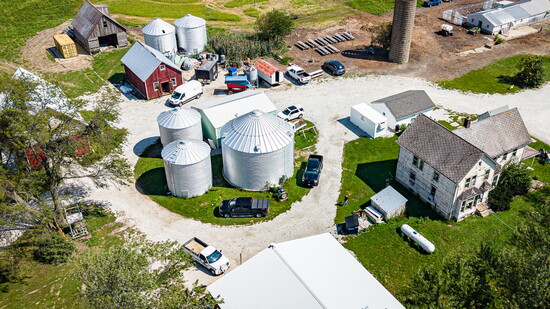
On a busy weekend at Kakadoodle, the Farm Market can feel a little less like a grocery store and a lot more like a gathering place.
There might be a line out the door, children watching the chickens, families stopping to admire eggs that were just laid, and neighbors striking up conversations as they shop. It’s lively, a little unexpected and exactly the kind of experience Marty and his wife never set out to create.
In fact, the Farm Market started as an experiment.
After their flock was lost to bird flu and a quarantine was finally lifted, the couple converted an old milk shed into a self-service farm stand, selling eggs and honey on the honor system. It went surprisingly well. And that success sparked a bigger idea: If Kakadoodle could already bring food from more than 30 local farms to customers’ doors, why not give people a place to experience those farms in person?
Today, the Farm Market has become a place where food has a story—and customers can get a little closer to it.
“We've learned that people don't just want convenient access to local food,” Marty says. “They want to experience where it comes from.”
That philosophy is at the heart of Kakadoodle, which now connects more than 30 local farms with more than 600 homes each week. The idea began with chickens of their own. Marty, a software engineer, and his wife weren't farmers when they started; they simply believed technology could make buying local food as easy as ordering anything else online.
So they raised chickens, and when those chickens began laying, customers could order their eggs online and have them delivered to their homes.
The experiment worked.
As their customer base grew, so did their network of farmers producing meat, dairy, greens and other foods. What emerged was something Marty calls a “modern local food system”: one that pairs the relationships and transparency of local agriculture with the convenience modern families need.
That connection is perhaps most visible at the Farm Market. Instead of simply picking up a carton of eggs, shoppers can look outside and see the chickens that produced them. They can learn about the farmers behind their food and leave knowing a little more about what’s on their table.
For Marty, that matters on a deeply personal level.
Seven years ago, he was diagnosed with stage 4 non-Hodgkin lymphoma. After that experience, he and his wife began thinking differently about food and the agricultural system behind it. Their mission became clear: Make clean, locally produced food more accessible while supporting the farmers doing the hard work of growing it.
And farming, Marty says, has taught them just how hard that work really is. Fires, bird flu and recent storms have all underscored the uncertainty farmers face, particularly those committed to growing food without relying on chemicals.
Supporting them takes a community. Every time a family chooses locally produced food, Marty says, they're helping make that kind of food system possible. It’s changing the way people connect with their food.
Because sometimes, gathering around the table begins much earlier—at the farm, with the farmer, the chicken coop and the people who believe food should be more than something we simply pick up at the store.
N/A