Over the past year, three topics have dominated wellness news: weight loss drugs, protein, and pumping iron. From the sudden shrinking of celebrities to social media influencers showcasing their gym routines and sharing single meals with 200-plus grams of protein, to the casual observer, it would appear as though we’ve become a nation of health addicts.
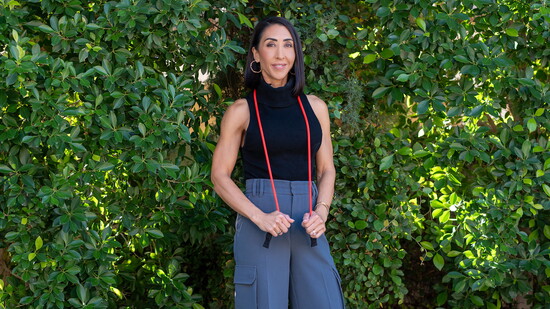
But why are we so obsessed with these issues? To learn more, we reached out to Dr. Yasmin Rahimi (Dr. Yas), a chiropractor and functional medicine practitioner. Dr. Yas is the founder of Backfit Health + Spine, a Valley-wide chain with 12 medical centers that offer an integrative approach to wellness that includes everything from traditional chiropractic care to physical therapy, acupuncture, allergy treatment, hormone optimization, and even diet and weight loss.
One area that’s especially important to Dr. Yas is muscle mass maintenance in women. Whether her patients are taking a GLP-1 for weight loss or struggling to stay fit during menopause, she emphasizes the benefits of building and maintaining muscles for better health.
Is it true that GLP-1s cause muscle loss?
There’s a misconception that GLP-1s waste your muscles. What’s really happening is that people aren’t eating properly when they’re on a GLP-1. Instead of changing what they’re eating, they just eating less, and that’s the problem. They are not changing their nutrition intake but are still eating the same ultra-processed and low-nutrient, low-protein foods.
We like to see patients change what they’re eating to a more protein-forward diet. Women, especially, should eat the minimum recommended grams of protein. That’s going to help maintain their muscle.
How much protein should women eat?
The average American woman weighs 150 pounds and is 5-foot, 4-inches tall. For her to maintain muscle and metabolic resilience, she needs a minimum of 100 grams of protein per day in her diet. Ideally, it should be 1 gram per every pound of ideal body weight, but that’s very difficult. Most people, especially if they’re on a GLP-1, just can’t eat that much. As long as you hit 100 grams, you’ll maintain your muscle and become metabolically resilient.
What does it mean to be metabolically resilient?
It means that you are not spiking your insulin, and you're not increasing the amount of sugar. Protein is made up of amino acids, and amino acids are what build muscle. The more muscle you have, the more your muscle acts like a sugar sponge. If you have a lot of muscle on your frame, you're able to eat anything, because your body, your muscle, will absorb the sugar like a sponge. This allows you to be metabolically flexible and resilient. If a person does not have enough muscle on their frame, there's nowhere for any of the carbohydrates or any of the sugars to get processed and stored as glycogen. So what happens is sugar gets dumped into the bloodstream, and that's when we start to get the initial lab markers of high A1c levels, and then eventually get diagnosed with pre-diabetes, followed by diabetes.
Are protein powders, drinks, or supplements effective?
I always recommend that people eat real food, but sometimes it's hard to meet [daily protein goals] when you're eating real food. If you must supplement with a protein powder, then make sure to look at the label for isolated whey or hydrolyzed beef or a minimally processed pea protein. Try to use one that only has maybe three or four ingredients at best, with minimal sugar and minimal chemicals. I wouldn’t skip a meal and drink a shake instead, but if you can't get your dietary protein amounts through your meals, then adding a shake here or there in addition to your meals in order to meet that extra 30 grams is always a good idea.
In addition to being used for weight loss, can GLP-1s help women going through menopause?
A GLP-1, when microdosed correctly, can be absolutely crucial in managing inflammation, cognitive support, and body recomposition. As we go through perimenopause and menopause, our gut microbiome changes, and we lose those naturally occurring peptides. And then, on top of that, we've got a lowering of estrogen. Estrogen is the inhibitor of inflammatory cytokines that float around in the body, blocking the inflammation from setting in. Less estrogen means increased inflammatory markers, then increased triglycerides. Finally, it snowballs into having gut dysbiosis and insulin resistance. In small doses, GLP-1s help prevent the pre-diabetes that occurs with perimenopause and menopause. It is also very cardio-protective.
Do women who take GLP-1s to treat menopause symptoms need to worry about muscle mass?
Women who are going through perimenopause and menopause should be strength training and eating protein whether they are taking a GLP-1 or not. The average woman gains about 5 to 8 pounds during menopause because she’s not addressing her dietary intake and she’s not adding progressive overload strength training to her routine. Instead, she’ll try to eat less and do more cardio, which actually increases cortisol and inflammation, which results in more weight gain. I always tell my menopause patients to minimize cardio and strength train at maximum weight for six to eight reps. Cardio burns muscle, while strength training builds muscle.
What is progressive overload strength training, and why is it important?
It’s the six to eight reps at max weight. If you can’t do more than eight reps, then you know you’re at the right weight. The biggest misconception is that we must build endurance in our muscles when we really have to build strength. Women lose 3% to 8 % of their muscle mass every decade after they turn 30. Once they’re post-menopausal, it’s 1.5% annually. So, we have to constantly focus on building muscle.
When should women start strength training?
As early as they can. When you’re in your 20s, you should focus on building muscle because once you hit 30, it starts to go downhill. I’m glad that the paradigm for young women has shifted toward being strong rather than being skinny. It’s a nice change that I’m seeing in young people.
This year, BackFit, in partnership with Fit Body Boot Camp, will begin offering strength-focused classes specifically for middle-aged men and women who are going through a hormonal transition or who are taking a weight loss medication. For more information, visit backfithealth.com or email dryasmin@backfithealth.com.
If a person does not have enough muscle on their frame, there's nowhere for any of the carbohydrates or any of the sugars to get processed and stored as glycogen.
The average American woman weighs 150 pounds and is 5-foot, 4-inches tall. For her to maintain muscle and metabolic resilience, she needs a minimum of 100 grams of protein per day in her diet.