There is something instinctive about gathering around a fire.
Long before gas ranges, induction cooktops and temperature-controlled ovens, fire was the center of the home. It provided warmth, light and, most importantly, the means to prepare a meal. Cooking was not something that happened in the background while dinner was being made. It was an essential part of daily life—one that required patience, skill, attention and an intimate understanding of fire.
Today, open-hearth and campfire cooking are finding their way back into the American culinary conversation. For some, it is a connection to history. For others, it is an opportunity to slow down. And for an increasing number of home cooks, it is simply a more visceral way to experience food.
In Huntsville, few places demonstrate that connection as vividly as Burritt on the Mountain.
Perched atop Round Top Mountain, Burritt’s Historic Park recreates aspects of 19th-century rural life through authentic historic structures and living-history interpretation. Cooking over an open hearth is among the skills demonstrated there, allowing visitors to see not simply what people ate, but how much work went into putting a meal on the table.
BEFORE THE STOVE
For generations, the hearth was the heart of the household.
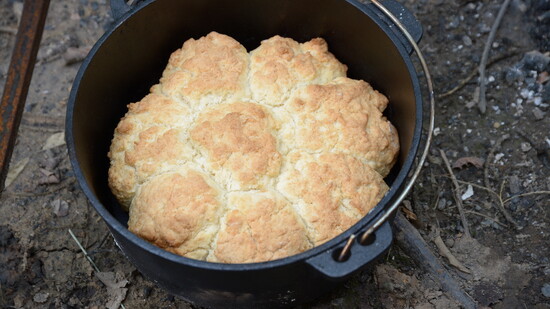
In early American homes, the fire provided the heat necessary to boil, simmer, roast and bake. Cast-iron pots could be suspended from cranes or hooks, placed directly into hot coals or set on trivets. Skillets and griddles could be positioned over the flames. Dutch ovens could sit among the embers, with additional coals placed on their lids to create an oven-like environment.
There was no dial to turn.
The cook learned to read the fire.
The size and type of wood mattered. The placement of coals mattered. Weather, humidity and even the particular fireplace could affect the heat. Instead of setting an oven to 350 degrees, cooks developed a tactile understanding of temperature—learning from experience how close a pot needed to be to the fire and how long a dish could remain over the coals.
Burritt describes the difference between modern cooking and 19th-century cooking in strikingly practical terms. During its Fire on the Mountain program, the museum has explained that there was “no stovetop to cook multiple menu items at once” and “no oven to pre-heat and set to the right temperature.” Cooking could occupy a significant portion of the day.
That reality makes today’s convenience-driven kitchens seem almost astonishing.
COOKING WITH THE FIRE, NOT JUST OVER IT
Open-hearth cooking is not simply placing a pot over a fire.
It is learning to work with different forms of heat.
A cook might use the flame for one task, glowing embers for another and a cooler portion of the hearth for something that required slower cooking. Roasting could take place near the fire, while a pot of beans or stew might simmer for hours.
The same principle applies to today’s campfire cooking.
Whether cooking breakfast in a cast-iron skillet, roasting vegetables in foil, baking bread in a Dutch oven or slowly cooking a pot of chili, the cook becomes responsible for creating the right conditions rather than simply selecting a temperature.
That is part of the appeal.
There is a little uncertainty involved—and that uncertainty makes the experience feel alive.
FROM NECESSITY TO EXPERIENCE
The fascinating thing about open-fire cooking is that something once associated with necessity has become a form of recreation.
Today, people seek out campfire cooking even though they have perfectly functioning kitchens at home.
Why?
Part of the answer is sensory.
Food cooked over wood absorbs the aroma of the fire. Cast iron develops a deep relationship with heat. Smoke becomes an ingredient. The sound of a skillet sizzling outdoors is different from the sound of a skillet on a kitchen range.
But the appeal goes beyond flavor.
Cooking over a fire takes time.
And time has become something of a luxury.
A campfire meal encourages people to put down their phones, gather around a table or a picnic blanket and participate in the process. Someone tends the fire. Someone chops vegetables. Someone pours a drink. Someone watches the pot.
The meal becomes an event rather than simply the end result.
THE BURRITT CONNECTION
Burritt on the Mountain has turned this historical practice into an immersive educational experience.
Its Historic Park contains six historic 19th-century homes representative of rural life in the Cumberland Plateau, including the Joel Eddins House, described by the Encyclopedia of Alabama as the oldest intact log cabin in Alabama, dating to approximately 1810. Living-history interpreters demonstrate skills associated with 19th-century farm life, including cooking over an open hearth.
Burritt’s current programming demonstrates that this isn’t simply a static museum exhibit.
In February 2026, the museum presented Makers on the Mountain: Open Hearth Cooking, inviting visitors into the Smith-Williams and Chandler Cabin kitchens to watch historic recipes being prepared over crackling fires. Burritt described the experience as a way to experience the “sights, sounds, and smells of history.”
That sensory component is important.
You don’t simply read about historic cooking at Burritt.
You can smell the wood smoke.
You can hear the fire.
You can watch a cast-iron pot hanging over the heat.
And you can begin to understand the amount of knowledge required to turn a pile of wood and a few basic ingredients into dinner.
FIRE ON THE MOUNTAIN
Burritt’s annual Fire on the Mountain event takes that experience even further.
In March 2026, the event brought open-hearth cooking, blacksmithing and other demonstrations throughout the Historic Park. Historic cooks prepared traditional recipes over open fires and a cast-iron cook stove while visitors could also experience campfire basics and other traditional skills.
The program illustrates something bigger about the renewed interest in traditional cooking.
People aren’t necessarily trying to abandon modern life.
They are looking for pieces of an older life that still feel meaningful.
The same impulse can be seen in the resurgence of sourdough baking, gardening, canning, woodworking and other hands-on traditions. There is satisfaction in making something with your hands—and in understanding how something was done before convenience changed the process.
THE MODERN CAMPFIRE KITCHEN
The contemporary version of open-fire cooking can be surprisingly sophisticated.
Campfire cooks today use cast-iron Dutch ovens, carbon-steel pans, portable grills and specialized fire pits. Recipes have moved well beyond hot dogs and marshmallows.
A campfire menu might include steak with fire-roasted vegetables, Dutch-oven bread, peach cobbler, cast-iron cornbread or a breakfast skillet layered with eggs, potatoes and sausage.
The technique is still fundamentally simple:
Build the fire. Let the wood burn down. Create a bed of coals. Manage the heat. Cook patiently.
The simplicity is precisely what makes it appealing.
A SLOWER WAY TO EAT
Perhaps the greatest lesson of open-hearth cooking isn’t about food at all.
It is about pace.
Our modern kitchens are designed around efficiency. We preheat quickly, cook quickly and clean quickly. Open-fire cooking resists that rhythm.
The fire determines the schedule.
Dinner happens when the fire is ready.
That can be frustrating if you’re hungry—but wonderfully restorative if you’re not in a hurry.
And maybe that’s why an ancient cooking method feels surprisingly modern.
People are craving experiences that require their attention.
They want to gather around something real. They want to watch a process unfold. They want to know where their food came from and how it was made. They want meals that create memories instead of simply filling a plate.
At Burritt, the crackle of the fire connects those desires to Huntsville’s past.
For the families who once depended on their hearths, fire was essential.
For us, it can be something else: a way to reconnect.
A skillet over glowing coals becomes more than a cooking vessel. A cast-iron pot becomes more than cookware. A fire becomes more than heat.
It becomes the center of the gathering again.
And around that fire, food does what it has always done best—it brings people together.
There is something instinctive about gathering around a fire.