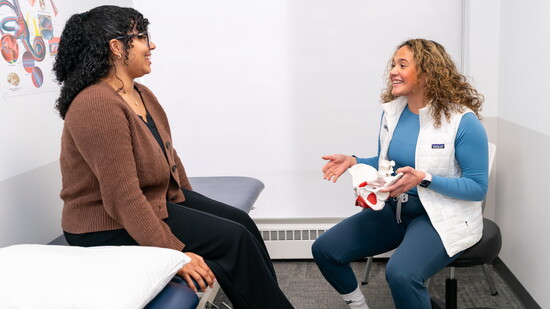
For years, many people quietly accepted problems such as pelvic pain or discomfort after childbirth, as an unavoidable part of life. Increasingly, however, healthcare providers are pointing to a solution that remains underused: pelvic floor physical therapy.
The specialized form of rehabilitation focuses on strengthening and coordinating the muscles that support the pelvic floor. Those muscles play a critical role in everyday functions including sexual health and core stability.
“When these muscles are too weak, too tight or not working together properly, people can experience a range of symptoms,” said Lauren Cummins, a physical therapist at FYZICAL Therapy & Balance Centers in West Hartford.
Lauren specializes in pelvic floor rehabilitation and has spent the past year working closely with pelvic floor therapy patients and says the need for treatment is growing rapidly as awareness spreads.
“I got really passionate about pelvic floor therapy during college after a lecture on the topic. It made me very curious about the field and the impact it can have on people’s quality of life.”
While pelvic floor therapy is often associated with women’s health, Lauren says the therapy benefits men as well.
“A lot of the conversation is focused on women, especially after pregnancy. But men get excluded from the discussion because pelvic floor therapy just isn’t that well known.”
At FYZICAL Lauren treats men experiencing urinary urgency or stress incontinence —which can occur during coughing, sneezing or laughing — as well as prostate cancer survivors who may struggle with bladder control after treatment.
For women, common reasons for referral include postpartum recovery, pelvic pain, sexual health issues and chronic gynecological conditions such as endometriosis. Patients recovering from abdominal or pelvic surgeries may also benefit from treatment that addresses scar tissue and muscle dysfunction.
Pelvic floor therapy begins with a detailed evaluation to determine whether the muscles are weak, overly tight, or lacking coordination, Lauren says.
“If we’re dealing with incontinence, most of the time it’s related to strength or tightening issues. Our exercise programs focus on building strength, coordination and endurance.”
Treatment often includes pelvic floor contractions combined with diaphragmatic breathing, along with functional movements such as squatting while engaging the pelvic muscles. Because the pelvic floor works closely with surrounding muscle groups, Lauren says, therapists also focus on strengthening the glutes, hip abductors, quadriceps, hamstrings and core.
“The core and the pelvic floor really go hand in hand.”
Some exercises can look unconventional. In certain cases, patients may even use a small trampoline to practice pelvic floor contractions during gentle bouncing movements, helping train the muscles to respond during everyday activities.
Since joining the West Hartford clinic, Lauren says demand for pelvic floor services has steadily increased. Just two months ago she was seeing four to six pelvic floor patients each day, and she expects that number to continue growing.
“My goal by the end of the year is to have a full schedule devoted to pelvic floor therapy. It’s really becoming my niche and my specialty.”
Having a pelvic floor specialist on staff is still relatively uncommon among physical therapy centers. She credits the clinic’s leadership with supporting her efforts to expand the program while she works toward advanced pelvic floor certification.
“A lot of people think these issues are just something they have to live with. But in many cases, pelvic floor therapy can make a huge difference.”
Fyzical West Hartford
61 South Main St.
Phone: (860) 733-1200
Online: Fyzical.com/west-hartford-ct
Email: westhartford@fyzical.com
"A lot of people think these issues are just something they have to live with. But in many cases, pelvic floor therapy can make a huge difference." Lauren Cummins