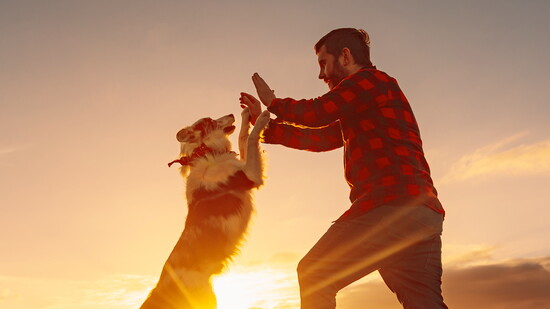
Long before pets slept on our couches or appeared on our holiday greeting cards, humans were forming close bonds with animals that provided both protection and companionship. People and animals can often form bonds that feel as strong as the bonds between fellow humans—the dog who waits at the door for their caretaker after a long day, the cat who treats its owner’s head like a lounge chair, or the rabbit that hops out of hiding when it recognizes a familiar face. Animals have a remarkable ability to become cherished members of the family.
Meaningful relationships with pets don't happen automatically or by accident. Animal behavior experts say that trust, communication, and consistency are the foundation of a strong human-animal bond. Just like any healthy relationship, the connection between pets and their caretakers grows through time, understanding, and shared experiences.
For many new pet owners, one of the biggest surprises is learning that affection and trust aren't always immediate.
"One misconception we hear from people is the assumption that their new animal will bond with them right away," said Alex Ferrente, a certified dog behavior consultant and owner of Young Lion Training in Rochester. In her professional capacity, she often encounters new dog owners who become frustrated when their new puppy or rescue dog doesn’t immediately express affection or loyalty.
"In reality, some of them will need time, space, and positive reinforcement in order to feel safe and build a strong relationship with their caretakers,” Ferrente said. The relationship almost always strengthens over time once the baseline level of safety and mutual trust is firmly established.
Research on animal behavior has shown that animals form secure attachments through repeated positive interactions. When pets consistently experience safety, predictability, and rewards in the presence of a caregiver, they learn to associate that person with comfort and security.
Experts like Ferrante point to several evidence-based strategies that help strengthen the bond between human caretaker and animal companion.
Respect Individual Personalities
Just as no two people are exactly alike, every animal has a unique temperament. As a species, dogs are uniquely primed to bond with humans. (Studies have demonstrated that canine brains release oxytocin, also known as the “bonding chemical,” when dogs make eye contact with people.) Even so, individual dogs vary in their inclination toward human bonding. Some dogs seek attention from everyone they meet. Others need time to warm up to new situations. One of the most effective ways to build trust is to meet an animal where they are emotionally rather than expecting them to fit our expectations.
When caretakers learn to recognize and honor an animal's preferences, working with them rather than against them, the relationship often becomes stronger and more secure.
Learn Their Language
Animals communicate constantly, even when they aren't making a sound. Tail position, ear movement, posture, facial expressions, and activity levels can provide valuable clues about how a pet is feeling. Learning to recognize these signals can help owners respond appropriately before stress, fear, or frustration escalate.
For example, a dog that turns away, licks its lips, or yawns repeatedly may be signaling discomfort. A cat with flattened ears and a twitching tail may be asking for space.
Paying attention to body language allows owners to become more responsive partners in the relationship. Over time, pets learn that their signals are understood, which can increase trust and reduce anxiety.
Use Positive Reinforcement
At Young Lion training, Ferrante uses only positive reinforcement techniques. She strongly believes that “fear and coercion [are] not necessary in training or behavior modification." In fact, the research shows that fear-based techniques often have the reverse effect, making pets less trustful and more defensive.
Instead, experts advise pet owners to reward behavior they want to see more often. Treats, praise, toys, play, or access to favorite activities can all serve as rewards. Pets learn best when expectations are clear and rewards are delivered promptly, helping pets associate their caretakers with positive experiences.
Training sessions don't always have to be lengthy or formal. A few minutes each day spent rewarding good behaviors can strengthen the bond between animal and owner.
Create Predictability
Much like humans, animals thrive when they know what to expect.
Consistent feeding schedules, regular exercise, familiar routines, and dependable interactions help pets feel secure. Predictability reduces stress because animals can anticipate what comes next in their environment.
This doesn't mean every day must be identical. Instead, maintaining reliable patterns helps establish a sense of safety. For dogs, daily walks and play sessions can become important bonding rituals. For cats, regular feeding times and interactive play can provide similar benefits. If your pet enjoys cuddling or being brushed, these can become meaningful moments of connection as well.
Be Patient Through Life Changes
Major transitions can temporarily affect a pet's behavior and confidence. Moving to a new home, adding a family member, adopting a new pet, or changes in routine can all create stress. During these periods, patience becomes especially important.
Animals may need extra time to adjust, and some behaviors that appear stubborn or disobedient may actually be signs of uncertainty. Providing reassurance, maintaining routines when possible, and rewarding calm behavior can help pets navigate change more successfully.
When we learn to see the world through our pets' eyes, we become better caretakers. In return, our animals offer something remarkable: companionship, loyalty, comfort, and a connection that enriches everyday life.
Anyone who’s shared their home with a beloved pet knows first hand, a strong bond between animal and caretaker is more than following a prescribed training plan or schedule. It's a partnership built on trust, compassion, and plenty of playful fun.
Pull Quote: "One misconception we hear from people is the assumption that their new animal will bond with them right away."