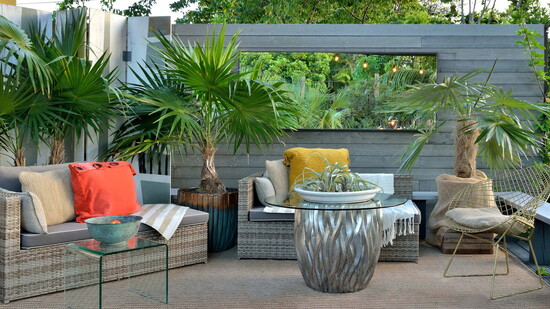
South Florida’s climate demands a different approach to landscape design — one rooted in resilience, sustainability, and a true understanding of place. The heat is relentless, the salt air unforgiving, and many traditional landscape choices require constant maintenance simply to survive. For Benjamin Burle of Yates Burle Studio, the solution is not more spraying, trimming, or replacing. It is a return to what naturally belongs here.
A fifth-generation Floridian raised between Miami and Key West, Burle designs sustainable native gardens for high-end residential properties from Palm Beach to the Keys. Working alongside his mother, artist and designer Debra Yates, he approaches landscape architecture as both ecology and art. Together, they aim to prove that native and indigenous plants can be every bit as refined and sophisticated as the clipped hedges and imported palms long associated with luxury Florida homes.
“We’re planting with the future in mind,” Burle says. “Native gardens require less water, fewer chemicals, and less maintenance, but they also bring life back into the landscape. They create habitat for songbirds, butterflies, bees, and pollinators while giving people a more authentic connection to Florida itself.”
Below, Burle shares some of his favorite indigenous plant selections based on geography, climate, and lifestyle.
On the Oceanfront
For properties directly along the coastline, Burle recommends species that can withstand salt spray, heavy winds, and the harsh exposure of oceanfront living. The coastline, he notes, is also one of Florida’s most biodiverse environments, making native restoration especially meaningful there.
Silver Palm
Rare, sculptural, and highly salt-tolerant, the silver palm adds dramatic architectural beauty while thriving in difficult coastal conditions.
White Indigo Berry
This resilient coastal shrub grows naturally near the dunes and creates a softer, more organic alternative to traditional hedges.
Near the Ocean
For homes close to the water but not directly on the beach, Burle favors species that tolerate salty air while still offering privacy, beauty, and ecological value.
Florida Sea Lavender
Delicate and silvery in appearance, Florida sea lavender thrives in coastal environments and helps stabilize sandy terrain.
Black Ironwood
A favorite for privacy planting, black ironwood features a beautiful natural form and dark berries that attract birds, all with remarkably little maintenance once established.
Inland Properties
Farther west, where homes are buffered from direct ocean spray, Burle shifts toward larger canopy trees and layered privacy planting.
Pigeon Plum
Excellent for natural privacy screens, pigeon plum offers a softer, more organic alternative to traditional hedge walls.
Crabwood Tree
Crabwood trees provide shade, structure, and resilience while helping create lush landscapes that feel distinctly Floridian.
For City Dwellers
Even urban homeowners and condo residents can incorporate indigenous planting into balconies, rooftops, and compact city gardens.
Everglades Palm
Low-maintenance and highly adaptable, the Everglades palm thrives in urban conditions and works beautifully in planters and smaller spaces.
Satin Leaf Tree
One of Burle’s favorites for city environments, the satin leaf tree features glossy green leaves with a shimmering bronze underside and can withstand both hurricanes and urban wear-and-tear.
Burle hopes more homeowners begin to see native landscapes not as a compromise, but as a more thoughtful and sophisticated approach to design. To him, sustainable gardens are not only environmentally responsible — they are richer, quieter, and more alive.
“Every indigenous species you add back into the landscape helps reclaim a small piece of what Florida once was,” he says. “And in doing that, you create something that feels far more authentic to this place.”