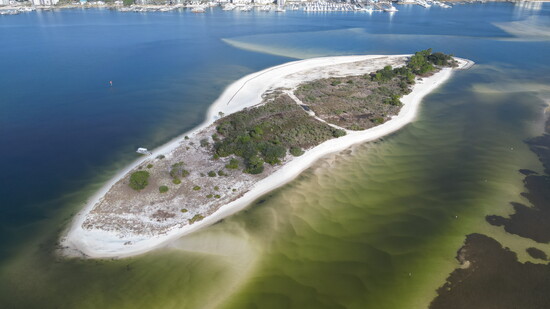
Private and public partners have joined forces to ensure the Perdido Islands remain a cherished haven for both people and nature. The Lower Perdido Islands, consisting of Bird, Robinson, and Walker Islands, are nestled near Perdido Pass in Orange Beach, Alabama. These islands, surrounded by beautifully clear waters, sandy beaches, and unique wildlife, have become increasingly popular destinations. Each year, Baldwin County welcomes roughly 8 million visitors, many of whom are drawn to these islands. During holidays, the islands may host over 500 boats simultaneously, a testament to their allure. However, this popularity has led to concerns about wildlife habitats and water quality, with issues like erosion from boat wakes, seagrass damage, disturbance to nesting birds, and increased marine debris and human waste.
To tackle these challenges, the City of Orange Beach, Moffatt & Nichol, Olsen Associates Inc., and The Nature Conservancy (TNC) collaborated in 2017 to create a comprehensive management plan. This plan, which was completed in 2022, outlines conservation strategies and restoration concepts to protect the islands and their valuable habitats for the future. With funding secured from the Bipartisan Infrastructure Law, Inflation Reduction Act, and Natural Resource Damage Assessment funds from the Deepwater Horizon spill, administered by NOAA, the partners have made significant progress.
The conservation goals focus on protecting marsh, forest, and seagrass habitats, which support a diverse range of wildlife. The islands are home to a variety of shorebirds, wading birds, and waterfowl, including tricolored herons, reddish egrets, snowy egrets, white ibis, and brown pelicans. Great blue herons, great egrets, clapper rails, willets, and woodcocks also forage in the marsh areas, creating a vibrant ecosystem. Migratory waterfowl and neotropical migrants use the area seasonally, adding to the biodiversity. The surrounding seagrass beds provide critical nursery areas for coastal finfish and shellfish like speckled seatrout, redfish, Atlantic croaker, shrimp, and blue crabs.
Due to the wide variety of biodiversity found on and around the islands, TNC’s conservation goals emphasize protecting and sustaining wildlife habitats while maintaining recreational opportunities for the public. Achieving these goals requires pursuing strategies that focus on habitat protection and raising public awareness of current rules, regulations, and the importance of the unique habitats of the Lower Perdido Islands. Some of the conservation strategies highlighted in TNC’s plan include:
- Planting trees and shrubs for nesting and roosting wading birds.
- Controlling vegetation in shorebird nesting and loafing areas to encourage natural behaviors.
- Cordoning off areas to maintain a respectful distance between birds and humans.
- Installing informative signs for public awareness (seagrass protection, no motor zones, no dogs, trash disposal, etc.).
- Enforcing rules and regulations to protect natural resources and ensure public safety.
While TNC’s conservation strategies focus on management, the restoration concepts propose habitat restoration actions developed by a team of ecologists and engineers. These concepts aim to provide large-scale, sustainable options while ensuring space for recreation. Informed by stakeholder and public feedback, hydrodynamic modeling, morphological modeling, a series of surveys, design charrettes, and existing conditions, the team developed these priority restoration concepts to push towards 100% designs.
This work focused on Walker Island and Robinson Island, while maintaining Bird Island as is for recreational use. Robinson Island's nearshore areas and beaches will be open to the public while Walker Island will remain off limits to foot traffic just like before restoration efforts.
Once TNC and partners developed conservation and restoration goals for protecting valuable island habitats while maintaining recreational space, Moffatt & Nichol led a rigorous design process to bring ideas to reality. This involved topographic and bathymetric surveys, cultural resource surveys, hydrodynamic modeling, sediment transport studies, water level monitoring, and seagrass assessments.
On Robinson Island, the team approached designs with the goals of addressing degraded marsh habitats, increasing areas of marsh and bird habitats, and reducing erosion to balance wildlife and public uses. Reinforcing the existing revetment on the north end will provide protection from the strong currents that erode the island. Placing a thin layer of sediment in strategic locations will also help increase the marsh platform for improved habitat health. A protective dune feature on the west end will reduce erosion, provide recreational space, and protect the adjacent marsh habitat. Additional sediment placement along the eastern side of the island will cover roots exposed due to storm activity and improve upland habitat quality while stabilizing the shoreline. Overall, restoration efforts will provide almost three acres of newly created and/or restored marsh habitat and more than four acres of dune habitat.
For Walker Island, Moffatt & Nichol designed two restoration placement areas to provide significant habitat for birds and other wildlife since it is off limits to the public. The western placement area created over five acres of high marsh habitat, around one acre of upland habitat, and some subtidal shoal habitat. The eastern placement area will address degradation of marsh habitat and maximize dune and scrub shrub habitat to restore habitat lost over time due to storms and other impacts. This results in over eight acres of high marsh and over three acres of upland habitat.
Each design aims to minimize impacts to existing seagrass beds surrounding the Robinson, Walker, and Bird Islands. Specifically, the “hummingbird” shape of the western placement area and the “kidney bean” shape of the eastern placement area on Walker Island are designed to protect and reduce impacts to valuable seagrasses and allow room for their expansion. In these areas, the team installed native plants such as sea oats, marsh grasses, and other species following sand placement. These plants will help hold the new material in place, reduce erosion on the islands, and provide shelter and foraging areas for both fish and wildlife species.
While the design team made every effort to minimize impacts to seagrass beds, a few patches of seagrass existed within the sediment placement areas. In partnership with the U.S. Army Corps of Engineers and NOAA’s National Marine Fisheries Service, the partners prepared documents outlining the plan to relocate seagrasses within impact areas and monitoring transplanted sods (plants, roots, and sediment) throughout the life of the project. These seagrass beds are extremely valuable as they have been steadily expanding over 20+ years, contrary to other areas exhibiting drastic declines in seagrasses worldwide. Thus, our project is doing everything possible to make sure this positive trend continues.
To prepare for construction, TNC, the Dauphin Island Sea Lab, CSA Ocean Sciences, Inc., Moffatt and Nichol, and many volunteers moved over 4,000 sods of shoal grass (Halodule wrightii) in July and August 2024 from sediment placement areas. The team placed the sods adjacent to the southern edge of an existing healthy seagrass bed located within a protected no-motor zone and outside of the construction footprint. The sods were planted in a checkerboard pattern to cover approximately 1.5 acres. The team will monitor the transplants for five years for survivability, adding additional plants if coverage declines.
In 2025, TNC and partners, together with Orange Beach-based MD Thomas Construction, realized the completion of this important and ambitious project. Restoration began at Robinson Island and then moved to Walker Island. During this time, dredging pipelines impacted navigation, and boaters were encouraged to navigate the area cautiously around buoys and signs marking the construction areas. Throughout this process, TNC posted signage at the local boat ramp and provided updates about the status of construction activities. For the record, the project has been completed.
The completion of this project marks a significant achievement in preserving these islands for future generations, balancing the needs of nature and recreation. The collaborative effort between public and private partners has not only helped protect the unique ecosystems of the Perdido Islands but also ensured that these coastal gems continue to be a source of enjoyment and natural wonder for all who visit. By safeguarding these habitats, the project contributes to the larger goal of maintaining biodiversity and promoting environmental sustainability in the region. The work done on the Perdido Islands serves as a model for other coastal conservation efforts, demonstrating the power of collaboration and innovative thinking in tackling environmental challenges. As visitors continue to enjoy the beauty of these islands, they are also reminded of the importance of preserving and respecting the natural world that surrounds us.
“We extend our heartfelt thanks to Katie Baltzer, Coastal Projects Manager, for sharing her insights and helping us illuminate the crucial conservation efforts on the Perdido Islands.”