When Juliette Blake talks about technology, she doesn't start with screens.
She starts with girls.
Long before she became the founder of Moxies, a groundbreaking platform designed to help girls build confidence and healthy digital habits, Blake was already thinking about how to create spaces where young girls could feel seen, supported, and empowered.
In many ways, her life's work has come full circle.
"I've always been building for girls," she says. "My first company was created to help my younger sister and her friends navigate middle school. Today, as a mom of three, I'm building for my own children and their generation."
That mission has guided nearly every chapter of Blake's entrepreneurial journey.
Growing up in Old Greenwich and graduating from Greenwich High School, she developed an early fascination with creating communities. While many teenagers were simply trying to survive middle school themselves, Blake was already identifying opportunities to make life better for others.
It started with her younger sister.
As Blake watched her sister and her friends encounter many of the same social challenges she had experienced herself, she began searching for ways to help. The internet was still in its infancy, and while most people were only beginning to understand its potential, Blake saw an opportunity.
Instead of creating a magazine for girls, she built a website.
What began as a hobby eventually evolved into Miss O and Friends, one of the largest online communities for girls in the world.
The platform attracted millions of users, secured investment from Procter & Gamble, and ultimately expanded into entertainment through a groundbreaking partnership with YouTube Originals and Disney.
One of the projects Blake remains most proud of is Hyperlinked, a family-friendly series intentionally designed to challenge stereotypes and encourage girls to see themselves in new ways.
Before a single script was written, Blake assembled an advisory board of educators, leaders, and experts to ensure the messaging reflected values she believed mattered: entrepreneurship, positive female friendships, STEM education, and girls supporting one another.
The results exceeded expectations.
An independent study later found that girls who watched just one episode of the series were 11 percent more likely to pursue a career in computer science than girls who had not watched.
For Blake, the experience reinforced a powerful truth.
"When we build with intention, we can have a real impact on how girls see themselves and what they believe is possible."
That realization would eventually become the foundation for Moxies.
As both a founder and a mother, Blake found herself increasingly concerned by the digital environments available to children.
While technology offered incredible opportunities for connection, creativity, and learning, many of today's most popular platforms seemed designed around a very different objective: capturing attention.
"The longer a child stays on a platform, the more valuable they become," Blake explains.
The statistics are difficult to ignore.
Research has shown rising rates of anxiety, loneliness, and poor self-image among young girls. Meanwhile, parents often feel trapped between two imperfect choices: allowing their children to participate in digital spaces that may not serve them well or restricting access altogether.
Blake believed there had to be another option.
Rather than asking how to keep children online longer, she began asking a different question:
How could technology actually help girls thrive?
That question ultimately became Moxies.
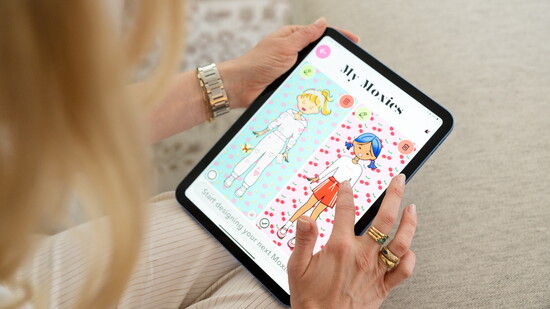
Designed specifically for girls ages eight through twelve, Moxies is built around confidence, creativity, friendship, and emotional wellbeing rather than engagement metrics.
Girls create avatars instead of sharing photos. Communities are private and invite-only. There are no public profiles, no algorithmic feeds, no strangers, and no endless scrolling.
Parents register alongside their daughters, moderation combines artificial intelligence with human oversight, and even messaging features are intentionally structured to encourage healthy boundaries.
The goal isn't simply safety.
It's creating an entirely different relationship with technology.
"When we say we're building technology for wellbeing instead of engagement, we mean every product decision starts with one question: Is this helping girls thrive?"
The early results have been remarkable.
According to ongoing research conducted alongside PhD researchers, 79 percent of girls using Moxies demonstrated improvements in mood, confidence, and self-regulation. Ninety-eight percent reported wanting to be kind to themselves and others while using the platform.
Perhaps even more surprising has been who is using it.
Initially, Blake assumed Moxies would primarily appeal to girls who had not yet been introduced to other digital platforms.
Instead, she discovered something unexpected.
Many girls already using social platforms and gaming environments actively preferred Moxies.
Some were shocked to learn that receiving messages from strangers wasn't simply part of being online.
"They didn't even know that could be a feature," Blake recalls.
Those moments reinforce the urgency behind her work.
For Blake, the conversation surrounding children's technology use isn't really about screen time at all.
It's about quality.
It's about creating digital environments that support healthy development rather than compete with it.
And it's about helping children build digital literacy before unhealthy habits become deeply ingrained.
As a parent herself, those values guide every decision she makes.
Her own children have limited access to technology, but Moxies is one platform she enthusiastically allows them to use.
"I want technology to be one of many ways my children learn, play, and connect—not the only way."
That philosophy extends beyond parenting and into leadership.
Blake describes her leadership style as collaborative and deeply rooted in curiosity. She prioritizes attitude over credentials, encourages team members to take ownership, and believes the best ideas often come from unexpected places.
Like many entrepreneurs, she also acknowledges that balance remains a constant work in progress.
"There is no such thing as perfect balance," she says with a laugh.
Some weeks are consumed by fundraising, travel, product development, and meetings. Others allow for field days, school events, family dinners, and bedtime stories.
The key, she says, is giving herself permission not to excel at everything simultaneously.
"Life happens on a Tuesday."
It's a phrase that has become something of a personal mantra.
Meaningful moments aren't reserved for milestones. They happen during school drop-offs, family walks, neighborhood gatherings, and ordinary afternoons spent together.
Looking ahead, Blake hopes Moxies helps create a generation of girls who view technology differently than those who came before them.
Girls who are confident, digitally literate, and empowered to seek out spaces that prioritize their wellbeing.
Girls who understand that technology should serve them, not the other way around.
And if she succeeds, the impact could extend far beyond a single platform.
It could help redefine what technology for children looks like entirely.
Juliette's Greenwich Favorites
Coffee: Birch Bakehouse's iced cappuccino
Self-Care: Pilates Privé
Shopping: Navy Lobster and The Cubhouse
Favorite Tradition: Walking to the Old Greenwich Memorial Day Parade and Binney Park fireworks.
Best Advice: Never stop asking questions. When you stop asking questions, you stop learning.