For me, the first signs of a thinning crown didn’t happen all at once. It was gradual, easy to ignore at first, until it wasn’t. Like a lot of people, I went down the rabbit hole of possible fixes: low-level laser therapy caps, specialized shampoos, supplements. Some of it helped in small ways, but none of it really addressed the bigger issue.
At a certain point, it became clear that if I wanted a meaningful change, I needed to look beyond temporary solutions and toward surgical hair restoration.
As I researched, I kept coming across two methods: Follicular Unit Extraction (FUE) and Direct Hair Implantation (DHI). FUE is widely used and involves extracting individual follicles and placing them into thinning areas. DHI builds on that process using a Choi Implanter Pen, which allows the surgeon to implant follicles directly without pre-cutting channels.
What stood out to me wasn’t just the technology, but the level of control it offered. With DHI, the angle, depth, and direction of each hair can be carefully managed, which plays a huge role in how natural the final result looks. That said, one thing became very clear during my research: The skill of the surgeon matters far more than the name of the technique.
Once I started getting quotes in the U.S., the reality set in quickly. Pricing per graft adds up fast, and for the level of coverage I was looking at, the total cost easily climbed into the $10,000–$20,000 range. It made what felt like the best option technically feel out of reach financially.
That’s when I started hearing more about Istanbul. At first, I was skeptical. Traveling internationally for a medical procedure felt like a big leap. But the more I looked into it, the more it made sense. Clinics there offered the same procedures, performed by highly experienced teams, at a fraction of the cost, typically 60–70% less. What really surprised me, though, was how structured the entire experience was. This wasn’t just a surgery; it was a well-developed system built around medical tourism.
What I also didn’t expect was how much the city itself would shape the experience.
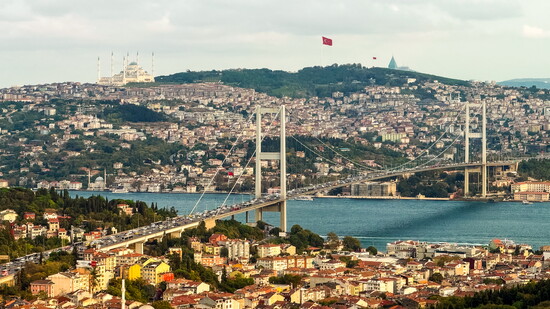
Istanbul sits along the Bosphorus Strait, literally connecting Europe and Asia. Being there in person, it’s easy to see why it’s been used as the setting for films like “Inferno” and “Taken 2.” There’s a sense of scale and history that feels almost cinematic without trying.
Walking past places like Hagia Sophia and the Blue Mosque, you’re constantly aware of how old the city is and how many layers of history exist in one place. And then, just as quickly, that feeling shifts.
Because Istanbul isn’t stuck in the past. I found myself at places like Nobu Istanbul, staying near properties like The Ritz-Carlton, and realizing how modern everything felt. If I needed something familiar, it was there, whether that meant grabbing a coffee at Starbucks or getting around easily using Uber. That contrast between ancient and modern at the same time ended up being one of the most memorable parts of the trip.
Recovery after the procedure is more of a waiting game than anything else. The first few days were all about healing with some swelling, redness, and noticeable scabbing in the treated areas. Activities are limited early on, but light movement and short outings are manageable, making it possible to explore the city in a low-key way while recovering before your aftercare appointment required by the clinic.
The visual results take time, but over the following months, the changes become noticeable, with full results typically developing over the course of a year.
Before going, safety was one of my biggest concerns. But what I found was a city that felt organized, accessible, and comfortable to navigate. The clinic environment was professional, and the overall process felt far more routine than I had expected. That said, doing the research beforehand is critical. Not every clinic operates at the same level, and taking the time to verify credentials and do your own research makes a big difference.
Choosing Istanbul meant stepping into a place where history, culture, and modern life all intersect. It turned a purely clinical decision into an experience—one that extended well beyond the procedure itself.