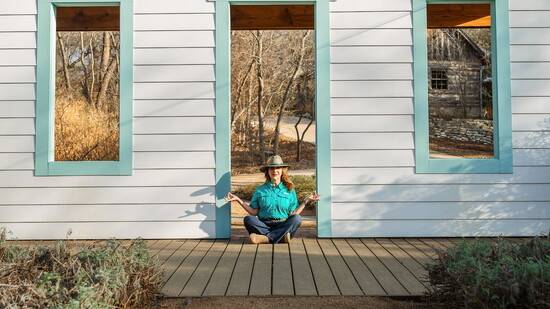
If you have lived in South Texas for any amount of time, you know there are certain challenges when it comes to gardening around here. It’s very hot most of the year. Water use is restricted for months at a time. We live on top of limestone, and sometimes we look outside to see deer eating our gardens. All of that can make us wonder if it’s worth planting anything in our yards. Zen Natives helps homeowners understand that beautiful landscaping can be easy and long-lasting when you invest in native plants, benefiting both people and our local ecosystem.
Sandra Longoria, founder and owner of Zen Natives, has always appreciated nature and everything it has to offer. As she grew up, many of her interests, like cycling, running, and hiking, revolved around getting outside as much as possible. Sandra began gardening in 2000 when she purchased her first home. As a teacher, she often hosted after-school nature and garden clubs. She also incorporated these topics into her curriculum for teaching GT students. As her interest grew during this time, she felt motivated to learn even more about native Texas plants. Sandra wanted to incorporate that knowledge into her teaching and clubs at school. She also knew that after she retired from teaching, she wanted her life to include working with plants. She decided to start her certifications before retirement so she’d be ready to step into that next phase as soon as she could. Sandra became a Texas Master Naturalist and later earned a Native Landscape Certification of Competency from the Native Plant Society of Texas. These training courses require more than 30 hours of instructional time, plus 40 hours of associated community service, advanced-level classes, and field training.
In 2022, Sandra retired after 31 years of teaching to care for her ailing mother. After her mother passed away in 2023, Sandra began working with a friend she had met in her certification classes who had recently opened her own nursery. Her friend quickly realized she couldn’t keep up with the nursery and do the garden installations. Sandra took over the installations, and after a few months, her friend encouraged her to open her own landscaping business. Sandra had also completed yoga teacher training towards the end of her teaching career, which is where the “Zen” in Zen Natives comes from; she officially launched it in 2023.
Sandra is passionate about working with native plants for many reasons. She loves nature and believes in the value of conservation. It is important to her to create spaces that are both beautiful for those enjoying them and ecologically beneficial for the area. Having native plants on our property isn’t just good for our yards. It benefits pollinators, which assist the growth of fruits and vegetables. Using native plants makes the soil more fertile and prevents erosion. Native plants help recreate natural habitats, which benefits birds and other wildlife. People get to enjoy the shade and privacy provided by larger plants, as well as the beauty of their new landscaping and all the pollinators, birds, and other animals that flock to it.
There are some landscaping challenges unique to South Texas. We have limestone outcroppings that are difficult to dig into and sometimes require special equipment. In some areas, we have clay soil, which drains slowly. Our weather is the most obvious challenge, due to mostly hot and humid months from spring through fall, including drought that causes water restrictions. And like many areas, we experience invasive species, both flora and fauna. Sandra told me, “Native plants are adapted to their specific climate and geological region.” The plants that are native to San Antonio go through a lot. They survive mild winters interspersed with sudden extreme freezes. They persevere through months of hot temperatures and drought and grow on limestone outcroppings and clay soil. “I admire the resilience of Texas native plants and their adaptiveness that makes them perfect for our eco-region. It’s my passion to share the benefits of Texas native plants with others through design and education.” Beautiful landscaping can be achieved by considering soil type, light requirements, and watering needs. Some plants should be avoided, including those that are too tempting for deer in highly populated areas, require a lot of extra water or cooler temperatures, or could become invasive.
Sandra wants every homeowner to know how investing in native plant landscaping will benefit them long-term. It starts with saving money as you reap the benefits of resilient native grass and sedge mixes that require less water, fertilizer, and maintenance. Having native trees and shrubs on your property can create shade that could lower your electricity bill, and they don’t usually need any fertilizer or time-consuming maintenance. Investing in the installation of a rain garden pays off because it uses runoff and stormwater to water the plants, creating a beautiful area that is easy to care for. Landscapes installed by Zen Natives will be low-maintenance, resource-conserving, money-saving, aesthetically pleasing, and beneficial to the local ecosystem.
Besides saving money in the long run, homeowners who invest in native plants should know that they are playing a part in benefiting our local ecosystems. Landscaping with native plants requires less water, which helps conservation efforts, especially during droughts. Because native plants require less effort in installation and maintenance, homeowners can avoid using gas-powered tools and chemical fertilizers, which decreases air and water pollution. Homeowners with native landscaping are also preventing soil erosion, supporting pollinators, and inhibiting the spread of invasive species. Another important effect of having plants that provide more shade during our many months of high temperatures is the reduction of the heat island effect. Cities warm up more and stay hotter partly due to a lack of shade in comparison to more rural areas, so any amount of increased shade we can provide benefits everyone.
As many Stone Oak residents know, our area is part of the Edwards Plateau eco-region. This means that we live over the Edwards Aquifer recharge zones. Sandra wants everyone in the Stone Oak area to know that “The Stone Oak area has the potential, through something as simple as a native plant landscape design, to positively affect the health of the soil and water systems that affect all of us.”
Homeowners, commercial business owners, and HOAs can all benefit from the services of Zen Natives. Most of the business revolves around landscape design and installation. This can include things like replacing high-input turf, which is anything that requires a lot of water and maintenance and is not suited to our area, like St. Augustine grass. They also install natural stone walkways and rain gardens. Zen Natives is often hired to do fence and deck repair or replacement, and pergola installations. If your property is overgrown, they can help with trimming and plant removal, as well as pruning, removal, and planting of trees. Zen Natives will also do container gardening and yard and house staging for home sellers. Sandra is happy to teach small group workshops if someone approaches her with a topic that they are interested in.
People who work with Zen Natives will have a collaborative and professional experience that includes personal attention and high-quality service. A homeowner’s investment with Zen Natives landscaping is well-researched during the planning process. Sandra understands what plants are historically suited for the area, as well as ones that have proven adaptable, and she includes them as much as possible. She uses her expertise to design the landscape, plan the materials, and manage each project. Sandra communicates closely with trusted subcontractors throughout the installation process, and she oversees each project. Every client can expect to have landscaping that is unique to them. Sandra wants people to enjoy their outdoor spaces while knowing that they have made a positive ecological impact by using native plants.
Working with Zen Natives also guarantees the clients detailed information about each plant that they have installed on their property, as well as maintenance information. Zen Natives provides optional maintenance packages for 3, 6, or 12 months, and Sandra comes back and performs all ongoing care herself. Customers also have the option to request maintenance as needed or use the information provided by Sandra to do their own upkeep. After the plants installed by Zen Natives are well established (1 year for perennials, shrubs, and vines and 3 years for trees), there won’t be much maintenance besides seasonal pruning.
While most of Zen Natives’ business is with homeowners, businesses, HOAs, and non-profit organizations are increasingly seeking Zen Natives’ expertise to improve their landscaping. Sandra told me they want sustainable, money-saving solutions, partly due to always increasing water restrictions in San Antonio. She hopes that as more people invest in native plant landscaping and their benefits become common knowledge, a greater number of large institutions like these will understand the benefits and install similar plants.
Sandra is excited to say that she is already seeing a lot of growth in her business, and she finds it to be a positive challenge. “It leads me to collaborate with people who are in or on the supportive circles around native plant landscapes and sustainability.” She continues to look towards others who have been advocating for native plants for longer, using their examples as motivation for her own work. In addition to growing her business, Sandra’s goals include educating others and continuing to learn herself. One of the ways she is doing that is Zen Natives’ collaboration with Trinity United Methodist Church to turn their underused garden into a revitalized and educational space that is open to the community. So far, they have updated the garden beds, installed new plants, and posted educational signs. There are plans to include public use gazebos, trees, and shrubs, making the Zen Natives Learning Garden a place everyone can enjoy. “If the challenge is keeping up with more people who seek sustainability and conservation for their homes or businesses, then we are ready.”
Besides the positive impact Zen Natives is making on the local ecosystem with each new landscape installation, Sandra says her favorite part about every project is when she gets to go back a few months later and see the landscaping. She loves these visits because she can immediately see the positive impact that the native plants are having. Pollinators and birds are using a more natural but still aesthetically pleasing area. Homeowners are now enjoying the space more because they’re spending less time and money on maintenance, and more time observing and watching things grow. Zen Natives plans to help more spaces around San Antonio come alive with native plants and sustainable landscaping, both for the benefit of our ecosystem and the people who get to enjoy it.
Investing in native plants is investing in resilience.
Native Plants
Despite the challenges of landscaping in South Texas, there are many native plants that can create a beautiful outdoor space. We are known for our live oak trees and the fragrant flowers of the Texas mountain laurel in the spring. Other trees to consider include Ashe Juniper, Hackberry, Texas persimmon, Mexican buckeye, Anacacho orchid, Mexican Plum, and Possumhaw. Shrubs like American beautyberry, Texas sage, fragrant sumac, agarita, Turk’s Cap, and Yaupon holly are also good additions. Ornamental grasses, including Inland Sea oats, blue grama, little bluestem, Muhly grass, sideoats grama, and Texas nolina, are great for garden beds. Perennials (plants that live more than two years and return each season) that do well in our area include Zexmenia, lance-leaf coreopsis, Yellow columbine, mealy blue sage, Four Nerve Daisy, and purple coneflower. We are famous for our annual wildflowers like Texas bluebonnet, Indian blanket, Maximilian sunflowers, horsemint, winecups, black-eyed Susan, and milkweeds. Vines, like Texas Wisteria, Pearl Milkweed, Crossvine, Virginia creeper, and Coral honeysuckle, are great to add to your native landscape as well.