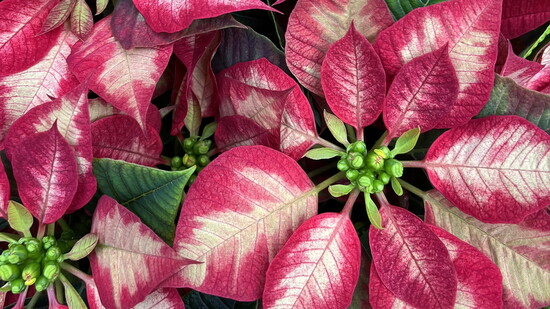
Every December, as homes slip into their holiday finery with wreaths and garlands, one familiar plant seems to appear everywhere. Behind the poinsettia's brilliant color lies a story that began centuries before it became a Christmas staple.
A Christmas Legend That Began in Mexico
Native to Mexico and Central America, the poinsettia was known to the Aztecs as cuetlaxóchitl. Its colorful leaves supplied dye, while its milky sap had traditional medicinal uses. Later, Franciscan missionaries incorporated the winter-blooming plant into Christmas celebrations.
One beloved Mexican legend tells of Pepita, a young girl with no gift to bring the Christ child on Christmas Eve. Encouraged to offer whatever she could, she gathered roadside greenery and placed it beside the nativity. Miraculously, the humble offering transformed into beautiful red flowers. The plant became known as Flor de Nochebuena, or Flower of Christmas Eve.
From Mexico to Christmas Tradition
In the 1820s, Joel Roberts Poinsett, the first U.S. minister to Mexico and an enthusiastic botanist, sent cuttings to his South Carolina greenhouse. The plant eventually acquired his surname. Decades later, California growers Albert Ecke and his son Paul helped transform poinsettias into a commercial holiday favorite. Through cultivation and promotion, including television appearances, the Ecke family helped make them fixtures of American Christmas decorating.
December 12, the anniversary of Poinsett's death in 1851, is now National Poinsettia Day.
The Even More Colorful Side of Poinsettias
Red remains the classic choice, but today's poinsettias also appear in ivory, pink, peach, salmon and burgundy, with marbled and variegated varieties adding still more possibilities. Plant sizes and bract shapes offer additional variety. And those colorful "flowers"? They're actually modified leaves called bracts. The true flowers are tiny structures, called cyathia, clustered at the center.
Where to Buy Your Poinsettia
It is important to know how the plants have been grown and handled. Supermarkets offer convenience, but specialty floral design shops may provide more specialized care, unusual cultivars, decorative containers and professionally styled arrangements.
For example, floral designer Aisha Crivens AIFD, CFD of Le FLEUR on South Perkins has selected an intriguing palette of poinsettias for Christmas 2026. Among them are “New Glitter,” “Rose Red,” “Christmas Beauty Princess” and “Picasso”—names that hint at the variety beyond traditional red.
And don't forget the journey home. As Frosty discovered in that greenhouse filled with poinsettias, these tropical plants prefer warmth to winter weather. Ask for protective wrapping on freezing days; even brief cold exposure can damage foliage.
Keeping the Color
Place poinsettias in bright, indirect light, away from cold windows, drafts and heating vents. Temperatures around 65–70°F are comfortable. Water when the soil surface feels dry, then let excess moisture drain. Never leave a pot standing in water.
Despite their reputation, poinsettias are generally only mildly toxic. Their sap may irritate skin or cause stomach upset if swallowed, so keep plants away from curious pets and children. Contact your veterinarian if a pet eats the plant and develops symptoms.
One or Many
An elaborate arrangement isn't necessary when working with poinsettias. Just one can bring Christmas cheer into a room, while several can make a seasonal statement. From an entryway showstopper to a hostess gift, the possibilities extend well beyond a traditional red plant in its foil-wrapped pot!
Most of us will bring home at least one poinsettia in December. This year, choose yours with a newfound appreciation for its centuries-old story—as colorful as the plant itself.
Five Signs of a Healthy Poinsettia
-
Foliage: Deep green, without yellowing or fallen leaves.
-
Shape: Full, balanced growth on all sides.
-
Bracts: Vibrant color, without blemishes or brown edges.
-
Flowers: Tiny central blooms, preferably unopened, with little pollen.
-
Condition: Firm stems, properly drained soil and no visible pests.