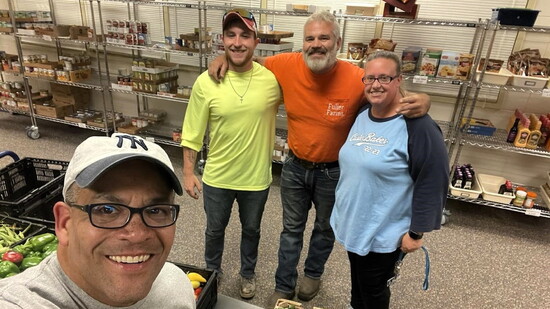
Planting seeds of generosity is the mission figuratively and literally of regional business owner Travis Fuller and Fox59/CBS4 anchor/reporter Rafael Sánchez. These two buddies are voluntarily helping others by providing free, homegrown produce, one batch at a time.
In 2022, Fuller says he was inspired by a speaker during a Lenten breakfast at New Bethel Methodist Church regarding the value of community gardening. Because he had a personal garden within his rural acreage at Fuller Farms Inc., he brainstormed with Sánchez about expanding it to contribute fresh vegetables to those in need of food.
Sánchez participates in 60 fundraisers on average each year, so recalls not being sure he'd have time to help with growing produce but committed to assisting with more than public promotions about Fuller Farms after he witnessed what an existing need there was among people "who didn't have things that the rest of us take for granted."
“Something we built is now bigger than us!” shares Fuller, principal of Fuller Heating and Air based from Franklin. “Food insecurity is a big deal. And it’s clear some people are giving up other vital things in life just to be able to afford food. This isn’t where we should be as a country. So, if we’ve been blessed with more than we actually need, we felt it's important to share it.”
Indeed, since these two community volunteers combined forces, along with friend Adam Bennett, Sánchez verifies they’ve donated the following amount of produce annually: 3,325 pounds in 2023; 3,100 pounds in 2024; and 6,527 pounds in 2025. The main recipients have been regional food pantries, including Interchurch Food Pantry of Johnson County, Victory Church, Johnson County Senior Services and Franklin Community School Cub Pantry located at Custer Baker Intermediate School.
A second-party always weighs and evaluates the produce donations, Sánchez adds.
“Basically, we only eat about 10% of what we grow; the other 90% we give away,” states Fuller, who also has 24 beehives on his land, from which the local beekeeper Doyle Burgess donates 10% of the manufactured honey to food banks.
Altogether, this gardening team grows peppers, tomatoes, green beans, eggplants, cabbage, Swiss chard, kale, red and green cabbage, romaine lettuce, cucumbers, carrots, beets, Brussel sprouts, onions, okra, cauliflower, mustard greens, zucchini, yellow squash, lettuce, peas, broccoli and spinach. They also grow herbs, such as mint, basil, oregano, rosemary, thyme and spearmint, some of which also serve as natural repellents to insects.
Their second year during 2024 was a valuable, yet learning year, after battling a fungus that destroyed the majority of certain plants. But they didn't give up amidst disappointment.
During November 2024, the two received a USDA grant and erected a tunnel greenhouse to be able to upgrade their processes and to help keep fresh veggies available longer for pantry clients in colder months. They say the greenhouse components were delivered in three crates, and the assembly came from the generous help of relatives and local friends. Their goal is to begin all their own seedlings and starter plants in the greenhouse, which worked well during last March through July.
“In the plots, Garden A is big and doing really well. For Garden B, we’re still working the soil. We've erected solar lights to help us take care of the plants in the dark evening hours," Fuller says.
Another recent addition is 50 chicks, confirms Sánchez. “We wanted to provide a method for protein for food bank clients and we plan to donate eggs when the chicks are old enough. During 2026, we might increase them to 100 chickens."
This is Fuller’s 11th year of overall, concerted gardening after planting trees and pollinating flowers on his farm.
“The best part of the community garden project is giving back to a community that’s helped me in the past. We see people benefiting from good, nutritious food; that’s a huge inspiration. I hope and pray more people can and will do the same by planting vegetable gardens in their own yards,” he says.
Fuller says he believes one of the best ways to give back is through knowledge. To that end, he enjoys teaching youths about food and agriculture. “I’d love to see elementary school classes coming to the farm three times a year so students could watch produce grow and then pick it themselves. And maybe as they get older, they’ll have the opportunity and want to take horticulture classes.”
For Fuller Farms to have a broader impact, he hopes to provide classes about nutrition and canning food, and maybe even a contemplation garden.
Sánchez agrees: "It's all about acting with intention. We've become our pantries largest, single home-based entity that donates food. My hope is that more people do something to help others, especially working with neighbors to combine resources. The biggest pleasure is to make a positive difference."
"Our purpose is to provide healthy food for those who need it. We grow and donate more than 20 varieties of vegetables and fruits, plus honey. We've also planted apple trees and berries. We're working on being able to provide fresh eggs and knowledge, too."