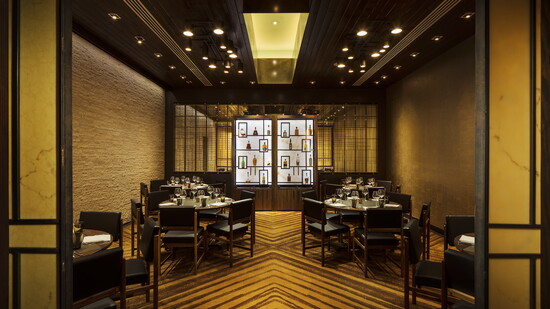
February is a month of celebration in the Sonoran Desert. As Arizona marks another year since achieving statehood on Feb. 14, 1912, Scottsdale celebrates a milestone of its own, honoring its 75th birthday since incorporation. Together, the anniversaries offer a fitting moment to reflect on how food, hospitality, and gathering around the table helped transform a once-sleepy desert outpost into one of the most influential dining destinations in the Southwest.
The Dishes
At the heart of that evolution are dishes that have transcended menus to become part of Arizona’s culinary identity, and few tell that story better than The Original Chopped Salad ($22). Created in 1997 by chef Bernie Kantak while leading the kitchen at Cowboy Ciao, the salad was born of necessity and instinct. Tasked with replacing a wildly popular chopped salad already beloved by guests, Kantak reached for what was available. Asiago, dried sweet corn, black currants, pepitas, marinated tomatoes, arugula, pearled couscous, pear vinaigrette, and smoked salmon came together in a composition that felt both unexpected and deeply Arizonan. Today, The Original Chopped Salad remains a staple at Kantak’s Citizen Public House and Beginner’s Luck. The Arizona Senate even designated it as an “Iconic Dish of The State of Arizona” and dedicated May 1 as its very own day.
At Diego Pops, another Scottsdale favorite has earned cult status through playful reinvention. The Brussels Sprouts Nachos ($14) take the familiar format of tortilla chips and elevate them with crispy Brussels sprouts, street corn queso, Oaxaca cheese, Fresno peppers, pickled onions, and a fried egg. Yet it is the vivid pink crema, made from local purple beets blended with cream and roasted garlic, that sealed its legacy. So beloved is the sauce that Diego Pops adopted its hue as the restaurant’s signature color, turning a garnish into a brand, and a dish into an Arizona classic.
Greater Scottsdale’s rise as a dining destination also owes much to concepts built around gathering. When Postino opened in 2001, it introduced a relaxed, neighborhood-driven wine bar inspired by Italian wine culture. Its Bruschetta Board ($17.50) quickly became the restaurant’s defining offering. Instead of a single topping, guests choose four selections atop thick-cut, toasted bread, ranging from fig and mascarpone with prosciutto to goat cheese with pepper jam or mushrooms with mascarpone. For a supplemental fee, there is also a gluten-free version.
Italian cuisine has also had a massive role in Scottsdale’s culinary ascent. When North Italia opened at Kierland Commons in 2002, it was a startup concept rooted in simplicity and craft. While menus evolved, one dish never left. The Chicken Pesto ($24), made with fresh basil pesto prepared daily, tender chicken, and pasta, and today utilizing spiral Trottole noodles rather than the original Campenella, has become a signature across the brand’s now-nationwide footprint, while remaining a point of pride in its Scottsdale birthplace.
Of course, fine dining dishes also helped Scottsdale make its mark. At Ocean 44 and Dominick’s, the Steak Farina ($83) stands as both a culinary indulgence and a personal tribute. Featuring a 12-ounce, bone-in filet topped with a fried egg and served with toasted bread, the dish honors the late actor Dennis Farina, a close friend of the Mastro family, who specially ordered his steaks in that fashion. The dish reflects the personal relationships and storytelling that have long defined Scottsdale’s dining scene.
The Restaurants
In recent years, Scottsdale has become a hotspot for celebrity-owned eateries, but the first true celebrity chef to create something special locally was Michael Mina. He opened the world’s first Bourbon Steak at the Fairmont Scottsdale Princess in 2007. Designed as a modern steakhouse with a sense of whimsy, Bourbon Steak introduced duck fat fries, lobster pot pie, and butter-poached steaks to a market hungry for innovation. The Scottsdale flagship sparked a national expansion that now includes more than a dozen Bourbon Steak locations, all tracing their lineage back to Arizona.
Few restaurants are as synonymous with Scottsdale fine dining as Mastro’s. Opened in north Scottsdale in 1999, the original Mastro’s introduced a new standard of big-city steakhouse glamour to the desert. Known for USDA Prime steaks, dramatic presentations, live music, and a celebratory atmosphere, the restaurant quickly became a power dining destination for locals and visitors alike. That vision expanded into two equally celebrated sister concepts, both still calling Scottsdale home. Mastro’s City Hall offered a grand, urban take on the classic steakhouse experience, complete with soaring ceilings, live entertainment, and a see-and-be-seen dining room that feels tailor-made for south Scottsdale’s energy. Mastro’s Ocean Club followed, bringing a seafood-forward counterpart to the brand, pairing pristine fish, shellfish towers, and signature butter cake with a polished coastal sensibility.
Joining in on the fine dining revolution is Café Monarch, which opened its doors in 2013. Here, candlelight, epic coursed tasting menus, and family stewardship have earned national acclaim. Owned and operated by the Lewkowicz family and known for its use of caviar, truffles, and Wagyu, Café Monarch has become one of the most celebrated fine dining destinations in the country, offering prix fixe and tasting menus that balance luxury with warmth.
Not all icons are formal. Since opening on Christmas Eve in 1958, the Sugar Bowl has served as Scottsdale’s original family-friendly restaurant, welcoming generations with ice cream, burgers, and nostalgia wrapped in cotton-candy pink. In a city known for reinvention, the Sugar Bowl’s constancy has made it a beloved landmark and a keeper of memories.
Nearby, AZ88 has been setting the tone for Scottsdale nightlife since 1988. Equal parts art installation, cocktail bar, and cultural hub, the Old Town institution is renowned for its expansive martini program, rotating art installations, and design-forward ethos. It remains a testament to Scottsdale’s creative spirit and its willingness to push boundaries.
And finally, there is Zinc Bistro, opened in 2001 by Scottsdale native chef Matthew Carter. Trained in France and known for classic technique, Zinc brought Parisian flair to the desert with its seafood bar, indulgent French fare, and enduring appeal. It represents the global influences that Scottsdale embraced as it matured.
Since opening on Christmas Eve in 1958, Sugar Bowl has served as Scottsdale’s original family-friendly restaurant, welcoming generations with ice cream, burgers, and nostalgia wrapped in cotton-candy pink.