For many, the hardest part of trying something new is walking through the door for the first time. Jiu-Jitsu carries assumptions that make that mountain an even steeper climb; strength, athleticism and ability are seen as prerequisites, creating hesitation before a class ever begins. At Gracie Barra, women often arrive unsure of what to expect, but find a welcoming environment designed for all experience levels.
Fabiana Borges, the academy’s owner, understands that hesitation well. She began training at age eleven through a nonprofit program in Brazil. Growing up in an area with limited opportunities for positive youth activities, the program provided structure and direction at an early age. The discipline gave her a sense of direction early on. Finding her passion, she continued training into adulthood, eventually moving to the United States in 2008 and opening her first school in 2015. Today, the locally owned franchise includes four locations and serves more than a thousand students across its programs.
While Brazilian Jiu-Jitsu is often associated with competition, the majority of students come to the mat with different goals. Some are looking for physical activity. Others are seeking a way to manage stress. Many women are simply looking for something that belongs to them–a space separate from responsibilities, expectations and the roles they carry each day. “As women grow, they carry so many roles,” the owner explains. “They become the daughter, the wife, the mom, and they forget to be themselves. With jiu-jitsu, a lot of women find themselves again.”
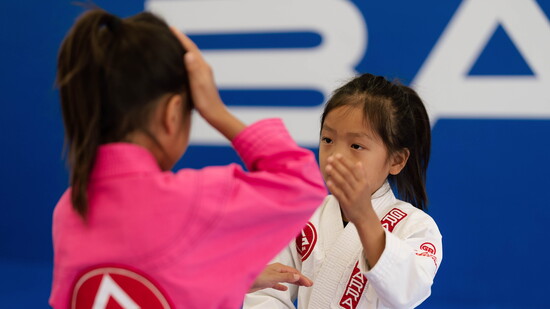
Classes are organized by age and experience level, allowing beginners to progress gradually. Early instruction focuses on body positioning, balance and leverage rather than physical strength, helping students build confidence as they learn. Over time, participants develop endurance, coordination and technical skill at a manageable pace. The school offers programs for children as young as three years old through adults in their seventies. Moms often train while their children participate in classes on adjacent mats. The routine becomes something families can share, rather than another demand on an already full schedule.
A women’s class has developed into one of the strongest examples of the school’s unique community dynamic. Participants arrive from different professional backgrounds and life stages, but the environment allows them to learn together. Some bring young children who remain nearby during class, with parents informally rotating supervision when needed. Over time, unfamiliar faces become training partners, and training partners often become friends.
Misconceptions about Jiu-Jitsu still prevent many women from considering it. Some believe they need to reach a certain level of fitness before starting. Others assume martial arts require aggression or competition. Many worry about coordinating schedules with childcare or balancing financial commitments. In practice, the structure of the program addresses many of those concerns. Beginners are introduced to technique step by step, building endurance as they continue attending classes. Progress comes through consistency rather than prior experience. “A lot of times we think we have to lose the weight first,” Fabiana explains. “But you get in shape doing jiu-jitsu.” Media portrayals of martial arts suggest the idea that the mat is an inherently intense or combative atmosphere. However, most training sessions emphasize collaboration and cooperation. Students practice movements together, learning how technique allows a person to manage force rather than rely on it. While competition is available for those who are interested, it is only one path among many.
Students often describe the class as a mental reset as much as a physical workout. The focus required during training allows participants to step away from daily pressures and concentrate fully on learning. “Jiu-jitsu is a great stress relief,” Fabiana says. “People come from work, they train for an hour, and they leave the stress on the mats.” The benefits extend beyond the class itself. As familiarity grows, so does comfort in the space. Students frequently develop friendships that continue outside the gym. For women balancing professional responsibilities, caregiving and family life, the class can offer a rare opportunity to focus fully on personal growth.
The academy extends its mission through outreach initiatives that support women in the broader community. During International Women’s Month and Breast Cancer Awareness Month, women in the community are invited to participate in introductory classes. Scholarships are available for women who have experienced domestic abuse, providing extended access to training and support.
For many students, the initial uncertainty fades quickly once training begins. Progress appears in small steps: improved balance, increased confidence, a greater willingness to dive into the unfamiliar. Women begin at many different stages of life, often unsure of what they will find. What they often discover is a place where effort leads to growth, where consistency builds confidence and where community forms naturally through shared challenge. Those who walk through the doors of Gracie Barra often leave feeling empowered with a stronger understanding of what they’re capable of.
“As women grow, they carry so many roles. They become the daughter, the wife, the mom, and they forget to be themselves. With jiu-jitsu, many women find themselves again.”
A women’s class has developed into one of the strongest examples of the school’s community dynamic. Over time, unfamiliar faces become training partners, and training partners often become friends.
Learning Together
Students begin at many different stages of life, often balancing work and family responsibilities. The structured format allows participants to progress at a steady pace while building supportive relationships through shared learning.