For most adults, aging sneaks up gradually - until it doesn’t. As men and women enter what longevity researchers call the “marginal decade,” the final ten years of life, the decline often accelerates. Without deliberate action, statistics show that people can experience nearly a 50% drop in physical and cognitive capacity by this stage. Frailty, immobility, and chronic disease don’t appear overnight; they accumulate from years of under-training the systems that keep us strong. If you want to avoid the plaguing sickness and disability often associated with later life, the solution is to begin proactively strengthening your body now.
Longevity expert Dr. Peter Attia underscores this point clearly. When evaluating the factors most closely linked with lifespan and healthspan, he notes that “There is a higher association with having a high cardiorespiratory fitness level, muscle mass and strength than metrics like cholesterol and blood pressure.” Strength, in other words, is not optional - it is foundational.
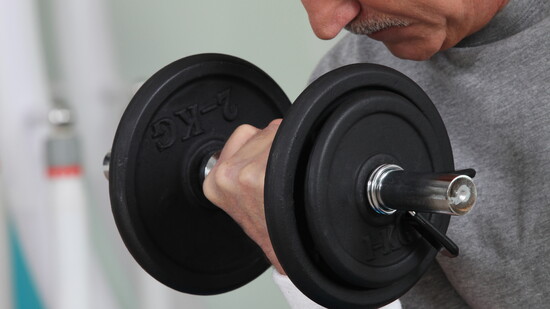
One of the most powerful enemies of healthy aging is sarcopenia, the gradual, programmed death of muscle cells. Left unchecked, it erodes mobility, metabolic health, and independence. But the process is not inevitable. Strength training slows sarcopenia by stimulating the body to build new muscle, increasing bone density, and improving the resilience of the cardiopulmonary system. Muscle isn’t only for athletes; it is a biological insurance policy against aging.
Building muscle goes hand-in-hand with maintaining mitochondrial health - the energy-producing engines inside every cell. How robust are your mitochondria? Resistance training boosts mitochondrial function, insulin sensitivity, metabolic rate, and even triggers mitochondrial biogenesis, the creation of new mitochondria that keep cells youthful and energetic.
Supporting this training with a high-protein diet, adequate recovery, and strong social ties (“great relationships”) amplifies results. And while starting early is ideal—planning in your 40s, 50s, and 60s - it is never too late to begin. Research shows that even individuals in their 70s can build meaningful muscle and dramatically reshape the trajectory of their final decade. Starting earlier simply provides more time to shore up physiological systems before injuries and chronic conditions create barriers that are harder to overcome.
Complimentary practices that introduce controlled stress: hormesis (low dose stressors that in large amounts would be harmful) have a longevity enhancing effect in low doses. Examples include cold plunges, far infrared sauna sessions, fasting, and ketogenic dietary cycles. They activate cellular repair pathways and strengthen metabolic flexibility (the ability to use carbs or fat for energy).
The message is clear: aging is inevitable, but decline is not. By prioritizing resistance training, nourishing your body, nurturing relationships, and strategically incorporating hormetic stressors, you can transform your marginal decade into a decade of strength, vitality, and independence. The work begins now.
Strength, in other words, is not optional - it is foundational.