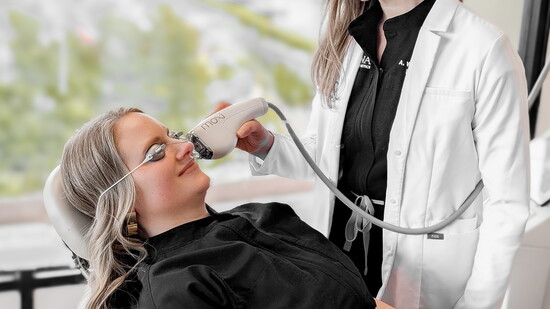
Belle Meade Lifestyle had the opportunity to sit down with Dr. Allison Weiffenbach, the Medical Director of Cortina Dermatology & Aesthetics, to talk about skincare in the summertime.
Why did you want to get into dermatology?
Dermatology allows me to build lasting relationships with patients across every stage of life, from the earliest years to the most seasoned ones. The skin is a remarkable window into our overall health. Beyond the science, dermatology allows me to help people feel confident in their own skin, which touches every other aspect of how they move through the world.
Should people change their skincare routine in summer?
The short answer is yes, but the degree of change really depends on your skin type and concerns. At minimum, I recommend ensuring a broad-spectrum SPF 30 or higher sunscreen is a non-negotiable part of your morning routine and reapplying every two to three hours if you’re spending time outdoors. Summer heat and humidity also call for a lighter moisturizer- swapping to a gel-based or oil-free formula can make a big difference. For those who struggle with melasma, summer sun can be a major trigger, and adding in a product with tranexamic acid or hydroquinone is beneficial. For my acne-prone patients, this is the season I swear by a hypochlorous acid spray. It’s a gentle yet powerful way to calm breakouts that can be triggered by heat and sweat.
Are there any ingredients (like retinol or AHAs) people should be more careful with in the summertime?
My philosophy is simple - don’t abandon your routine just because the calendar changes. Retinol and AHA/BHA products remain completely safe in the summer, with one key rule: reserve them for your evening routine. These ingredients can increase sun sensitivity, so applying them at night and following with a broad-spectrum SPF every morning is really all the protection you need. Pair that with a gentle cleanser in the morning, and there’s no reason to press pause on the ingredients doing the most work for your skin.
How often should people be reapplying sunscreen, and what are the most common mistakes you see?
As a general rule, reapplication every two to three hours during direct sun exposure is what I recommend - and more frequently if you’re swimming or sweating. But the mistakes I see far more often than skipping reapplication are the ones people don’t even realize they’re making.
The first is treating sunscreen as a standalone solution. Sun-protective clothing and a wide-brimmed hat are non-negotiables during the summer months. No SPF alone can replicate a physical barrier. The second, and perhaps most pervasive, is the belief that SPF in your foundation or tinted moisturizers is sufficient. Makeup is applied far too lightly to deliver the protection printed on the label. Think of SPF in makeup as a bonus - never a substitute.
There are different degrees of sunburn. At what point should someone see a doctor about theirs?
Most sunburns, while painful, can be managed at home with cool compresses, gentle moisturizers, and anti-inflammatory medications like ibuprofen. However, the moment a sunburn begins causing systemic symptoms - fever, chills, nausea, or significant swelling - that is your signal to seek medical attention. What you’re experiencing at that point is no longer a skin issue; your body is mounting a full inflammatory response, which warrants a professional evaluation. When in doubt, don’t wait it out.
What's the single most impactful thing someone could start doing today for long-term skin health?
Without question, find a dermatologist you trust. Not just any dermatologist, but someone whose philosophy and approach to skin health genuinely align with your long-term goals.
So much of what I see in practice is patients spending years self-diagnosing, chasing trends, and layering products without a real strategy. A trusted dermatologist is not a luxury. They are one of the best investments you can make in the long-term health, quality, and longevity of your skin.
Besides wearing sunscreen, do you have any other summer skincare tips?
My biggest piece of advice is one that surprises most people - don’t take the summer off from your cosmetic treatments. There’s a longstanding myth that lasers and injectables are off-limits once the temperatures rise, and in a city like Belle Meade where summers are long, that mentality means months of lost progress. Injectables are entirely safe year-round, and many laser treatments are as well when performed by a board-certified dermatologist who can tailor the approach to your skin and the season.
A lot of people feel their best with a summer tan. Is there a way to enjoy the sun without paying for it later?
As a dermatologist, this is a question close to my heart - because I understand the appeal completely. The good news is you do not have to choose between looking tan and protecting your skin. My answer is always the same: embrace self-tanners and spray tans. The formulations available today are a far cry from the streaky, orange products of the past. And a professional spray tan or a quality at-home self-tanner can deliver a genuinely beautiful, natural-looking glow- without a single moment of UV exposure.