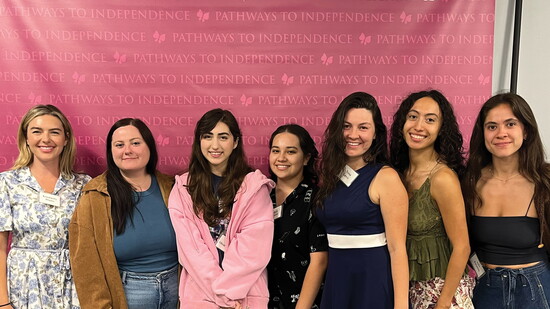
A strong support system is essential to succeed. When it is missing, especially for women in early adulthood, building a stable and secure future becomes significantly more difficult.
Pathways to Independence is a local nonprofit serving unmarried, unaccompanied women ages 18 to 35 in southern Los Angeles County and northern Orange County. Often from adverse backgrounds with little to no safety net, they turn to Pathways for help navigating work and college.
Stable housing in Pathways-owned buildings, which can shelter up to 31 women at a time, allows clients to focus on the program. Their required routine includes attending school full time, working 20 hours weekly and regularly meeting with a mentor, therapist, academic success coach and coordinator who acts as a case manager.
“We really consider what we do complete wraparound services, and so it's really important we become the support system that our clients don't typically have,” said Diana Hill, executive director of Pathways to Independence.
Many clients grow up without much structure. Hill explains that by setting expectations around school, work and regular check-ins, the program offers women a steady, supportive day-to-day structure.
One of the key requirements Hill identified for becoming a client is having completed at least 12 successful college units. Once enrolled, the nonprofit assists program participants with everything from school and mental health services to health care and car insurance, so they no longer have to handle all of it alone.
The program started more than 30 years ago when its founder, Dave Bishop, helped a young woman pursue higher education and independence. Since then, it has grown as more women have needed the support they provide.
“Women can, inside of who they are, be incredibly strong and powerful,” Hill said. “And I think sometimes women need a little bit more help finding that power and not being taken advantage of out in society.”
Pathways connects with new clients through its long-standing ties with the 12-step recovery community. Others come through nearby colleges like Long Beach City College and Cal State Long Beach, as well as foster youth programs that support students who have aged out of the system.
80% of women who join Pathways graduate from college and the program, Hill said.
“I believe that everybody who needs a hand up should be given a hand up,” she said. “...I think many times with women, it’s hard for us to ask for help. We think we’re supposed to do it all on our own.”
One woman joined Pathways very young and struggled with the program's rigor. She left before graduating and later joked she had been “loved right out of there,” Hill recalled. Years later, she returned as a pre-licensed therapist with a master’s degree, eager to support current clients.
“She told me, ‘All of what I learned at Pathways never left me, and it never left me believing that I could graduate from college and be something,’” Hill said.
Another former client, who was recently honored by the One Vine Foundation, entered Pathways about 25 years ago, and now she has a career in medical sales, a supportive husband and two sons. Seeing healthy relationships among mentors and volunteers, Hill said, helped that alumna “break that cycle” in her own life.
Hill sees Pathways as a social impact organization that balances compassion with financial responsibility, using donor dollars thoughtfully to make as much impact as possible. She hopes the program will continue this essential work for many decades.
“Their past doesn’t dictate who they are or who they should be in the future,” she said. “Their pasts are their pasts. What we want to do is to keep them looking forward to what that bright future is.”
For more information on Pathways to Independence, including how to donate, volunteer or apply to the program, visit pathwaystoindependence.org.
“Their past doesn’t dictate who they are or who they should be in the future.” - Diana Hill