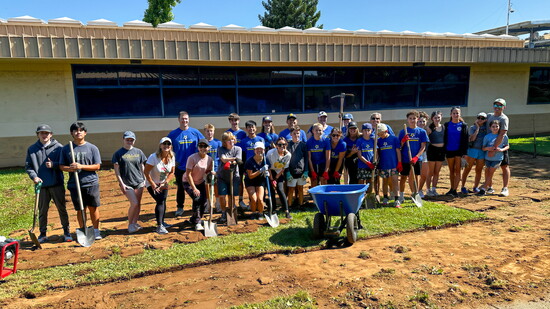
Project Green brings gardens and outdoor art to schools and youth communities in El Dorado County. Operating in Rescue Union, Latrobe, Gold Oak, Placerville Union, and El Dorado Union school districts, as well as at Boys and Girls Club Western Slope and Summitview’s youth-at-risk facility in El Dorado Hills, Project Green has participants ranging from TK to 12th grade. “We serve an estimated 8,500 students,” says founder Gina Johnston.
Gina, what motivated you to start Project Green?
Five years ago, I began noticing that children were spending less time connecting with nature, participating in creative play, or engaging in hands-on learning during the school day. Many existing school gardens had become neglected. I created Project Green to help revitalize and support school garden programs throughout El Dorado County. One of the missions is to transform underused outdoor spaces into educational gardens where students can learn, explore, collaborate, and reconnect with the natural world. Project Green encourages healthy habits, environmental stewardship, creativity, and a stronger sense of belonging.
How does Project Green fill a missing need?
We offer recess garden programs, counseling corners, and outdoor science curriculum. We have garden coordinators at every site. We’ve also been able to connect with different organizations in the community, like Boy Scout Troop 645—they’ve completed over 15 Eagle Scout projects in our gardens!
How has Project Green grown and what’s on the horizon?
We have expanded to schools outside Rescue Union School District, where it all began. We couldn’t do this without the support and guidance from the El Dorado Community Foundation and Latrobe Fund. Recently, Project Green has expanded through a partnership with Lora Watts of Project Luma, a professional muralist who works directly with students to create vibrant outdoor art installations. Together these projects transform plain blacktops into “cool tops,” which can reduce surface temperatures by as much as 30 degrees, making our schoolyards more comfortable and usable during our hot seasons. This collaboration blends art and nature in a powerful way, giving students hands-on creative expression, deepening their connection to place, and encouraging pride and ownership in their school spaces.
Please describe a day in the field/schoolyard.
Most of our gardens are open during lunch recess for every grade. This allows students who don’t normally play traditional recess activities a chance to work in their school garden. They can rake, weed, plant, water, compost—whatever is on that day’s list of to-dos. We also offer students art projects to help beautify their spaces. Having the garden open during recess gives them a safe place to land.
What happens over the course of the year seasonally?
The gardens follow a natural rhythm that mirrors the curriculum and the climate. In the fall, students prepare soil, plant cool season crops, and learn about composting and garden planning. Winter is a quieter time of observation and maintenance; students study weather patterns and plant dormancy and plant winter crops. They also prepare the beds for spring. As temperatures warm in spring, the gardens come alive with rapid growth, pollinator activity, and hands-on lessons in biology, nutrition, and ecology. By late spring/early summer, students harvest crops, eat and celebrate their work, and reflect on the full cycle of growth, understanding firsthand how food systems and natural ecosystems evolve. Students also participate in grant writing. They share their experiences, articulate program needs, and take ownership in sustaining and expanding their school garden initiatives.
What about when school is out for summer?
Each garden coordinator reaches out to their community families, and they sign up to help throughout the summer.
What else do students do with Project Green besides dig and plant and water?
We incorporate outdoor art, campus beautification projects, and grant writing. We also have hydroponic gardens at some of our schools. We also encourage many of these projects to be student-led, and it’s so rewarding to watch it build students’ confidence.
Can you share any specific stories from the students?
We have many “lunch hour loyalists,” like one of my students, Hudson. After moving from the Bay Area, this quiet second-grader discovered the garden during one of his first days at his new school. Pulling weeds helped him calm down, and his connection was made. Once middle school came around, he continued to choose the garden every single lunch. Not because he didn’t have friends—because he did. They came with him. The garden became their hangout spot, their “friendship bench,” their place to laugh, talk, and decompress. He received a “Gardener of the Year” award at his eighth-grade promotion. Now he is starting at Oak Ridge High School as a freshman who will visit the garden every day during his flex period. Hudson has shown howthe garden becomes a third space—not home, not classroom, but a place where kids feel like themselves.I also have some absolutely priceless quotes and comments from students, like “I want to do this forever!” “Dig deep to fill your heart!” “This is the best day of my life.” “It’s so peaceful here. I don’t want to leave.”
How can people/businesses help?
Currently we need support for an upcoming project at Marina Village Middle School. The outdoor basketball/PE courts blacktop is cracked and needs new asphalt. Lora Watts/Project Luma will work her magic with cooling paint and designs. We also constantly need supplies ranging from fence supplies to gardening tools. We have had many generous local landscaping companies donate truckloads of mulch and soil, and families often donate plants or seeds. We also accept monetary donations on our website.
What keeps you going?
Seeing how the garden benefits students is what keeps me going. Not only is there an educational benefit, but to see the social/emotional benefits is definitely the most rewarding.
Anything else you would like to add about Project Green?
I’m so grateful for all of our dedicated community partners, including RUSD, Boy Scouts, Boys Team Charity, Boys and Girls Club Western Slope, Oak Ridge High School’s student-led nonprofit One Green Step, Latrobe Fund, El Dorado Community Foundation, Women’s Fund, Assistance League, Home Depot, and local families.
For more information and to volunteer or support Project Green, contact Gina Johnston at projectgreenedc@gmail.com or go to projectgreencommunity.org.