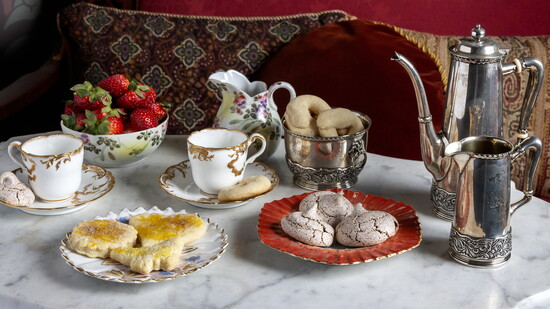
England’s Anna Russell can be thanked for first making “afternoon tea” into a formal social occasion. Also known as the Duchess of Bedford, Anna was one of Queen Victoria’s ladies-in-waiting.
The origins of afternoon teas had to do with the shifting hour of the evening meal, which became fashionably later (around 8-9 p.m.) as advancements in lighting — first gas, then electricity —enabled houses to stay lit until well into the late evening. As a result, Anna understandably began to feel hungry in the late afternoon and requested a spot of tea and some light food, which probably included bread, butter and perhaps biscuits.
The idea proved so successful it soon became routine, and the duchess decided to invite a few of her friends to her private rooms for tea in the afternoon, spawning a new social opportunity for the upper classes. Americans soon caught on to the idea, adding afternoon tea (sometimes referred to as “five o’clock tea”) to their entertaining methods.
The food at tea parties was actually fairly simple: fancy cakes and small tea sandwiches were the only requisite foods. Similar to shortbread, these buttery, tasty little cakes are perfect for tea as their name suggests. Most cookbooks from the nineteenth century feature at least one recipe for tea cakes, which was often a category in itself. There were several variations; some called for a flavoring such as nutmeg, cinnamon or rosewater, and others used yeast and/or milk to make the dough rise, resulting in a lighter confection, more like a true cake or light biscuit.
TEA CAKES
MAKES 2 1/2 DOZEN
- 2 1/2 cups all-purpose flour
- 1/8 teaspoon salt
- 1/4 cup sugar
- 2 large eggs, beaten
- 1 stick (1/2 cup) unsalted butter, melted
- Cold water
- 1 egg yolk, beaten
- Additional granulated sugar
Heat oven to 375 degrees F.
Sift flour with salt into a large bowl. Add sugar, eggs and melted butter; stir together, adding cold water a teaspoon at a time to make a rather stiff paste.
Transfer dough to a pasteboard or clean counter dusted with flour. Knead into a ball and roll to about 1/4-inch thickness. Cut dough into shapes with a cookie cutter, or roll into a log shape and slice into 1/4-inch-thick circles. Place on baking sheets lined with parchment paper.
Brush the top of each cake with beaten egg yolk and then sprinkle with sugar. Bake for 10–12 minutes. Cool on wire racks.