November gives us an opportunity to honor and thank those whose professions touch others every day and recognize the people whose work makes our communities stronger.
On Veterans Day, we pause to recognize the men and women who have served in our nation’s military—and the families who have supported them along the way. Their sacrifices, courage, and commitment to something larger than themselves deserve our deepest gratitude throughout the year.
We are equally thankful for the teachers who inspire curiosity, encourage confidence, and help shape the next generation. In classrooms large and small, they give their time, energy and hearts to helping students discover who they are capable of becoming.
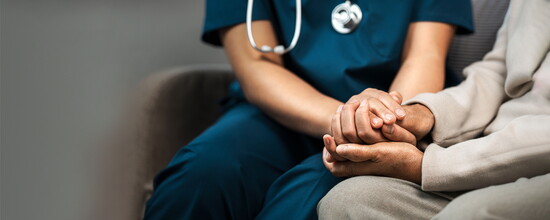
And then there are nurses, whose compassion and expertise carry us through some of life’s most vulnerable moments. Whether caring for a patient, comforting a family, or simply offering reassurance when it's needed most, nurses remind us what it means to show up for others.
Today, we celebrate these everyday heroes and the countless ways they make our communities healthier, wiser, and stronger.
Rhonda Foster
4th grade teacher
Rhonda Foster knows what it’s like to feel lost in a classroom. As a child, she struggled with a learning disability and a speech impediment at a time when neither was well understood; she knew there had to be a better way of learning.
“I remember sitting there, thinking I don’t know a thing,” she recalls. “The worksheets were confusing, and nothing made sense.” She often felt stupid, with no one able to explain why learning came so much harder to her than to her classmates. Left to find her own way, she eventually discovered strategies that worked for her, and that experience changed the direction of her life. “That’s why I pursued education,” she explains. “I wanted to help others who struggle in school like I did.”
Foster earned her associate and bachelor’s degrees early on, then spent years teaching preschool, tutoring, and volunteering while raising her four children. Nearly 15 years ago, once her kids were all in school, she moved into full-time teaching. Today she teaches fourth grade at the Draper American Preparatory Academy (one of several APA locations) and is pursuing a master’s degree as a dyslexia specialist, work drawn directly from her own story.
A few years ago, after juggling a caseload of 35 students, including ten with IEPs, Foster reached a breaking point and nearly left the profession. Instead, APA trained her as a reading specialist through Take Flight, a research-based reading program, and covered the cost, much of which counted toward her master’s degree. She now teaches small, ability-based cohorts working through the program.
“APA can now say we’re a dyslexia school,” she says, a distinction she’s proud to have helped build. What keeps her energized, though, is the moment a struggling student finally breaks through. “Each student is a puzzle for me to figure out,” she says. “Seeing a kid achieve something and know they can do it, that’s my passion.” She notes that her ability to step into a student’s shoes and adjust her approach until a concept clicks is a skill she doesn’t take for granted.
“Generally, I think educators are underappreciated and not understood—but that’s not why we go into it!” says Foster. The exception, she says, was the year after COVID: “Most parents were so grateful the kids went back to school,” she says, laughing. “They had a new appreciation for what we did.”
She works hard to communicate with the parents of her students, having learned that her efforts often encourage appreciation from them. Her favorite gestures of appreciation range from classroom help to Amazon gift cards to financial donations—“and I’ll always take a Swig gift card” she adds. Her advice to parents wanting to express appreciation: “Find out what your specific teacher likes and do that.”
Dr. Kat Lofley
Women’s Health Nurse Practitioner and Certified Nurse Midwife
For Dr. Kat Lofley, becoming a nurse was never exactly the plan. As a little girl, she wanted to be an OB/GYN and deliver babies. As she got older, she imagined a different life: becoming a stay-at-home mom.
Then 9/11 happened.
Lofley and her then-husband were both in the Army Reserves, and suddenly the possibility of deployment became very real. She had a stark realization: she needed a career that would allow her to support a family if she unexpectedly became the sole breadwinner.
Nursing entered the picture and what began as a practical career decision quickly became something she was genuinely passionate about, as she saw the way the profession combines science and medicine with something much more personal: the human experience.
“We often think of nurses as the ‘doers’ but they are every bit as much the ‘thinkers’,” she says, explaining just how much critical thinking happens behind the scenes. Nurses are constantly “assessing, anticipating, prioritizing, questioning, and problem-solving,” often spending more continuous time with patients than anyone else on the healthcare team.
“We don’t just treat a diagnosis or perform a task—we care for a whole person who may be scared, hurting, overwhelmed, celebrating, grieving, or experiencing one of the biggest moments of their life,” she continues. “It’s an incredible privilege to be invited into those moments.”
That privilege comes with an enormous amount of responsibility—something Lofley says she didn’t fully appreciate when she began nursing school. Nursing is “academically intense, physically demanding, emotionally challenging,” she says, and carries “an enormous amount of responsibility.”
Over the years, her patients have taught her that compassion isn’t necessarily about having the perfect words or being able to fix everything.
“Sometimes it’s simply being willing to sit with someone where they are, listen, and say, ‘Okay. Let’s figure out what we can do from here.’”
She’s built her career around continuous learning, becoming a Certified Nurse Midwife and Women’s Health Nurse Practitioner, and a deep respect for the trust patients place in her.
It’s what kept her pushing to open her own practice and care for patients in the way she believes they deserve. Her philosophy focuses on helping patients understand their bodies and the “why” behind their care.
“Our bodies are quite literally the one thing we have from birth until death,” she says, “and yet most of us are never really taught how they work.”
For Lofley, helping people understand those bodies is one of the most rewarding parts of the profession. “I get to help people feel better in their bodies—inside and out,” she says, “I never want to lose sight of what an honor that is.”