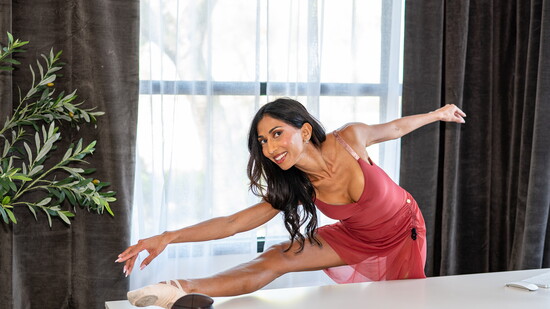
At fifteen, I stood backstage preparing for one of the most important performances of my life. After nearly a decade of training in Bharatanatyam, an ancient classical dance of India, I was about to perform my Arangetram: a three-hour solo performance requiring extraordinary physical endurance, intricate rhythmic precision, emotional expression, and years of discipline.
I had spent countless hours perfecting every movement and the precise rhythm of my feet striking the floor.
But my teachers had taught me something far more important than technique. Technical excellence means little without the ability to make someone feel something. More than twenty-five years later, I understand that lesson differently.
Classical dance is a fascinating marriage of science and artistry. Every movement requires extraordinary coordination between the brain, nervous system, and musculoskeletal system. Balance, proprioception, muscular control, memory, and rhythm must work together. Yet no audience comes to watch a dancer demonstrate anatomy. They come to feel something.
A technically flawless performance without emotional expression can leave an audience unmoved. Conversely, the smallest gesture, performed with genuine intention, can bring someone to tears. Medicine shares this beautiful paradox. We spend years mastering anatomy, physiology, biochemistry, and the complex science of human disease. We learn to interpret laboratory values, recognize patterns, and make decisions grounded in evidence. But the person sitting across from us is so much more than a collection of biological systems. She is a mother who is exhausted but continues showing up for everyone. A woman quietly navigating the changes of midlife. A son or daughter worried about aging parents. Someone who has built an extraordinary life but fears losing the health to enjoy it. While science surely matters, so does the human being.
Several years into my medical career, I found myself confronting a difficult truth. While working within a large corporate healthcare organization, I watched the pressure to increase efficiency become increasingly difficult to reconcile with the way I believed medicine should be practiced.
There were efforts to automate patient communications, shorten time spent with patients, and increase the number of visits physicians completed. I understood the business rationale. Healthcare organizations need to remain financially sustainable, but I struggled with what we risked losing.
How do you automate compassion?
How do you measure the value of an extra ten minutes spent listening to someone who is frightened?
How do you place a price on the moment a patient finally feels heard?
I had devoted years to becoming a physician, yet I increasingly felt that the very qualities that drew me to medicine, including curiosity, connection, and a deep desire to care for others, were being crowded out by the demands of the system. It was painful to realize that being a good physician and having the freedom to practice medicine as I believed it should be practiced were not always the same thing.
I began asking myself a question that would eventually change the direction of my life;
What would medicine look like if we designed it around the human being first?
That question became the foundation of Luxury Lifestyle Medicine®. I wanted to create a practice where clinical excellence and extraordinary kindness were not competing priorities, but inseparable ones. A place where physicians have time to listen, think, investigate, and understand the lives their patients are trying to protect. Our approach brings together traditional medicine, lifestyle medicine, and longevity science to develop highly personalized health strategies. We examine the data, anticipate risks, and create thoughtful plans for the decades ahead. But we also ask questions that cannot be answered by a blood test.
What brings you joy?
What are you hoping to experience in the next twenty years?
Who are the people you want to remain healthy for?
The purpose of medicine should extend beyond helping people live longer. It should help them live more fully.
When I imagine the future of medicine, I don't begin with hospitals, technology, or laboratories.
I see physicians who have the time and emotional capacity to care deeply, without sacrificing their own well-being. I see people who feel known, valued, and loved, and I see kindness becoming something we practice deliberately, not merely something we hope happens along the way.
My mission is simple: to spread ultra-kindness™.
Today, I still train in classical ballet several times a week. At the barre, I am reminded that excellence is never a destination. It is a practice requiring discipline, humility, and the willingness to begin again. Some days, the movements feel effortless. Other days, they remind me how much I still must learn.
Medicine is no different. We must continue studying, questioning, refining, and growing. But we must never become so consumed by the pursuit of technical perfection that we forget the person in front of us.
At fifteen, I believed the purpose of my performance was to demonstrate everything I had learned. Today, I understand that the real purpose was to give something of myself to others.
Perhaps the most beautiful thing we can offer another human being is not perfection. It is the feeling of being genuinely cared for.
luxurylifestylemedicine.com
"At the barre, I am reminded that excellence is never a destination. It is a practice requiring discipline, and humility."
"Classical dance is a fascinating marriage of science and artistry. Every movement requires extraordinary coordination between the brain, nervous system, and musculoskeletal system. Balance, proprioception, muscular control, memory, and rhythm must work together."