Thirty years ago, Barrett-Jackson made a decision that would rewrite the future of the collector car world: it stepped onto the national stage and into America’s living rooms. What began as a bold experiment in 1996 became one of the longest-running live reality broadcasts in television history, transforming a regional auction into a cultural phenomenon and turning the high-octane energy of the auction block into must-watch TV.
In 2026, Barrett-Jackson celebrates three decades on live television, now reaching more than 380 million homes through HISTORY and FYI. It's a milestone shaped by visionary risk, unforgettable broadcast moments, and the leadership of Chairman and CEO Craig Jackson.
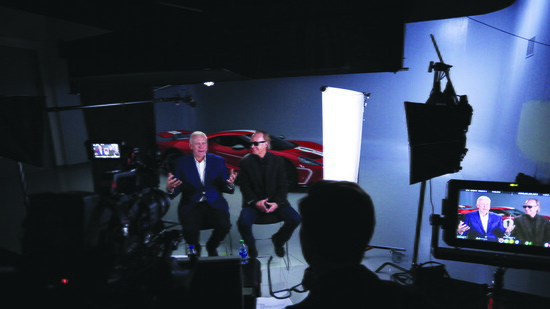
In this exclusive interview, Mr. Jackson takes us back to the beginning, sharing the pivotal decisions, surprises, and moments that defined one of the most influential broadcasts in American culture.
When you connected with the founders of Speedvision, what convinced you that Barrett-Jackson belonged on national television?
When I stepped into leadership in 1995 after my brother Brian passed away, I wanted to pursue the dream I shared with him to bring the auction's incredible energy to a national audience. The founders of Speedvision, Roger Werner and Bob Scanlon, saw the same potential we did; that the passion and excitement of the collector car world could captivate viewers right in their living rooms.
What convinced me that Barrett-Jackson belonged on national television was the raw, unscripted drama of the auction block. It's like a live sporting event where anyone can step onto the field and get in the game. I remember in those first conversations that set everything in motion, we all agreed it was groundbreaking. It wasn't just about selling cars; it was about expanding the entire car collecting hobby. We pulled phenomenal ratings right from the start and changed the car collecting world forever.
In 1996, the first tape-delayed broadcast aired. What were your expectations versus the actual response?
My expectations were high because I believe so much in the auctions, but the actual response was a game-changing moment for us. The ratings were incredible, proving the public had an appetite for the energy and passion of a live auction. It showed us we were onto something massive. That breakthrough success is exactly what drove the decision for full, live coverage the very next year.
Is there a moment from those early telecasts that still gives you goosebumps?
When those first television cameras rolled in for our live Speedvision broadcast in 1997, it was an absolute game-changer. The energy on the auction floor became electric instantly, transforming a great local event into a national production. We were no longer just selling cars to the people in the tent; we were putting on a live 'rock and roll' show for millions in their living rooms, which added a whole new level of excitement.
That initial moment, when we realized the sheer scale of the audience, still gives me goosebumps.
From Speedvision’s early sets and shoestring crews to SPEED, Fox Sports1, then more than 100 hours of live coverage across Velocity and Discovery, how did you maintain Barrett-Jackson’s identity through each era?
Maintaining the Barrett-Jackson brand has always been about honoring my family and Tom Barrett’s legacy while having the vision to embrace innovation and let the market determine true value. The core ideals of transparency and passion for the collector car community remain unchanged, but we've constantly evolved the experience.
The greatest behind-the-scenes evolution was our bold transition to the 'No Reserve' auction format in 2005. It was a risk that fundamentally redefined our business, creating a level of excitement and transparency that reaffirmed who we are and positioned us as a global leader in the industry.
What does that global reach feel like?
The vast reach we have today, bringing the auction into millions of homes, truly underscores how the love for collector cars transcends borders and demographics. It's an organic, global community, something we always envisioned when we first decided to put the auctions on live television back in the '90s.
There have been many incredible TV moments over the years, so it's very difficult to choose one. The sale of Carroll Shelby's personal 1966 Shelby Cobra 427 Super Snake for $5.5 million- three times- was an incredible moment as was having Carroll Shelby join me on the block when bidders went head-to-head, captivating the arena with incredible energy.
Also, our commitment to philanthropy is a major point of pride, having raised over $164 million for various causes through our charity cars. Having former U.S. President, George W. Bush on the block for a charity sale was a deeply significant moment that I will never forget.
What elements were most critical in creating that “live adrenaline” experience?
Building that live adrenaline experience on TV was all about capturing the emotional arc of the auction block. The critical elements were speed, energy, and storytelling. We needed to present the action so quickly, with so much happening at once; the auctioneer's chant, the bids flying in, the intense reactions of the bidders; that it felt like a sport, a head-to-head competition right up until the final hammer. That, combined with putting a camera on the vehicles themselves as they crossed the block, let viewers feel like they were right there in the arena.
Producers have to determine the right mix of auction block coverage and other content, such as behind-the-scenes stories, to keep viewers engaged during varying speeds of bidding. Early on, we faced significant technical challenges in adapting traditional TV production to the unpredictable nature of live auctions, particularly in managing real-time data and graphics for displaying bids and vehicle information to a remote audience.
How has live television shaped the collector-car hobby itself?
It changed the world of car collecting forever by pulling back the curtain on the auction process and bringing the excitement of 'the block' directly into living rooms across the globe.
2026 will mark our 30th year on television, and over that time, the shift has been monumental. Television has demystified the hobby for millions, creating transparency and building an enormous, engaged audience that wasn't previously involved. We've certainly seen direct shifts: people watching from home learn the nuances of the market in real-time. This exposure fuels demand, educates bidders, and creates a significant cultural momentum around collector cars that simply didn't exist before we broadcast the auctions live. It's a key reason for the hobby's explosive growth.
After 30 years, is there a bidder story, seller moment, or car crossing the block that became an unexpected “television moment?"
In 2013, the original Batmobile from the 1960s TV series, a custom-built masterpiece by George Barris, crossed the block. The anticipation was electric, the crowd was buzzing, and the energy in the arena was unlike anything I'd felt before. When the gavel finally came down, it sold for a staggering $4.62 million to Phoenix-area executive Rick Champagne. It was a truly unforgettable sale that captured the magic of that car and the passion of the collector community.
As new generations discover Barrett-Jackson through TV and streaming, what surprises you most about how younger fans engage with the broadcasts?
Definitely how younger fans, who grew up on 'Fast & Furious' and video games, are engaging with the technical side of the cars we sell on TV. They aren't just looking at the aesthetics; they're passionate about the performance, the 'Resto-Mods', and the engineering. We made the decision to bring in more modern and unique vehicles, like a record-setting Toyota Supra from the Fast & Furious movie, to engage a younger demographic, particularly Millennials and Gen Z enthusiasts, and their enthusiasm has been incredible. We also recently collaborated with popular YouTuber and restaurant entrepreneur 'Stradman' (James Neese), who showcased several of his supercars at the 2025 Scottsdale Fall Auction.
Looking back on three decades and ahead to the next, how has seeing Barrett-Jackson through the lens of TV shaped your understanding of the company’s cultural impact?
It is my sincere hope that my dream of making the auctions accessible to everyone lives on and this wonderful hobby continues to grow.
When my parents, Russ and Nellie Jackson, along with Tom Barrett, started the Barrett-Jackson auctions more than 50 years ago in 1971, it was in part to share their love of collector cars with others... and they instilled that value in me.
Today, I humbly consider myself a steward of the collector car hobby. It is important to me that the next generation experience and share their love of collector vehicles.
barrett-jackson.com