“We’re here to help people have a better life.”
That simple statement sums up the philosophy of EmpowerPups by Hero's Puppy for Life, a locally based service dog training organization that recently celebrated its 10th anniversary.
Founded by veteran and Purple Heart recipient Frank Griggs, EmpowerPups helps others through a relationship-based training approach rooted in trust, connection and healing.
Frank spent much of his life searching for his purpose, a journey that began on his 19th birthday in Vietnam when he lost several fellow Marines in an attack near the Ho Chi Minh Trail. Frank returned home carrying the weight of survivor’s guilt and PTSD. Decades later, he found his purpose in what began as a one-time goal of providing a service dog to a fellow veteran through the Military Order of the Purple Heart.
That effort set Frank on an unexpected path. Faced with the high cost of professional dog training, he became certified in canine training and behavior, developed his own training program called the Frank Griggs Relationship Bond Training and brought home an English Golden Retriever puppy named Bo, who would become his service dog. Together, those experiences laid the foundation for EmpowerPups. Over the past 10 years, the organization has grown into a community that has graduated 116 service dogs for veterans and has expanded its work to help first responders and individuals living with disabilities.
Frank’s philosophy is that service dogs aren't trained for people—they're trained with them. In fact, he believes so strongly in the relationship between a dog and its owner that he wrote a book called A Relationship That Trains a Dog, based on the training program he developed.
The training process begins long before formal training. During the first weeks together, a pup and its owner focus on bonding, allowing the pup to learn its person's routines, emotions and needs while the person learns to trust the dog.
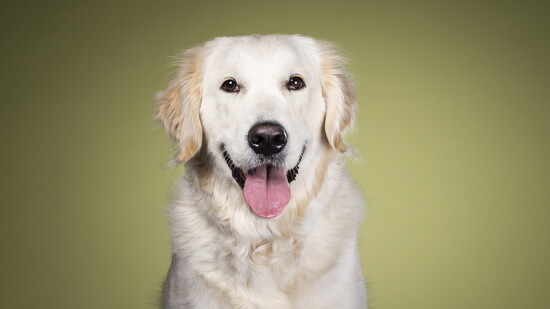
That was certainly the case with Daisy Mae, an English Golden Retriever who when she was eight weeks old, came to live with veteran Sherry Jones. “During those first few weeks, we spend time with the pup and love on them. At first, I assumed there would be a lot of specifics right out of the gate. So, I thought, ‘Oh my goodness, what have I gotten myself into? What do I do now?’” she laughs. “But I realized it was our time to bond. Daisy Mae was learning our smells and our home, and we were learning about her.”
After that initial bonding period, the formal training begins with Frank's in-person training, reinforced by online training resources designed to strengthen the recipient's understanding. The training encourages participants to use the word "yes" frequently, which helps shift their mindset toward possibility and optimism. According to an expert Frank consulted, repeatedly affirming positive actions and experiences may even help rebuild neural pathways affected by trauma over time, so using this positive philosophy in training also helps the person move forward.
Socialization is another tenet of both training and healing. Rather than keeping recipients isolated while they train, Frank encourages them to take their puppies into stores and other public places early on. The dog becomes both a companion and a bridge to the outside world, giving people a reason to get out, interact with others and rebuild their confidence. “With veterans in particular, it’s easy just to recluse. You don’t always want to get out and deal with people and things.” Sherry said. “Having Daisy Mae with me as a distraction is very helpful. Although sometimes I don’t want the extra attention, I’ve realized the people who approach you are drawn to you for the same reasons. It's always a niceness, always a good spirit and a good energy.”
And it’s during these outings when extraordinary things can happen.
“Oftentimes, Daisy Mae will pick someone out of a crowd, and she'll pull me over to that person so she can lean into them,” Sherry said. “I’ll apologize, and the person will say, ‘You don’t know how much I needed this today.’ It's really cool to witness, because she's very in tune with people. I just tell them, ‘Daisy knows.’ I just let her have her moment with them. I've had people cry to us. It's really awesome to know that she makes a difference in so many lives, not just mine.”
Frank has witnessed or heard about similar moments that demonstrate the ripple effect dogs can have during public outings. In one case, Bo repeatedly gravitated toward a veteran, lying down on his feet. The veteran eventually sought medical attention and discovered he had cancer.
In another example, Frank shared a story about a veteran’s service dog who persistently pulled toward a stranger in a restaurant. The veteran said, “Ma’am, I don’t know why, but my dog really needs to see you.” The woman started loving on the dog and began crying. The man asked if she was OK, and she responded, “I was just diagnosed with cancer today.”
These encounters perfectly illustrate what Frank has long believed: dogs possess an extraordinary ability to sense when people need comfort, companionship and support the most, often before anyone else recognizes it. Sherry has experienced that connection firsthand. Daisy Mae helps Sherry recognize emotions before they become overwhelming, nudging her toward awareness and grounding her in the present. “I think she has trained me more than I've trained her,” Sherry said. “She has taught me so much about myself.”
This connection between dog and human can be profoundly healing. And that, Frank believes, is the real goal. EmpowerPups is not simply about producing well-trained service dogs. It’s about helping people build trust, rediscover confidence and reconnect with life through the human-canine bond.
“We’re more than just training dogs,” Frank said. “We help save lives.”
"I think she has trained me more than I've trained her."
— Sherry Jones
"Service dogs aren't trained for people—they're trained with them."
— Frank Griggs