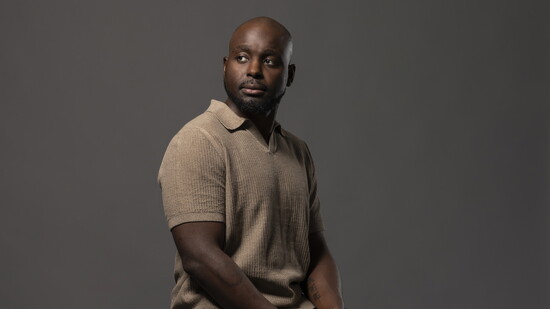
There was a time when, from the outside, Montee Ball appeared to have everything a young athlete could want.
Football took him from a standout childhood athlete to the University of Wisconsin, then to the NFL and the Denver Broncos. There were packed stadiums, expectations, accomplishments, and a dream he hoped would last for years.
But there was also something happening that couldn't be seen on a scoreboard.
“You can look strong on the outside and still be losing on the inside,” Ball says.
Looking back, he sees pressure and identity as important pieces of his struggle with alcohol. He had dedicated so much of his life to football that separating his performance from how he was doing as a person became difficult.
Success didn't mean he had the tools to understand everything he was experiencing or even to talk about it.
Alcohol seemed to offer an answer.
“At the time, I thought alcohol was giving me relief,” he says. “It felt like a way to quiet the pressure, get out of my own head, and temporarily stop carrying the expectations.”
Eventually, the thing that seemed to provide an escape began to create more pain.
Alcohol was affecting his mind, discipline, and peace, even as Ball held tightly to his dream of playing in the NFL for years to come. Eventually, some of the consequences became public.
But the struggle behind them was deeply personal.
That distinction matters to Ball now, especially when he looks at young athletes who seem to be doing everything right.
Because sometimes, a young person's performance can convince everyone they're okay when it may actually be hiding the fact that they aren't.
Ball is careful not to package his addiction into a single defining moment.
There wasn't one trigger that explained everything. Ball understands the pressures that contributed to his drinking, but he doesn't believe those pressures erase responsibility for what happened because of it.
“No matter what occurred, I'm always in control of my actions. Period. Full stop there.”
Eventually, that meant facing what alcohol had taken from his life and asking a different set of questions: How do I fix this? How do I get away from the substance? How do I make amends?
The answer wasn't a dramatic realization followed by an easy comeback.
It was work.
Ball completed 12 weeks of intensive outpatient treatment at 15 hours per week, including group, family, and individual therapy. He then continued individual therapy, ultimately completing another 176 hours.
Ball says recovery brought clarity, peace, purpose, and honesty back into his life.
And near the end of therapy, his therapist, who also happened to be in recovery, gave him a piece of advice that would help shape what came next.
“Moving forward now, your medicine is going to be service.”
Ball took it seriously. Service became part of his own continued healing, but it also offered an opportunity to use the hardest chapters of his life to change someone else's.
One way that mission is taking shape is Sideline Support, Game Plan Life's flagship mental health training curriculum for youth sports coaches. The training centers on three actions: recognize, respond, and connect. Coaches learn to notice changes in an athlete's behavior, mood, performance, communication or engagement; start a conversation and respond with care while maintaining appropriate boundaries; and connect athletes and families with school or community support when more help is needed.
The statistics cited through Sideline Support underscore the need. Fifty-eight percent of high school athletes report moderate to very high sport-related stress, while 78% of athletes have experienced behaviors related to emotional harm and neglect while participating in sports. The curriculum also points to the relationship between physical and mental health: poor mental health can increase the risk of injury, while experiencing an injury can worsen mental health.
The goal isn't to turn coaches into therapists. It's to help the people standing beside young athletes recognize when something isn't right and know what to do next.
For Jeremy Senecal, president of the Douglas County Defenders and a high school football coach at Chaparral High School, that idea has changed the way he looks at the athletes in front of him.
Senecal says he has always viewed youth sports as an opportunity to develop more than athletic ability. Work ethic, discipline, accountability, leadership, and character mattered just as much as wins and losses. But meeting Ball, Dr. Jess Kirby, and the Game Plan Life Foundation expanded his understanding of what developing the whole athlete should include.
“Those conversations opened my eyes to an area of youth development that I hadn't spent nearly enough time thinking about: mental health,” Senecal says.
The shift led him to start asking different questions. Coaches spend countless hours considering whether an athlete is physically prepared—strength, speed, technique, conditioning and nutrition. But what is happening inside that child? What pressures are they carrying away from practice? Are they struggling with confidence, anxiety, school, friendships or the fear of disappointing a parent or coach? And do they know it's okay to talk about it?
Since completing the training, Senecal says he finds himself paying closer attention when something seems off. Student-athletes today can carry enormous pressure to perform, he says, both on the field and in the classroom. Rather than assuming a player will work through it, he'll pull the athlete aside and check in.
“I now find that just letting them know you are in their corner and offering help when necessary or lending an ear goes a long way,” he says. “I now pull them aside and have a chat when something's off and let them know it's okay sometimes to not be okay.”
For Senecal, it has also expanded the way he defines his responsibility as a coach. “Our job isn't simply to develop better football players. Our job is to help develop better human beings.”
Ball wants communities to move beyond simply being aware that young people are struggling. Awareness has grown. The next question is what adults actually do with it.
What should a coach notice? How does a parent begin the conversation? Where does a family turn when a child says they aren't okay?
Ball remembers trying to navigate that uncertainty himself. During his addiction, he searched online for a “therapist near me.” A list of names appeared, but that didn't necessarily tell him who could provide the help he needed.
Through education, training, shared language, and community connections, Game Plan Life hopes to close that gap before a young person reaches a crisis.
Sometimes, Senecal says, the most important thing a coach can do is simply ask, “How are you doing?” and take the time to actually listen to the answer.
Ask Ball what he wants parents, coaches, and communities to do differently, and his answer isn't complicated.
Get curious.
“I want the community just to become more curious regarding mental health,” he says. “Ask more questions.”
Not interrogations. Not an attempt to diagnose a child across the dinner table. Just questions.
How are you doing? How's your mental health? Are you feeling more anxious than you did a month or two ago? Why?
They are remarkably ordinary questions. But Ball now knows how much can exist beneath an outwardly successful life.
A teenager can still go to practice. Still get good grades. Still make the starting lineup. Still smile for the picture. And still need someone to notice.
Ball's own story also carries another message for young people: mistakes don't have to become identities.
Football once gave him an identity. Later, addiction and its consequences threatened to give him another. Recovery taught him that neither had to determine who he would become next.
It also changed his understanding of strength.
Owning a mistake doesn't mean refusing help. Sometimes accountability looks like admitting what you've done, accepting the consequences, and then doing the difficult work required to make things right.
For Ball, that work continues through service.
It's an especially fitting message during a season centered on gratitude. He doesn't just talk about his gratitude for recovery. He puts it to work in conversations with athletes, in training the adults around them, and in helping build communities where asking for help can happen before everything falls apart.
His football career may be why people first recognize his name, but what he hopes people carry away has very little to do with football.
Pay attention to the people you love. Make room for honest answers. Make it safe to struggle, and safe to fail.
Most importantly, mistake achievement for wellness.
Sometimes the person who looks strongest is the one hoping someone will look a little deeper.
“Just because they're playing well doesn't mean they're doing well. Most of the athletes that are the highest performing, they are the most stressed.” - Coach Seneca