The ninth-grade shop teacher said bring in an engine. Most boys raided the family garage. Nick Vermet had no engine to raid. His family cut grass with a reel mower, the kind you push. So his mother drove him to a lawnmower shop in Detroit, and a man in the service department returned from the back with a discarded single-cylinder vertical engine made by REO, a marque that traced its bloodline to Ransom Olds himself. Vermet took it apart, and understood something about the relationship between curiosity and mechanical truth that no classroom had yet given him words for. The collection currently in his garage is the long result of that beginning.
Detroit in the late 1960s was still the center of something. The GM Tech Center in Warren stood as the engineering headquarters of the automotive world, and Vermet grew up close enough to feel its gravity. He enrolled in small engine repair at thirteen, cut lawns to buy tools, and by 1974 was one of six students sponsored by the Chevrolet Engineering Center to attend GMI, working dyno labs in Warren and driving prototypes at the Milford Proving Grounds. He went on to spend 25 years at Detroit Diesel, rising to executive vice president, before moving through Toyota, Penske, and ultimately Deutz, the engine company founded by the man who codified the Otto cycle and, by extension, made most of the 20th century possible. Through all of it, the cars kept arriving.
"I became a car guy because I'm an engine guy. Cars have engines. So do boats, motorcycles, planes. I've had all of them."
He has owned more than 200 automobiles by his own estimate, offered without ceremony.
Walk the garages with him and a logic emerges that has nothing to do with display. Each car earns its place by doing something the others cannot. The Bentley handles an evening out. The AMG SUV handles the dogs. The truck hauls. And then there are the cars that handle something harder to define.
The Ferrari Testarossa occupies its own register. Not the fastest car in the garage—the 812 Superfast, with its 6.5-liter naturally aspirated V12 climbing to a 9,000 RPM redline and 800 horsepower, holds that position without effort. But the Testarossa carries a different kind of weight. Its flat-12 engine sits low and wide behind the cockpit, sounding unlike anything else Ferrari ever built. Vermet recently added a Cavallino to the hood patterned after a one-of-a-kind Daytona owned by Ferrari itself. Two cars in the world now wear that script. He mentions it without pausing to let it land.
The 812 Superfast is for something else entirely. It can be driven like a touring Mercedes or like a Ferrari at full extension, the difference measured entirely in right foot pressure. "You can go three miles an hour through The Woodlands," he says, "or 212 on a proper road. That choice belongs to you."
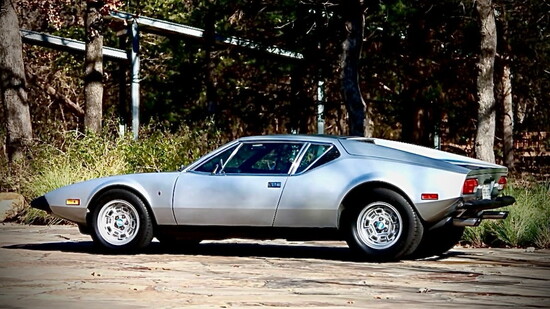
The De Tomaso Pantera, currently mid-restoration, is the car he sold years ago and knew he would find his way back to. Designed by an American, commissioned by an Argentine, built in Italy, powered by Ford. It fits no clean category. Vermet has always been more interested in what something does than where it belongs.
He still thinks about engines the way he did at 13. The collection in his garages is simply the evidence.