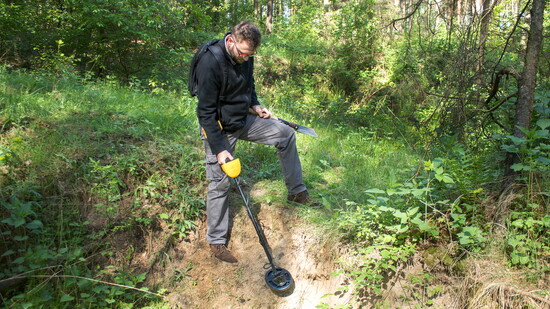
Treasure hunting has been around for as long as there was, well, treasure to find! When our ears hear the words “treasure hunt”, our minds wander to historic shipwrecks with pirates and sunken chests full of gold. Modernly, after metal detectors became more popular in the 70’s however, treasure hunting has been associated more with beach combing. Nowadays, beaches and parks are the most popular sites for searching for treasure—especially here in the Delaware County area.
Lots of people know that if you want to hunt for treasure, you need a good shovel and a metal detector. However, if you want to keep better track of all your treasure finds, you can bring a field notebook! This will help with documenting coordinates of search areas, weather conditions, and anything of note you want to jot down. A camera will also be effective as you can take pictures of your findings; this helps with identification for your finds. Long-time treasure hunters are exceptionally great at identifying objects; they’re able to by looking through the object through a historical lens.
Before you arrive at your destination (whether it is a national park or a coastline) make sure to research the area. Reading up on the local history and viewing old maps is a great way to get an idea on the types of items you might find. For example, if you know you’ll be searching around fairgrounds or a home that was built in the 1800s, some objects you could expect to find are iron objects such as horseshoes or oxen shoes, harmonica reeds, and even musket balls from time to time. This not only gives insight to the land but also its people and their culture.
Coins are a common find throughout treasure hunting and some certainly color our American history. An infamous one is the Liberty Head nickel (also known as a V nickel): a coin sporting Lady Liberty with stars on one side and the Roman numeral “V” surrounded by a wreath on the other. It was a five-cent piece that came into circulation in 1883 but it didn't have the word “cents” to signify its value as it was deemed not necessary. Scammers learned that the coin was close in diameter to a five dollar gold piece and would plate the nickels in gold to use it as such.
The government did eventually catch on and later that same year, the newer versions of these coins had the word “cents” on them.
History and knowledge are two great treasures that you can get from hunting, but nothing beats the fun you have when you’re searching in a group. There are many treasure hunting groups and clubs who would love to have new members join them. There are different websites that not only have equipment for sale but also lists groups to join such as Kellycodetectors.com or Metalpursuits.com.
If that feels too daunting, you can always ask some friends and family to join you while doing other hobbies for the summer. Treasure hunting while hiking or camping can add more fun to your outing. You don’t have to be a professional to hunt for treasure—just someone who enjoys nature and loves to learn about history.
It is important to remember that while it is fun to run off and start hunting for treasure, you must make sure you have all the basic necessities to keep yourself safe. Always have a bottle of water to stay hydrated and sunscreen to protect your skin! A hat will protect you from the sun’s harmful rays while you’re searching away. A first aid kit is always handy in case of any minor cuts or burns.
If you’d like to get out there and go treasure hunting on your own—or even with family and friends—there are many places to go in the Delaware County area. The Brandywine Battlefield is in Chadds Ford.There is Brandywine Creek State Park in Wilmington Delaware, which is open all year round, as well as Bellevue State Park in New Castle County overlooking the Delaware river. Dewey Beach in Eastern Sussex County is great for treasure hunters who want a good view of the ocean.
When you find your treasure, you’ll be able to keep modern-day coins and pieces of jewelry. According to the Bureau of Reclamation, coins and relics dating back more than 100 years must be surrendered to the authorities. The Archeological Resources Protection Act prohibits the excavation and removal of objects over 100 years old from public grounds.
As you’re out there, always be aware of private property versus public land. Remember to get permission whenever you want to search on private property. If you’re looking to search on public land, always check the laws and regulations. Some areas are free game while others require a permit. Visit www.pa.gov to learn more about metal detecting in state parks.
Never forget that when you’re out there hunting for treasure, you’re also hunting for knowledge and years worth of history, and those are some of the best things to have!
Long-time treasure hunters are exceptionally great at identifying objects; they do this by looking at the object through a historical lens.