Dr. Jesse Greer built Preamble Health in Scottsdale around a simple idea: do not wait until someone reaches the point of no return.
That philosophy was shaped in the United States Army, under the weight of a log.
Jesse was 32 years old and several days into Special Forces selection. The candidates had been pushed from one punishing station to the next until their muscles stopped cooperating. Firefighters sprayed them with water to prevent heat injuries. Men were quitting where they stood.
Most of the soldiers around him were younger and far more experienced with weapons and tactical training. Jesse was already a physician and nearly a decade into his military career, but here, he had to prove himself all over again.
“What kept me in was a simple thought,” Jesse says. “If I was going to quit, it should have been before then, because there was no way I would go through something that hard and have it be for nothing.”
He held up his end of the log.
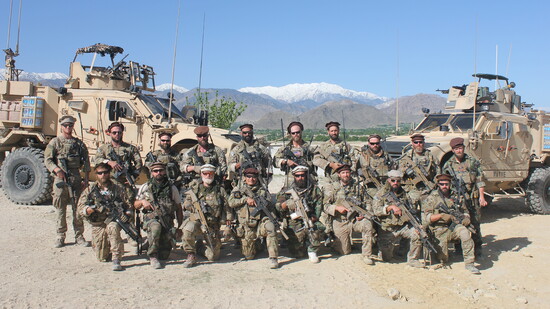
Green Berets are members of the United States Army Special Forces. They operate in small, highly trained teams, often in uncertain or hostile environments with limited support. Their work requires physical endurance, sound judgment, adaptability and the ability to remain effective when the original plan no longer works.
“What it really requires is finding your breaking point and learning that you can push it back,” Jesse says. “Every time you go past it, it moves.”
Jesse’s path to service began after September 11 while he was finishing college at the University of Arizona. He discovered the military had its own medical school and accepted a direct commission into the Uniformed Services University.
“The Army and medicine started for me on the same day. At 23, service meant something simple. I wanted to be useful to my country, and this looked like the way I could be most useful.”
After completing his residency at Walter Reed, Jesse became a flight surgeon under Special Operations Command. Senior physicians had created a program allowing doctors to attempt Special Forces selection and complete the full qualification course.
“The flight surgeon job asked me to be a good doctor. The Green Beret job asked me to be one of the boys. Train with the men, deploy with them, and go through what they went through. Once they watched me do the same hard things they had done, they trusted me.”
His service took him into situations where expertise mattered, but adaptability mattered more. During six months in South Sudan, Jesse worked thousands of miles from a hospital without laboratories, imaging or much medicine.
When a man arrived with his leg severely hurt, there was no specialist to call.
“Telling him I was an internal medicine doctor was not going to help him. I was the only doctor around, so I fixed the leg.”
Experiences like that stripped away any need to appear tough.
“It takes a lot of energy to look tough. Once you have been pushed past your breaking point and found out you can still function, the doubt goes away. The most capable people I served with had lost the need to look tough somewhere along the way.”
As a Special Forces flight surgeon, Jesse cared for elite soldiers operating under years of sustained physical and emotional pressure. Traditional medicine could treat an injury or diagnose disease, but it was not designed to keep these men functioning at their highest level.
“Some could no longer sleep. Their hormones were suppressed. Inflammation, fatigue and emotional strain were taking over. What was missing was the big picture. Nutrition, exercise, hormones, inflammation and sleep had to be addressed together, through one program, with everyone working toward the same objective.”
Jesse began building that approach while still serving.
“It brought life back into some of those guys’ eyes… My ‘aha’ moment.”
The transition into civilian medicine left him searching for another mission. At a large university hospital, he found himself treating people near the end of a disease process that had often begun years earlier.
“We were treating sick people and getting them out of the hospital as quickly as possible. My heart was not in it. Every day reminded me of what that system could not do for people.”
He knew a different approach was possible.
“Root cause first. Lifestyle first. Medicine and supplements as support. All of it done early, before people reach the point of no return.”
That became Preamble Health.
At his Scottsdale practice, Jesse applies the team-based model he experienced in Special Forces to preventive medicine. Testing, physician oversight, nutrition and performance support work toward one coordinated objective: helping people protect both their lifespan and their healthspan, the years they are healthy enough to truly live.
Veterans Day honors those who served in uniform. Jesse’s story also reveals what can happen when that instinct to serve finds a new mission.
“We do a lot of testing, treatment and education, but my real goal is health agency. I want people to understand the handful of things about their health that actually matter and know how to keep them in line.”
Preamblehealth.com