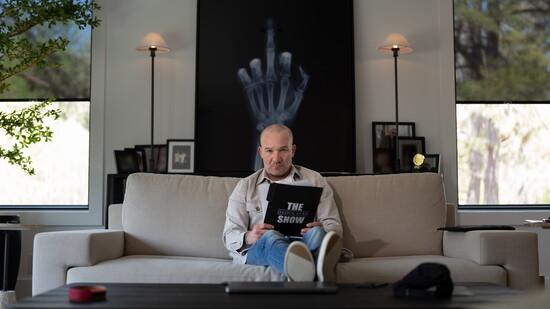
As the country celebrates America 250, our July Explore Issue is dedicated to the people, stories, and experiences that help define the American spirit.
Shawn Ryan is a former Navy SEAL, CIA contractor, entrepreneur, and host of The Shawn Ryan Show, one of the largest podcasts in the world, surpassing two billion streams and attracting an audience that spans veterans, first responders, business leaders, parents, and everyday Americans.
Shawn is often the one asking the questions, so when we had the opportunity to connect with him, we decided to flip the script.
In a world filled with constant information, what do you think people are craving most from the stories they consume?
"Unification. They want to see some unity in the country. I think they're craving voices of people that actually have skin in the game, like World War 2 vets, Vietnam vets, Iraq and Afghanistan vets."
Your podcast has become known for long-form, unfiltered conversations.
"I think people are hungry for authenticity because it's hard to come by. And we were authentic from the get go. We didn't see it as a trend to jump on. We were just authentic and honest from the beginning."
Growing up in Missouri, did you always feel a pull toward service?
"Ever since I was a toddler, playing with GI Joe's and building forts, I knew I wanted to be a SEAL or something similar. I knew wanted some type of combat role in the military."
Before you graduated high school, you were already researching the SEAL teams.
“None of the other branches could offer the path I wanted. Then a Navy recruiter asked if I knew what a SEAL was. I didn't. But once I learned they were considered the best of the best, I knew that's where I wanted to be. I wanted to work with the best people on the planet.”
What did your years as a Navy SEAL teach you about sacrifice and brotherhood?
“Nothing worthwhile comes without sacrifice. To operate at that level, you have to be a team player. The brotherhood falls into place naturally because if you don't embrace it, they'll kick you out. The team becomes more important than yourself. It's ingrained in you from day one: team, swim buddy, self.”
You say that military service showed you how fortunate Americans are.
“When you go overseas and see people who don't have clean water, food, or even a way to keep warm, it changes your perspective. They have nothing, and all they've ever known is war. That's something most people in this country can't even fathom.”
You've lived several different lives already: Navy SEAL, CIA contractor, entrepreneur, and podcast host. Which chapter changed you the most?
“I'd say they're all equal. The SEAL teams taught me about brotherhood, leadership, and teamwork. The CIA taught me patience and how political war can become. Entrepreneurship taught me that the American dream is alive and well and that you can accomplish anything you put your mind to. Podcasting has given me a glimpse into worlds, both good and bad, that I never knew existed.”
The Shawn Ryan Show often explores untold stories.
“I think firsthand storytelling matters because we've been conditioned to hear stories from talking heads in the media. You rarely hear them from the people who were actually there on the ground doing the job. It was always somebody in a newsroom. Giving those people a platform to share real firsthand accounts, without the bias or political spin, has created a huge thirst for it.”
Many know you as a podcast host today. How did your years as a SEAL and CIA contractor shape the way you interview people?
“When I first started, I was interviewing colleagues. The conversations were so good because there weren't many people who could relate to what they had experienced. When you've seen that much combat and war trauma, you're not always comfortable telling your story to just anyone. I never tried to insert my own experiences. I simply let them talk. There was a level of trust because they knew I understood.”
There's a strong thread throughout your work centered around struggle, redemption, and healing.
“I was very intentional from the beginning and had clear goals in mind.
One: To document how it happened.
Two: To put on public display what war trauma does to a human being. I think we've done that perfectly.
Three: I wanted to talk about how they got out of those struggles, what avenues they took, whether it was medication or therapy, or anything else.
Four: I wanted to elevate their new venture, whether that be a business or a nonprofit.
Five: I wanted to tell the stories of people who had experienced extreme violence or lived through more war and conflict than most people can imagine.
I wanted other guys who haven't been on the show, who are coming home, about to come home, or are over there right now, to be able to listen and hear these stories. Knowing how bad it was, I wanted to bring hope to those guys and show them the avenues that exist. I wanted them to see how bad it got for the person sitting across from me and how they managed to pull themselves out of it.
A lot of these guys hear those stories and think, 'S***, that guy had it that bad. Maybe I can pull through the [stuff] that I'm going through.' And it has done that."
Why was it important for you to speak publicly about dark moments?
"If you want to make real change, then you have to be vulnerable and honest with yourself, and people respect that. Along the same lines, my best friend passed of an addiction. He was a SEAL and at the CIA with me."
How has your faith transformed the way you lead?
"It has changed pretty much everything that we do. I think about, 'is this what God would want me to do? Would he be happy that I'm doing this? Would he be happy that I'm making this decision?' And just always reflecting back on that."
In many ways, your show has become a modern archive of American stories that might otherwise go unheard.
“One of the big reasons I do this that nobody really sees is that these people get a legacy account of their life that can be passed down for generations. Family members who never had the chance to meet them will be able to go back, listen, and know exactly who they were.”
You've interviewed everyone from veterans and intelligence officers to political figures and cultural voices. Which interviews have impacted you most?
"Ryan Montgomery, a cybersecurity expert and child-safety advocate who works to expose online predators and exploitation networks. We educated parents in one episode and I think that's the biggest impact that I've made. I also think sharing my journey to faith had a huge impact on people. Just by being vulnerable and honest about how that all happened."
Was there ever a guest or conversation that completely shifted your perspective on something you thought you already understood?
"That is the whole objective of this… Talking with all kinds of different people with different backgrounds and different perspectives in hopes that me and the audience learn something new."
Why do you think so many different people connect with your message?
"Because this is raw honesty and vulnerability. I mean people come in and they go places that nobody else goes. They talk about humiliating things. I mean, they really bare their soul, and nobody else is able to get that."
The phrase 'American spirit' means different things to different people. What does it mean to you?
"Fighting for freedom, standing for truth and destroying evil no matter what the consequences are."
What do you think makes podcasting such a unique form of storytelling?
"They're long form. You can't hide behind a 10 second sound bite. People are able to get their entire thoughts out, and they're not rushed by somebody who has to go to a commercial break. Time creates trust, and you get time in a podcast."
You've said everything you do now is about building a better world for your children.
"All that comes second. Being a father comes first."
What gives you hope for our country's future?
"We have the best innovators in the world. We have the most patriotic people in the world. The world looks to us for everything."
What do you hope people understand about what you're doing?
"We're just trying to do good here."
shawnryanshow.com
"I think people are hungry for authenticity because it's hard to come by. Time creates trust, and you get time in a podcast."